P0087 on a diesel: prove the filter and the leak-off before condemning the pump
CA
@cargeek
1 month ago
P0087 says commanded rail pressure and actual rail pressure disagree low — the system asked for pressure it could not build. On common-rail diesels the expensive suspect is the high-pressure pump, which is exactly why the cheap suspects need eliminating in order.
Watch commanded versus actual rail pressure as live data under load. Actual tracking well below commanded, worst at high demand — motorway grades, hard acceleration — while fine at idle points at supply starvation before pump failure: the pump cannot compress fuel it is not receiving.
The fuel filter is the first suspect and the cheapest. A filter overdue or waxed in winter starves the high-pressure side at load first, idle last — matching the symptom pattern exactly. If the service history is vague, a filter is diagnosis and maintenance in one part.
Next, injector leak-off: an injector returning excessive fuel to the tank bleeds the rail's pressure away as fast as the pump builds it. The back-leak test — measuring each injector's return volume over a timed run — finds the culprit for the cost of some graduated tubes, and it is the test that most often saves a wrongly condemned pump.
Suction-side air leaks belong on the list too: perished seals on the filter head or supply lines let the lift side pull air, and aerated fuel will not build pressure. Hard starts after sitting overnight are the tell.
The pump is real as a cause — but it is the last name on the list, not the first quote.
Watch commanded versus actual rail pressure as live data under load. Actual tracking well below commanded, worst at high demand — motorway grades, hard acceleration — while fine at idle points at supply starvation before pump failure: the pump cannot compress fuel it is not receiving.
The fuel filter is the first suspect and the cheapest. A filter overdue or waxed in winter starves the high-pressure side at load first, idle last — matching the symptom pattern exactly. If the service history is vague, a filter is diagnosis and maintenance in one part.
Next, injector leak-off: an injector returning excessive fuel to the tank bleeds the rail's pressure away as fast as the pump builds it. The back-leak test — measuring each injector's return volume over a timed run — finds the culprit for the cost of some graduated tubes, and it is the test that most often saves a wrongly condemned pump.
Suction-side air leaks belong on the list too: perished seals on the filter head or supply lines let the lift side pull air, and aerated fuel will not build pressure. Hard starts after sitting overnight are the tell.
The pump is real as a cause — but it is the last name on the list, not the first quote.
Attachments
-
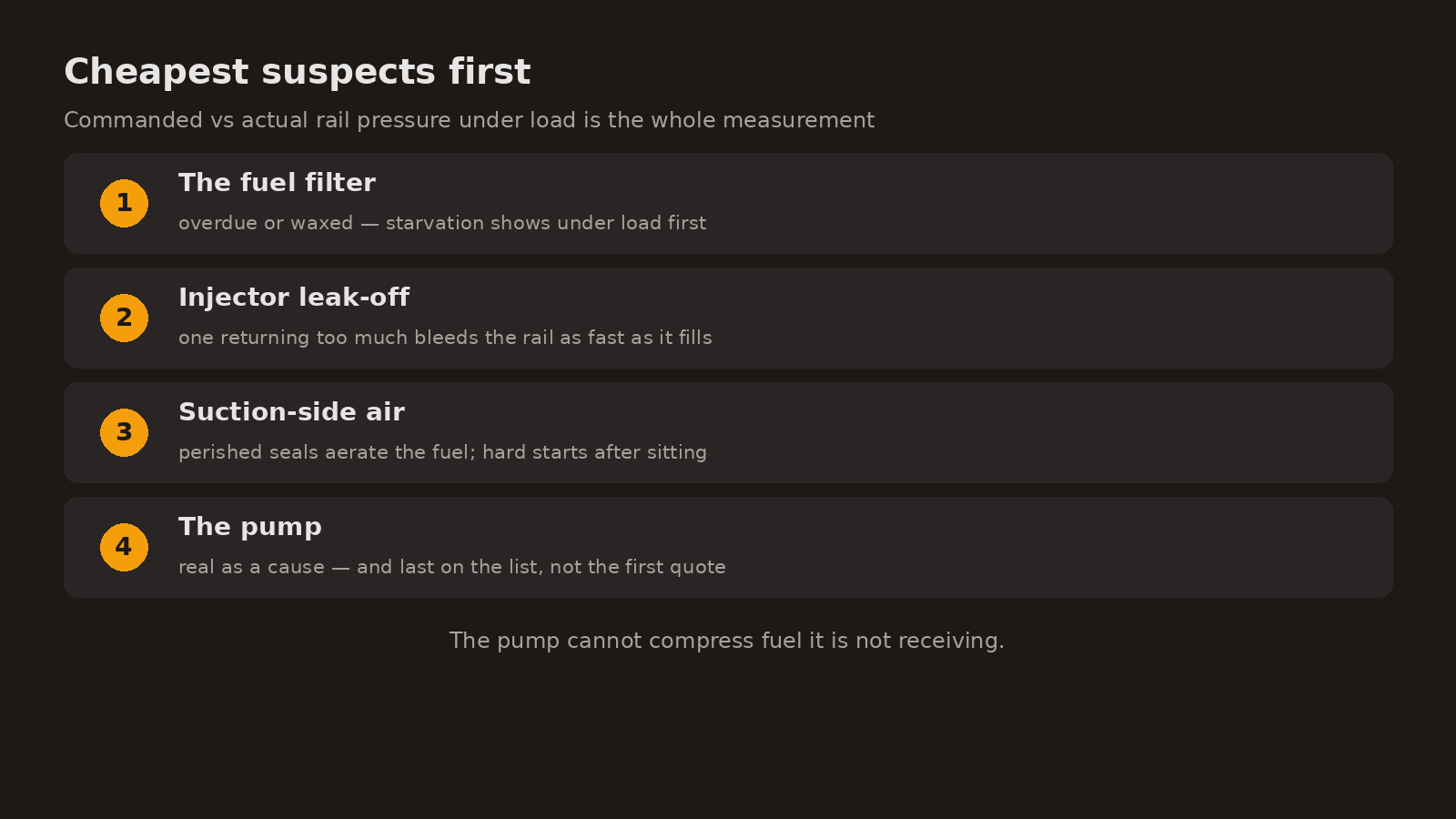
Diagram: the diesel rail-pressure suspect list in order of cost — filter, injector leak-off, suction-side air leaks, and only then the high-pressure pump.
Information, not instruction
CarGeek is a reference, not a service manual. Its pages are written from public sources and from what other people have found, never from a manufacturer's own service information, so they can be wrong or incomplete for your particular vehicle. Some of what they describe carries real risk: high voltage, fuel under pressure, stored energy, hot and moving parts.
Have anything you intend to act on checked by a trained person against the manufacturer's own procedure for your vehicle. Nothing here replaces that procedure.