Vehicle
BMW X3
The compact SUV volume seller. Mechanically a 3 Series of its era in a taller body, which is exactly how to approach its codes.
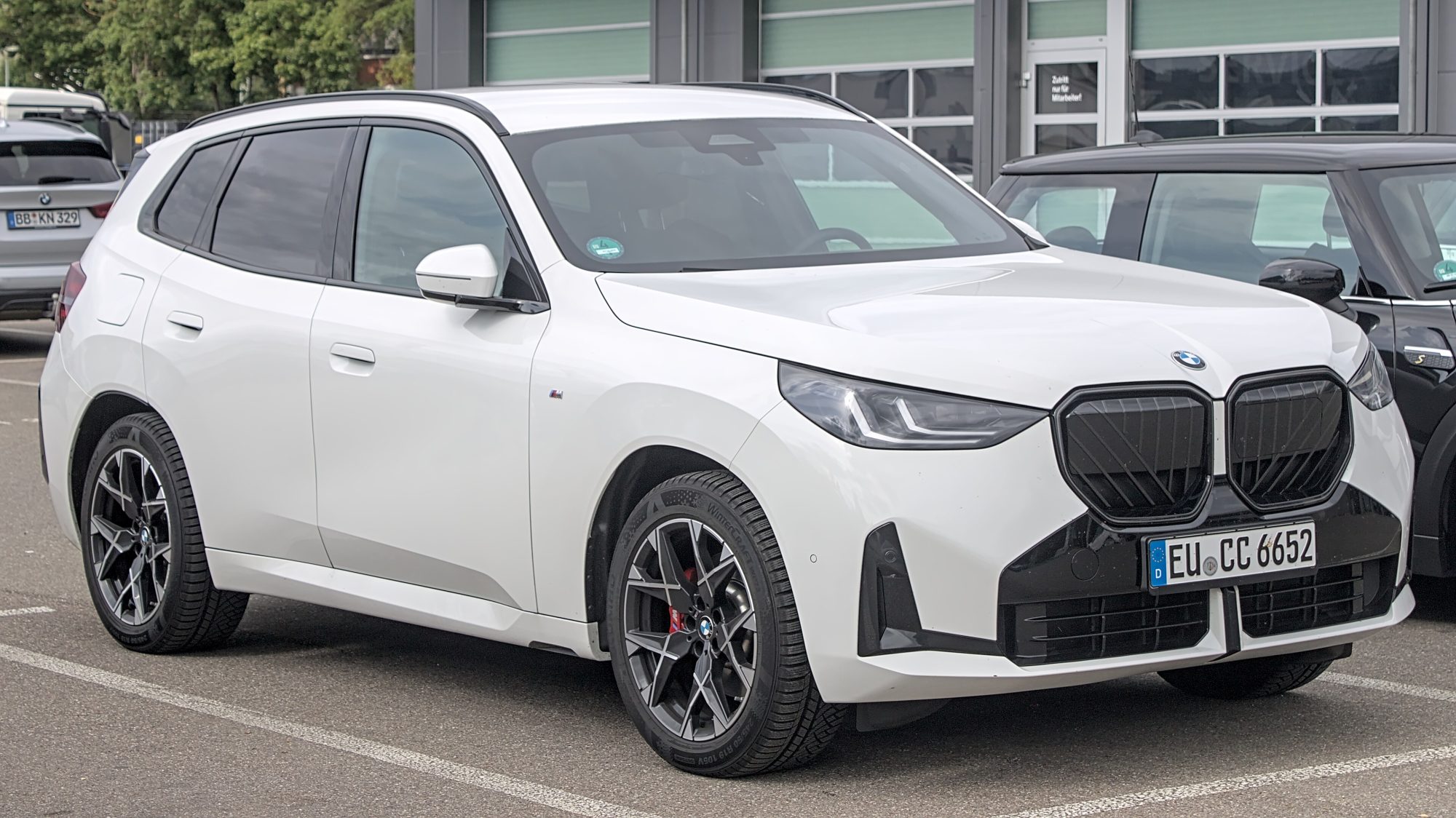

Generations
-
E83 2003–2010
The first X3; transfer case actuator wear is its known driveline fault.
- Body styles
- SUV
- Platform
- E83
- Engines
-
- 2.0 four-cylinder — N46 · petrol · 110 kW (148 hp) · 200 Nm (148 lb-ft)
- 2.5 / 3.0 straight-six — M54 · petrol · 141–200 kW (189–268 hp) · 245–315 Nm (181–232 lb-ft) · M54 and N52
- 2.0d — M47 · diesel · 85–100 kW (114–134 hp) · 265–280 Nm (195–207 lb-ft) · M47 and N47
- 3.0d — M57 · diesel · 150–210 kW (201–282 hp) · 410–580 Nm (302–428 lb-ft)
- 3.0 — M54 · petrol · 170–200 kW (228–268 hp) · 300–315 Nm (221–232 lb-ft) · 6-cylinder, US market 2004-2010
- Transmissions
- 5-speed manual · 6-speed manual · 5-speed automatic · 6-speed automatic · 6-speed automatic and manual
- Drivetrain
- Four-wheel drive
-
F25 2010–2017
N20 and N55 petrol, N47/N57 diesel — a 3 Series of the period in a taller body.
- Body styles
- SUV
- Platform
- BMW L7
- Engines
-
- 2.0 turbo — N20 · petrol · 115–180 kW (154–241 hp) · 240–350 Nm (177–258 lb-ft)
- 3.0 turbo — N55 · petrol · 400 Nm (295 lb-ft)
- 2.0 — N47 · diesel · 70–160 kW (94–215 hp) · 235–450 Nm (173–332 lb-ft)
- 3.0 — N57 · diesel · 190–230 kW (255–308 hp) · 560–630 Nm (413–465 lb-ft)
- 3.0 straight-six — N52 · petrol · 225 kW (302 hp) · 310 Nm (229 lb-ft)
- 2.0 diesel — B47 · diesel · 360–400 Nm (266–295 lb-ft)
- Transmissions
- 6-speed manual · 8-speed ZF 8HP automatic
- Drivetrain
- Rear-wheel drive · Four-wheel drive
-
G01 2017–present
B-series engines, mild hybrid late in the run, and a fully electric iX3 alongside.
- Body styles
- SUV
- Platform
- CLAR
- Engines
-
- 2.0 turbo four-cylinder — B48B20B · petrol · 135–185 kW (181–248 hp) · 290–350 Nm (214–258 lb-ft) · B48
- 3.0 turbo straight-six — B58B30 · mild hybrid · 260–375 kW (349–503 hp) · 500 Nm (369 lb-ft) · B58, M40i, and S58 in the X3 M
- 2.0d — B47D20 · mild hybrid · 110–170 kW (148–228 hp) · 350–500 Nm (258–369 lb-ft) · B47
- 3.0d — B57D30M0 · mild hybrid · 195 kW (261 hp) · 620 Nm (457 lb-ft) · B57
- 2.0 turbo hybrid — B48 · plug-in hybrid · 420 Nm (310 lb-ft) · xDrive30e
- Transmissions
- 8-speed ZF 8HP automatic · Single-speed with fixed ratio
- Drivetrain
- xDrive four-wheel drive · Rear-wheel drive
Service information
Information, not instruction
CarGeek is a reference, not a service manual. Its pages are written from public sources and from what other people have found, never from a manufacturer's own service information, so they can be wrong or incomplete for your particular vehicle. Some of what they describe carries real risk: high voltage, fuel under pressure, stored energy, hot and moving parts.
Have anything you intend to act on checked by a trained person against the manufacturer's own procedure for your vehicle. Nothing here replaces that procedure.
Posted about the BMW X3
Be the first to write this up
Nothing posted about this yet. Whatever you found is worth writing down — even a dead end saves someone the same afternoon.
What makes one worth reading:
- The car — make, model, year and engine. The same fault behaves differently on each.
- What you measured, not only what you replaced.
- What actually fixed it — or that nothing did, which is worth knowing too.
Sign in or create an account to add what you found about BMW X3.