Vehicle
Chevrolet Corvette
Rear-drive, transaxle, and for six generations small-block V8 — which means most of its powertrain diagnosis is shared with the Silverado and Camaro of the same era, and only the chassis is exotic. The recurring items are not the engine: the column lock on C5 and early C6 cars throws a security fault and immobilises the car, the Active Handling and steering-angle sensors generate chassis codes readily, and the C5's rear transaxle and the C6/C7's dry-sump variants each want their own service data. The C8 moves the engine behind the cabin and changes almost every module address and network layout, so it is a separate vehicle for diagnostic purposes even though the LT2 is a recognisable small block.
.jpg)
Generations
-
C3 1968–1982
The chrome-bumper and later rubber-bumper small blocks, carburetted until the very end — no diagnostic connector, and timing is set by light rather than by tool.
- Body styles
- Coupé · Convertible
- Platform
- GM Y-body
- Engines
-
- 5.7 V8 — petrol · small block 350
- 7.4 V8 — petrol · big block 454
- Transmissions
- 4-speed manual · 3-speed automatic · 3-speed manual · 3-speed Turbo-Hydramatic automatic · 4-speed automatic
- Drivetrain
- Rear-wheel drive
-
C4 1984–1996
L83 through LT4, plus the Lotus-designed LT5 in the ZR-1; digital instrumentation and the Opti-Spark distributor are the era's electrical headaches.
- Body styles
- Coupé · Convertible
- Platform
- GM Y-body
- Engines
-
- 5.7 V8 — petrol · 153–246 kW (205–330 hp) · L83, L98, LT1 and LT4
- 5.7 V8 DOHC — petrol · 280–302 kW (375–405 hp) · 502–522 Nm (370–385 lb-ft) · LT5, ZR-1
- Transmissions
- 4-speed manual · 4-speed 700R4 automatic · 6-speed ZF manual
- Drivetrain
- Rear-wheel drive
-
C5 1997–2004
LS1 with a rear transaxle; the column lock is the classic no-start and reads as a security or theft-deterrent fault.
- Body styles
- Coupé · Convertible
- Platform
- GM Y-body
- Engines
-
- 5.7 V8 — LS1 · petrol · 257–261 kW (345–350 hp) · 508 Nm (375 lb-ft) · LS1
- 5.7 — LS6 · petrol · 287–302 kW (385–405 hp) · 522–542 Nm (385–400 lb-ft)
- Transmissions
- 6-speed manual T-56 · 4-speed automatic 4L60E
- Drivetrain
- Rear-wheel drive
-
C6 2005–2013
LS2 through LS7 and the supercharged LS9; Active Handling and steering-angle faults are the common chassis codes.
- Body styles
- Coupé · Convertible
- Platform
- GM Y-body
- Engines
-
- 6.0 V8 — LS2 · petrol · 298 kW (400 hp) · 542 Nm (400 lb-ft)
- 6.2 V8 — LS3 · petrol · 321–325 kW (430–436 hp) · 575–580 Nm (424–428 lb-ft) · LS3
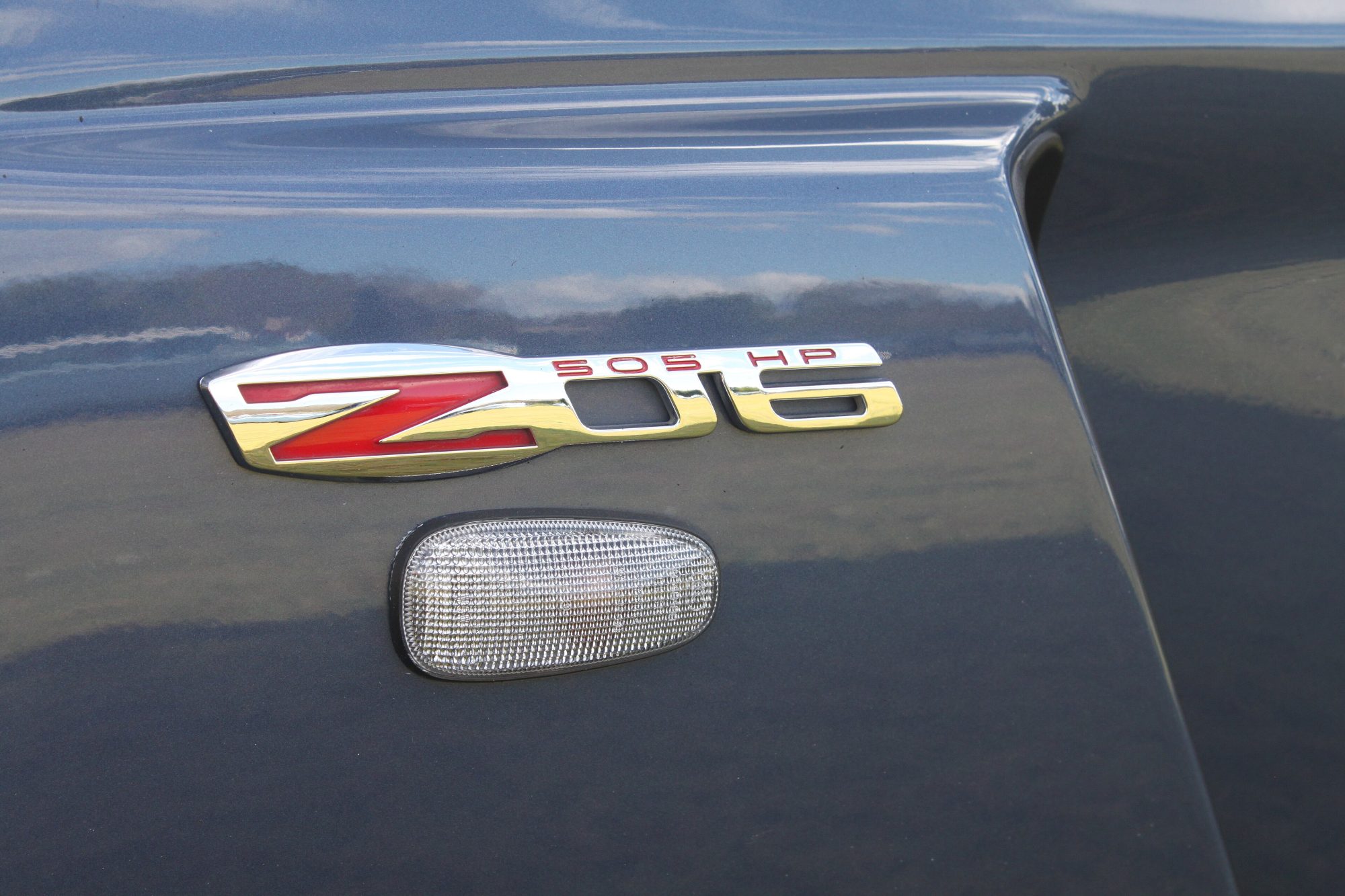
- 7.0 V8 — LS7 · petrol · 377 kW (505 hp) · 637 Nm (470 lb-ft) · LS7, Z06
- 6.2 supercharged V8 — LS9 · petrol · 476 kW (638 hp) · 819 Nm (604 lb-ft) · LS9, ZR1
- Transmissions
- 6-speed T-56 manual · 6-speed TR-6060 manual · 4-speed 4L65-E automatic · 6-speed 6L80 automatic
- Drivetrain
- Rear-wheel drive
-
C7 2014–2019
Direct-injected LT1 with cylinder deactivation; the eight-speed automatic arrives from 2015.
- Body styles
- Coupé · Convertible
- Platform
- GM Y-body
- Engines
-
- 6.2 V8 — LT1 · petrol · 339–343 kW (455–460 hp) · 624–630 Nm (460–465 lb-ft)
- 6.2 supercharged V8 — LT4 · petrol · 485 kW (650 hp) · 881 Nm (650 lb-ft) · LT4, Z06
- 6.2 supercharged V8 — LT5 · petrol · 563 kW (755 hp) · 969 Nm (715 lb-ft) · LT5, ZR1
- Transmissions
- 7-speed Tremec TR-6070 manual · 6-speed GM 6L80 automatic · 8-speed GM 8L90 automatic
- Drivetrain
- Rear-wheel drive
-
C8 2020–present
Mid-engined, with an entirely different module layout and network topology from every earlier Corvette.
- Body styles
- Coupé · Convertible
- Platform
- GM Y2
- Engines
-
- 6.2 V8 — LT2 · petrol · 354–369 kW (475–495 hp) · 613–637 Nm (452–470 lb-ft)
- 5.5 V8 — LT6 · petrol · 500 kW (671 hp) · 624 Nm (460 lb-ft) · LT6, Z06
- 6.2 V8 with front electric axle — hybrid · E-Ray
- 5.5 turbo — LT7 · petrol · 793 kW (1063 hp) · 1123 Nm (828 lb-ft)
- Transmissions
- 8-speed dual-clutch
- Drivetrain
- Rear-wheel drive · Four-wheel drive
Service information
Information, not instruction
CarGeek is a reference, not a service manual. Its pages are written from public sources and from what other people have found, never from a manufacturer's own service information, so they can be wrong or incomplete for your particular vehicle. Some of what they describe carries real risk: high voltage, fuel under pressure, stored energy, hot and moving parts.
Have anything you intend to act on checked by a trained person against the manufacturer's own procedure for your vehicle. Nothing here replaces that procedure.
Posted about the Chevrolet Corvette
Be the first to write this up
Nothing posted about this yet. Whatever you found is worth writing down — even a dead end saves someone the same afternoon.
What makes one worth reading:
- The car — make, model, year and engine. The same fault behaves differently on each.
- What you measured, not only what you replaced.
- What actually fixed it — or that nothing did, which is worth knowing too.
Sign in or create an account to add what you found about Chevrolet Corvette.