Vehicle
Dodge Avenger
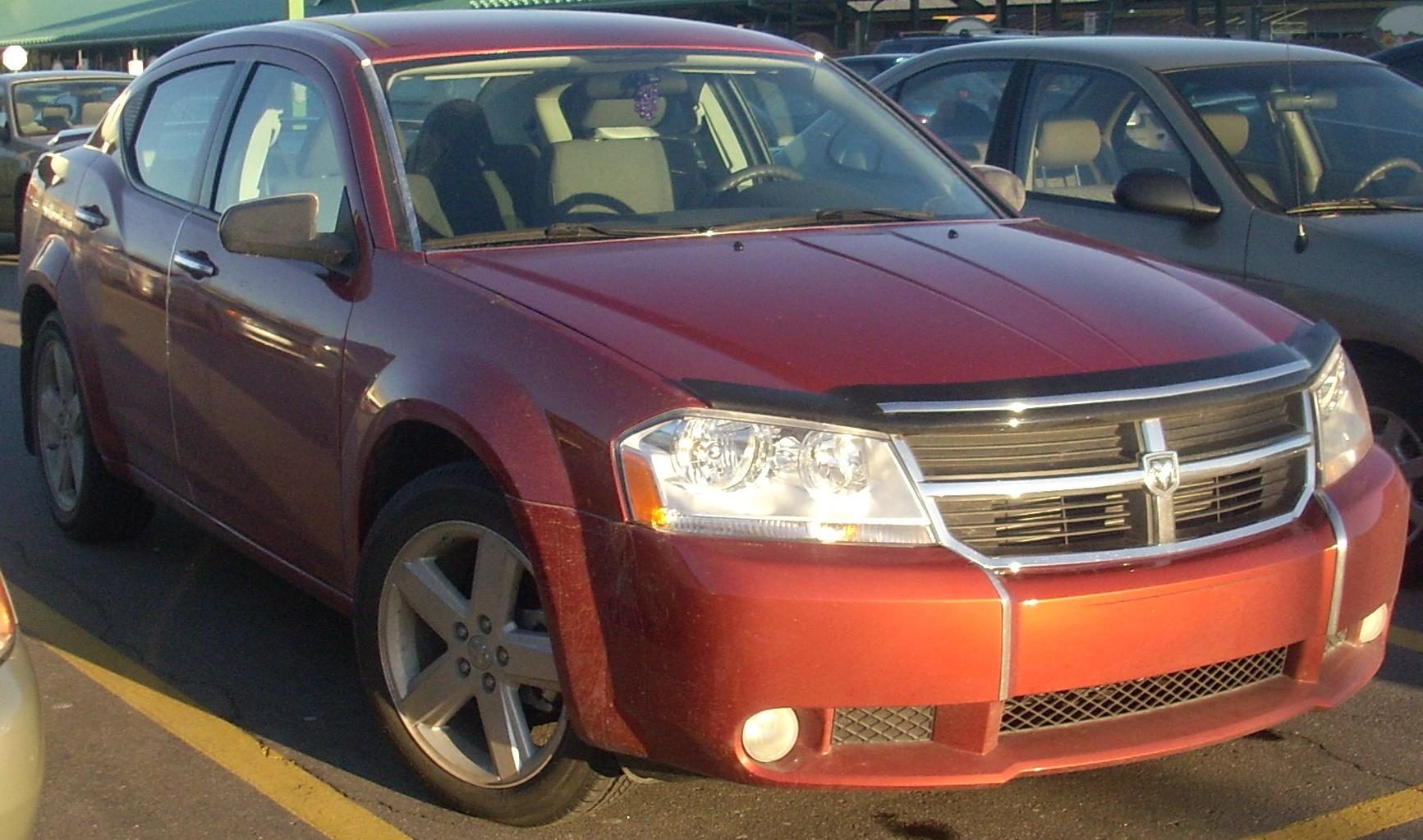
Two entirely different cars under one badge, and knowing which you have is the first question: the 1995-2000 car is a Diamond-Star coupé on a Mitsubishi floorpan, and the 2008-2014 car is a mid-size saloon that the Chrysler Sebring shares completely. Almost nothing crosses between them. For the saloon, Sebring information is more plentiful and applies throughout — the World Engine 2.0 and 2.4 fours are the ones most examples carry. For the coupé, look to the Mitsubishi Galant and Eclipse of the same years rather than to anything else wearing this name.

Generations
-
First generation (FJ) 1995–2000
A Diamond-Star coupé on the Mitsubishi Galant floorpan, and a different car from the 2008 saloon that took the name — the parts almost never cross over.
- Body styles
- Coupé
- Platform
- Chrysler FJ (Mitsubishi-derived)
- Engines
-
- 2.0 four-cylinder — petrol · 420A, the Neon-derived DOHC four
- 2.5 V6 — petrol · Mitsubishi 6G73
- Transmissions
- 4-speed automatic · 5-speed manual
- Drivetrain
- Front-wheel drive
-
Second generation (JS) 2008–2014
The same car as the Chrysler Sebring; World Engine oil sludging takes out the cam phaser and sets timing-correlation codes.
- Body styles
- Sedan
- Platform
- Chrysler JS
- Engines
-
- 2.0 World Engine — petrol
- 2.4 World Engine — petrol
- 2.7 V6 — petrol
- 3.5 V6 — petrol
- 3.6 V6 — PENTASTAR · petrol
- 2.0 CRD — diesel · European market
- Transmissions
- 4-speed Ultradrive 40TES automatic · 4-speed Ultradrive 41TES automatic · 5-speed Magna T-355 manual · 6-speed Ultradrive 62TE automatic · 6-speed Getrag Mps6 DCT automatic · 6-speed Aisin manual
- Drivetrain
- Front-wheel drive
Information, not instruction
CarGeek is a reference, not a service manual. Its pages are written from public sources and from what other people have found, never from a manufacturer's own service information, so they can be wrong or incomplete for your particular vehicle. Some of what they describe carries real risk: high voltage, fuel under pressure, stored energy, hot and moving parts.
Have anything you intend to act on checked by a trained person against the manufacturer's own procedure for your vehicle. Nothing here replaces that procedure.
Posted about the Dodge Avenger
Be the first to write this up
Nothing posted about this yet. Whatever you found is worth writing down — even a dead end saves someone the same afternoon.
What makes one worth reading:
- The car — make, model, year and engine. The same fault behaves differently on each.
- What you measured, not only what you replaced.
- What actually fixed it — or that nothing did, which is worth knowing too.
Sign in or create an account to add what you found about Dodge Avenger.