Vehicle
Genesis G70
The compact executive saloon, on the same rear-drive platform as the Kia Stinger and sharing its turbocharged engines — which is where the more plentiful information lives. The 3.3 twin-turbo V6 is the one its enthusiast population concerns itself with.
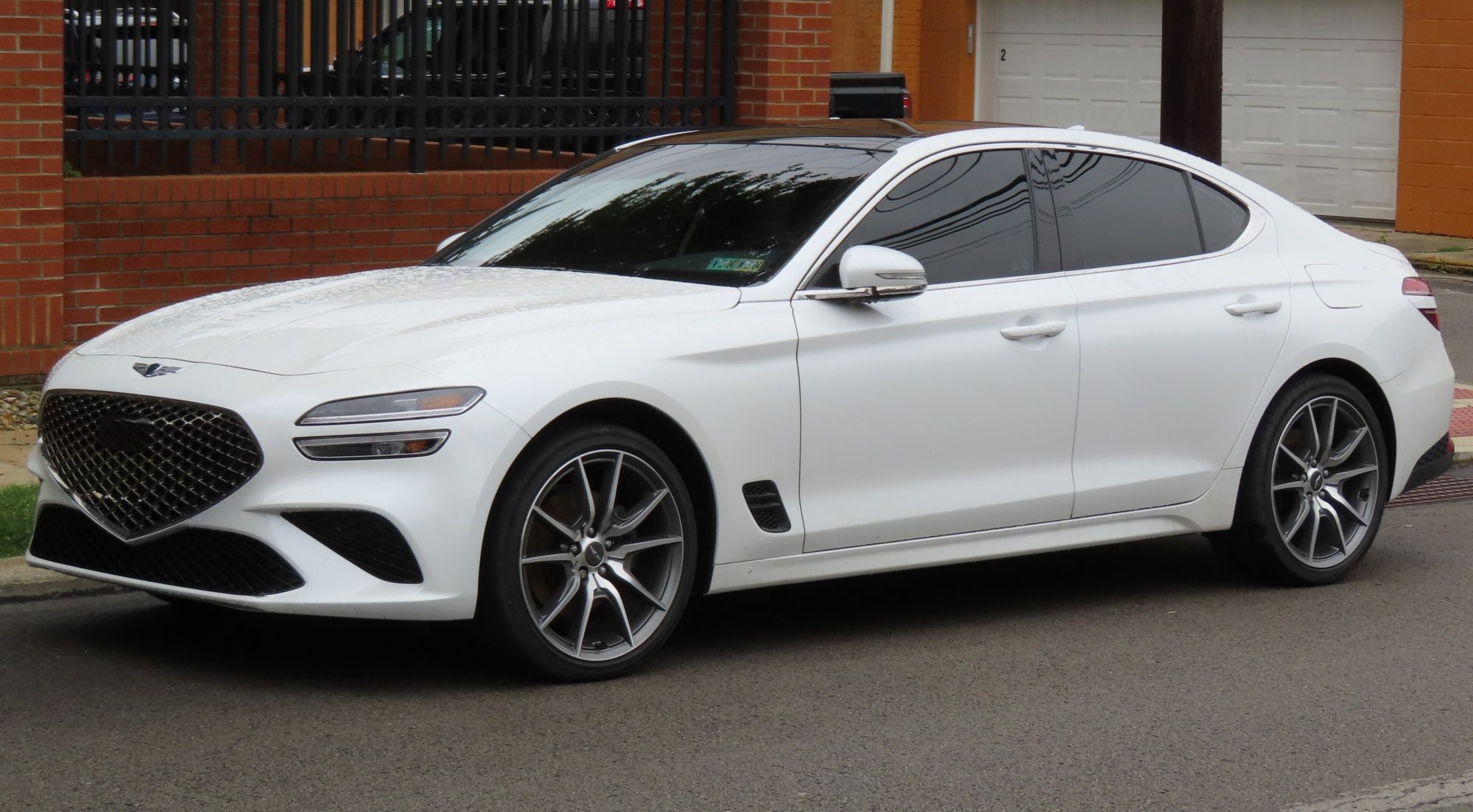

Generations
-
First generation 2017–present
Rear-drive platform shared with the Kia Stinger, whose far larger population documents the same turbocharged engines.
- Body styles
- Sedan · Estate
- Platform
- Hyundai N3
- Engines
-
- 2.0 turbo — petrol · 145–185 kW (194–248 hp) · 353 Nm (260 lb-ft)
- 2.5 turbo — petrol · 224 kW (300 hp) · 422 Nm (311 lb-ft)
- 3.3 twin-turbo V6 — petrol · 272 kW (365 hp) · 510 Nm (376 lb-ft)
- 2.2 diesel — diesel · 149 kW (200 hp)
- Transmissions
- 6-speed M6VR2 manual · 8-speed A8LR1/A8TR1 automatic
- Drivetrain
- Rear-wheel drive · HTRAC four-wheel drive
Information, not instruction
CarGeek is a reference, not a service manual. Its pages are written from public sources and from what other people have found, never from a manufacturer's own service information, so they can be wrong or incomplete for your particular vehicle. Some of what they describe carries real risk: high voltage, fuel under pressure, stored energy, hot and moving parts.
Have anything you intend to act on checked by a trained person against the manufacturer's own procedure for your vehicle. Nothing here replaces that procedure.
Posted about the Genesis G70
Be the first to write this up
Nothing posted about this yet. Whatever you found is worth writing down — even a dead end saves someone the same afternoon.
What makes one worth reading:
- The car — make, model, year and engine. The same fault behaves differently on each.
- What you measured, not only what you replaced.
- What actually fixed it — or that nothing did, which is worth knowing too.
Sign in or create an account to add what you found about Genesis G70.