Vehicle
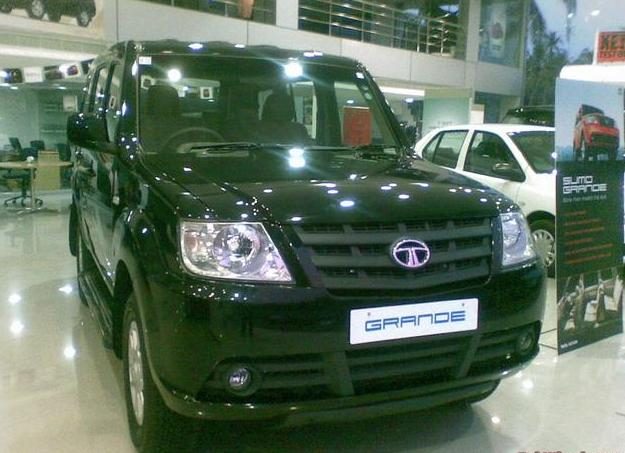
Tata Sumo Grande
A different vehicle from the Sumo, and Tata renamed it in 2014 to stop people confusing the two. It was drawn as the Sumo's replacement — the X2 ladder frame revised, a body designed in the UK, the Xenon's double-wishbone front suspension — and then the old Sumo outsold it on price and stayed in production beside it for eight years. The two ran in parallel under one name, which is why this is a page of its own and not a second generation of that one.
The engine is the difference that matters with a scan tool in your hand. The Sumo of 1994 is built around mechanical indirect-injection diesels and sets very few codes, so diagnosis there is compression, timing and fuel delivery. This car has the 2.2 DiCOR — a PSA DW12 common-rail with a variable-geometry turbocharger and a 32-bit ECU — so it reads normally, and anyone arriving with the Sumo's reputation for being undiagnosable will spend the first hour looking for the wrong thing.
Three names, one car. Sumo Grande to 2010, Sumo Grande MK II after it, plain Tata Grande from 2011, and Tata Movus from 2014 until production ended in 2016. The Movus changed the trim, the colour range and the bumpers and left the mechanicals alone, so a Movus is diagnosed as a Sumo Grande and parts lists cross over.
It shares the X2 platform and much of its running gear with the Safari, the Aria and the Xenon pickup, which is where to look when nothing useful is published under this name — and a great deal more is published under the Safari's.

Generations
-
First generation 2008–2016
The common-rail Sumo that never replaced the Sumo — sold beside it for eight years and renamed Movus in 2014 to stop the confusion.
- Body styles
- SUV
- Platform
- Tata X2
- Engines
-
- 2.2 DICOR — DW12 · diesel · 88 kW (118 hp) · 250 Nm (184 lb-ft) · the PSA `DW12` as Tata built it — a variable-geometry turbocharger and a 32-bit ECU, which is what makes this car diagnosable where the Sumo of 1994 is not. en.wikipedia's Sumo Grande spec table gives 120 PS at 4,000 and 250 Nm at 1,500, which is exactly the pair this row already carried; both readings are en.wikipedia, so that is one tree agreeing with itself rather than a second source. Later cars wear the `VariCOR` badge instead and it is the same engine
- Transmissions
- 5-speed manual
- Drivetrain
- Rear-wheel drive
Information, not instruction
CarGeek is a reference, not a service manual. Its pages are written from public sources and from what other people have found, never from a manufacturer's own service information, so they can be wrong or incomplete for your particular vehicle. Some of what they describe carries real risk: high voltage, fuel under pressure, stored energy, hot and moving parts.
Have anything you intend to act on checked by a trained person against the manufacturer's own procedure for your vehicle. Nothing here replaces that procedure.
Posted about the Tata Sumo Grande
Be the first to write this up
Nothing posted about this yet. Whatever you found is worth writing down — even a dead end saves someone the same afternoon.
What makes one worth reading:
- The car — make, model, year and engine. The same fault behaves differently on each.
- What you measured, not only what you replaced.
- What actually fixed it — or that nothing did, which is worth knowing too.
Sign in or create an account to add what you found about Tata Sumo Grande.