Vehicle
Tesla Cybertruck
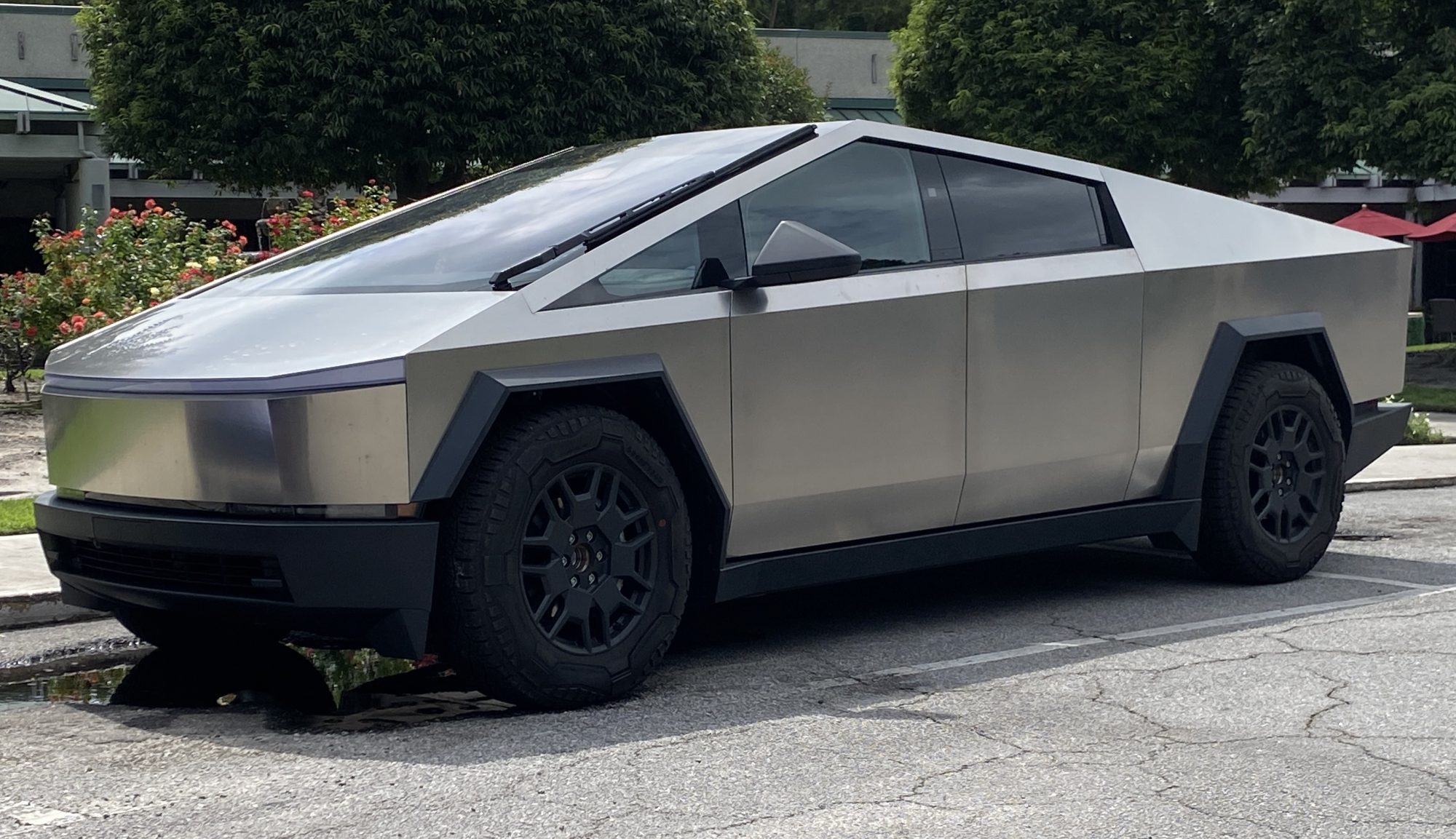
The pickup, and structurally unlike anything else in this catalogue: an exoskeleton of cold-rolled stainless steel carrying load rather than a painted body over a frame, so panel damage is a structural question and ordinary bodyshop technique does not apply. It is also Tesla's first 48-volt low-voltage architecture — where every other vehicle here uses 12 volts for its accessories — and it uses steer-by-wire with no mechanical column. Both change what a low-voltage or steering fault even means.

Generations
-
First generation 2023–present
A stainless exoskeleton, a 48-volt accessory system and steer-by-wire — three departures from everything else here at once.
- Body styles
- Pickup
- Platform
- Tesla Cybertruck
- Engines
-
- 123 kWh electric — electric
- Transmissions
- Single-speed reduction · Single-speed fixed
- Drivetrain
- Rear-wheel drive · Four-wheel drive
Information, not instruction
CarGeek is a reference, not a service manual. Its pages are written from public sources and from what other people have found, never from a manufacturer's own service information, so they can be wrong or incomplete for your particular vehicle. Some of what they describe carries real risk: high voltage, fuel under pressure, stored energy, hot and moving parts.
Have anything you intend to act on checked by a trained person against the manufacturer's own procedure for your vehicle. Nothing here replaces that procedure.
Posted about the Tesla Cybertruck
Be the first to write this up
Nothing posted about this yet. Whatever you found is worth writing down — even a dead end saves someone the same afternoon.
What makes one worth reading:
- The car — make, model, year and engine. The same fault behaves differently on each.
- What you measured, not only what you replaced.
- What actually fixed it — or that nothing did, which is worth knowing too.
Sign in or create an account to add what you found about Tesla Cybertruck.