P0141: a heater circuit code starts at the fuse box, not the exhaust
Check the fuse first, genuinely first. On many cars the O2 heaters share a fuse with other consumers, and a blown one takes several heater circuits down at once — two heater codes together is practically a fuse announcement.
The connector on a downstream sensor lives in one of the harshest spots on the car: under the floor, behind the catalyst, in the splash zone. Green crust on the pins or a melted plug that sagged onto the exhaust are both common enough to check before any electrical theory.
The sensor's own element is a resistance check: heater pins (usually the two same-coloured wires), and you are expecting single-digit to low-teens ohms depending on spec. Open circuit means the element is gone; that is the one outcome where a new sensor is the fix.
Worth knowing about urgency: the engine runs normally with this code — the downstream sensor does not steer fuelling. What suffers is monitoring: the catalyst check cannot run, readiness never completes, and an inspection will fail on "not ready" long before anything else. Cheap code, but not one to ignore in inspection season.
Archivos adjuntos
-
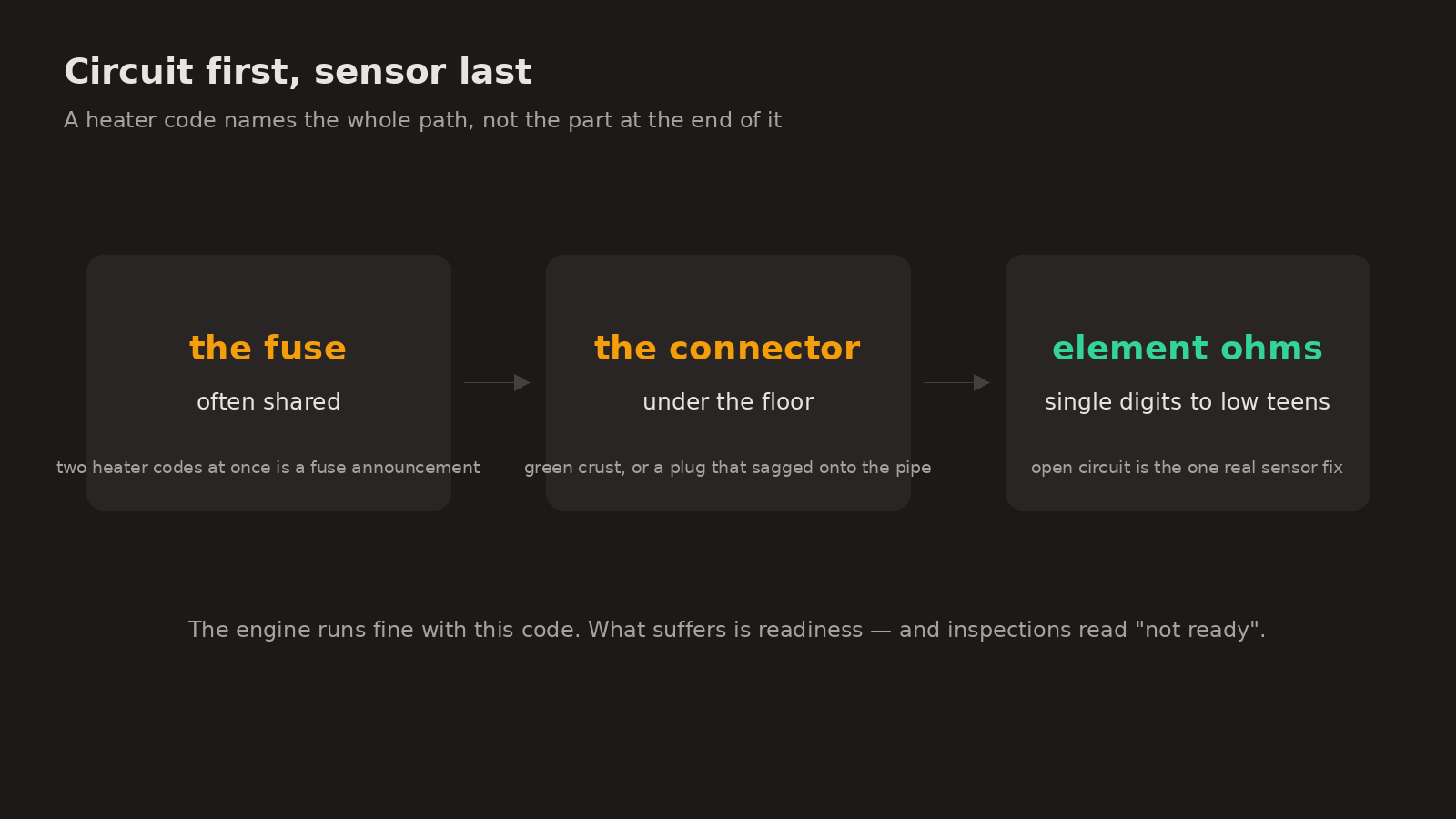
Diagram: the order for an oxygen sensor heater circuit code — fuse, then the underfloor connector, then the heater element's resistance.
Información, no instrucciones
CarGeek es una obra de referencia, no un manual de taller. Sus páginas se escriben a partir de fuentes públicas y de lo que otras personas han comprobado, nunca a partir de la documentación de servicio del fabricante, de modo que pueden ser incorrectas o incompletas para su vehículo concreto. Parte de lo que describen entraña un riesgo real: alta tensión, combustible a presión, energía acumulada y piezas calientes o en movimiento.
Antes de actuar sobre cualquier indicación, hágala verificar por una persona con formación técnica siguiendo el procedimiento propio del fabricante para su vehículo. Nada de lo que hay aquí sustituye ese procedimiento.