خودرو
Iran Khodro Bardo
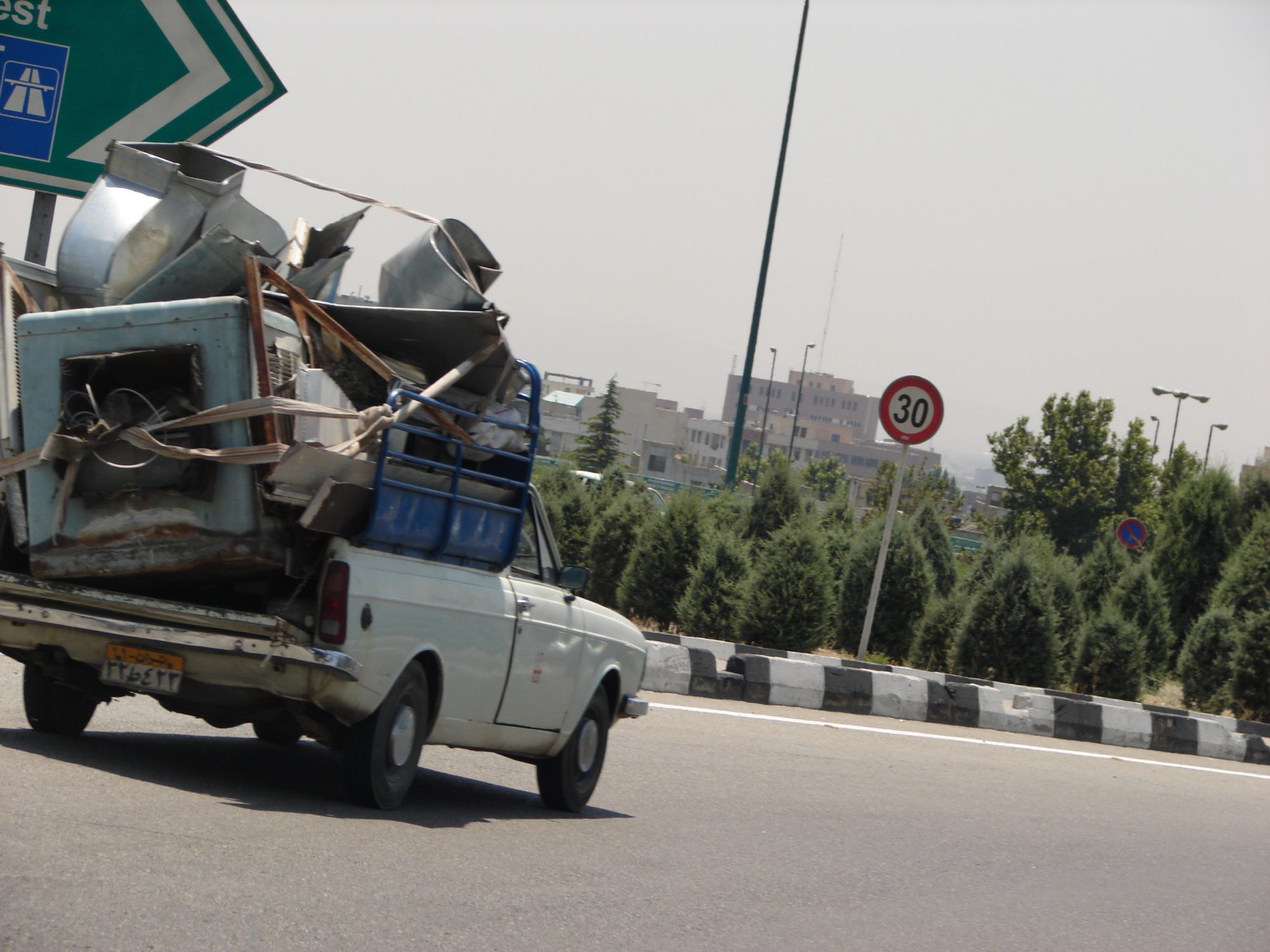
The Paykan with a load bed, and it outlived the saloon by ten years. Built from 1969 to 2014 — forty-five years, one body — it is mechanically a Paykan forward of the cab, on the same Rootes Arrow floorpan with the same pushrod engine and the same rear-wheel drive. Anything written about a Paykan saloon's engine, gearbox, front suspension or steering applies here, which matters because far more has been written about the saloon and because nothing at all has been written in English about either.
The name changed in 2006 and so did the engine. It was sold as the Paykan Vanet until Iran Khodro fitted the Roa's engine and renamed it Bardo; a second engine change followed near the end of production. The two are the OHV and the OHVG2, and the G2 is the version arranged to run on compressed natural gas as well as petrol — different valve seats, different ignition timing, a different maintenance schedule. The badge does not say which is fitted and the year is what decides it.
It is a pushrod engine in a vehicle sold into the 2010s, which is the single most useful thing to know before opening one: no camshaft in the head, valve clearances set mechanically with a feeler gauge, and service intervals from an older era. Treat a modern fault tree with suspicion — much of what it assumes is not fitted.
Its replacement shares nothing with it. The Arisun that took over in 2014 is a Peugeot 405 underneath, front-wheel drive, with a transverse engine. Parts, procedures and fault experience do not carry across in either direction, and the two are easy to confuse because they did the same job for the same buyers.

نسلها
-
First generation 1969–2014
The Paykan pickup, on the Rootes Arrow floorpan. Sold as the Paykan Vanet until 2006, when it took the Roa's engine and the Bardo name.
- انواع بدنه
- Pickup
- پلتفرم
- Rootes Arrow
- موتورها
-
- 1.6 — OHV · petrol · 60 kW (80 hp) · 135 Nm (100 lb-ft) · the Peykan's Rootes-derived pushrod engine in the pickup, and 135 Nm at 3,000 held on two sources that do not share an ancestor. car.ir states it for the Bardo itself; khodrobank carries no Bardo page at all, so the second reading is en.wikipedia's Peugeot Roa, which gives the Rootes 1.6 OHV 61 kW and 135 Nm at 3,000 in the saloon. **The bracket convention that article uses was checked rather than assumed** — it writes `[135] (140) Nm ... [1600cc] (1700cc)`, and the 140 it assigns the 1700 is the figure the Bardo's own 1.7 row already holds from the Arisun, so the pairing is confirmed against a figure this catalogue sourced separately. Three of that article's translations read the brackets wrongly and label the 1600's output as the 1700's
- 1.7 — OHVG2 · petrol · 64 kW (86 hp) · 140 Nm (103 lb-ft) · the Roa's engine, fitted from 2006; the G2 is the bi-fuel-capable version. 86 hp at 5,250 and 140 Nm at 3,000 — the same pair the Arisun publishes, because it is the same engine
- گیربکسها
- 4-speed manual
- سیستم انتقال قدرت
- Rear-wheel drive
اطلاعات سرویس و تعمیر
اطلاعات است، نه دستورالعمل
سایت CarGeek یک مرجع است، نه دفترچه تعمیرگاهی. صفحههای آن از منابع عمومی و از آنچه دیگران تجربه کردهاند نوشته میشود، نه از مستندات سرویس خودِ سازنده؛ بنابراین ممکن است برای خودروی خاص شما نادرست یا ناقص باشد. بخشی از آنچه شرح داده میشود خطر واقعی دارد: ولتاژ بالا، سوخت تحت فشار، انرژی ذخیرهشده و قطعات داغ یا متحرک.
هر چیزی را که میخواهید بر اساس آن اقدام کنید، نخست فردی آموزشدیده بر پایه دستورالعمل خودِ سازنده برای خودروی شما بررسی کند. هیچچیز در اینجا جایگزین آن دستورالعمل نیست.
نوشتهشده دربارهٔ Iran Khodro Bardo
نخستین کسی باشید که این را مینویسد
هنوز چیزی دربارهٔ این نوشته نشده است. هر چه یافتهاید ارزش نوشتن دارد — حتی یک بنبست هم یک بعدازظهر را برای کسی نجات میدهد.
چه چیزی آن را خواندنی میکند:
- خودرو — برند، مدل، سال و موتور. یک خرابی روی هر کدام رفتار متفاوتی دارد.
- چه چیزی را اندازه گرفتید، نه فقط چه چیزی را عوض کردید.
- در واقع چه چیزی آن را درست کرد — یا اینکه هیچچیز درستش نکرد، که دانستنش هم ارزش دارد.
ورود یا حساب کاربری بسازید تا آنچه پیدا کردهاید را اضافه کنید — دربارهٔ Iran Khodro Bardo.