Fahrzeug
Iran Khodro Bardo
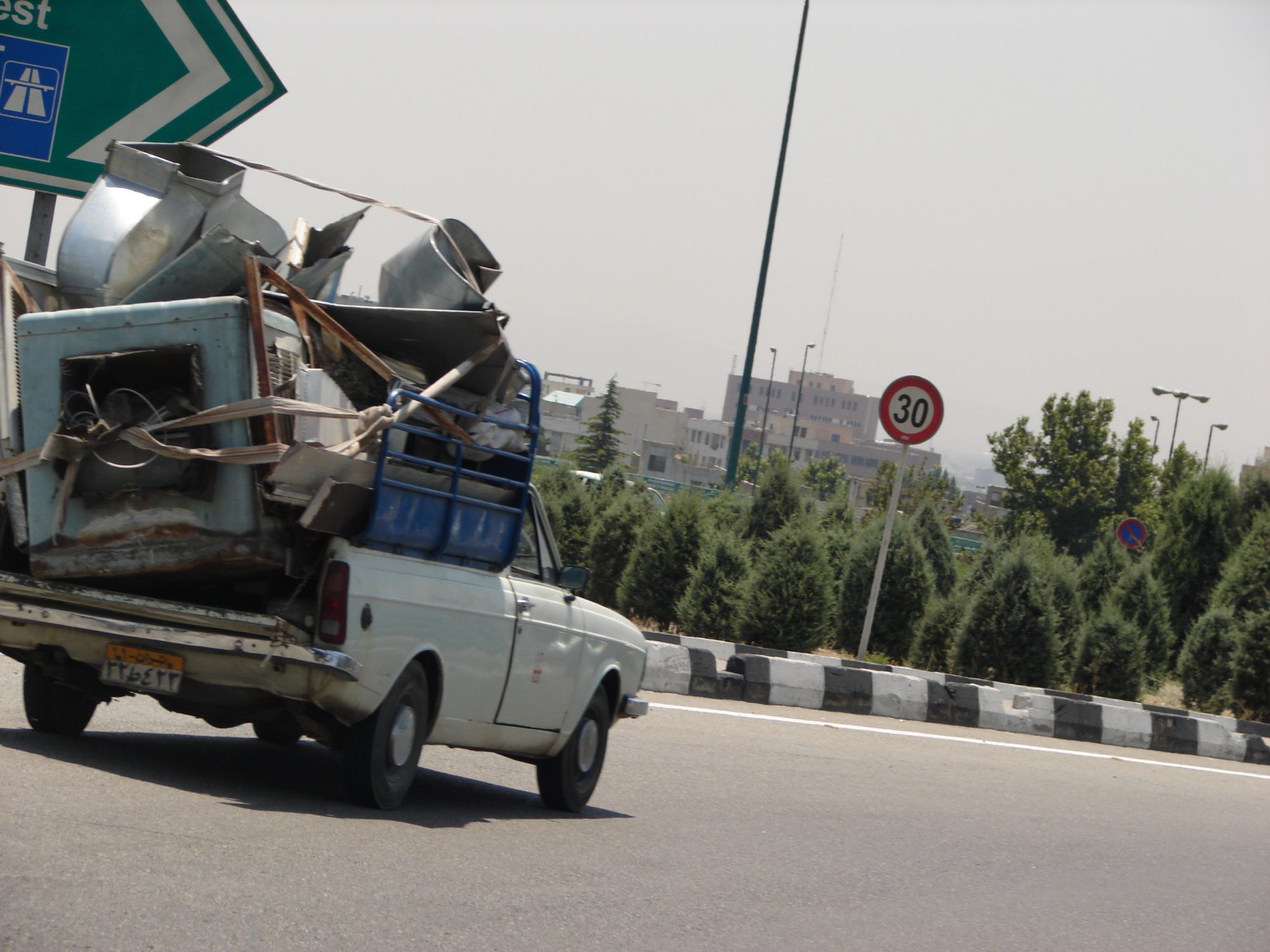
The Paykan with a load bed, and it outlived the saloon by ten years. Built from 1969 to 2014 — forty-five years, one body — it is mechanically a Paykan forward of the cab, on the same Rootes Arrow floorpan with the same pushrod engine and the same rear-wheel drive. Anything written about a Paykan saloon's engine, gearbox, front suspension or steering applies here, which matters because far more has been written about the saloon and because nothing at all has been written in English about either.
The name changed in 2006 and so did the engine. It was sold as the Paykan Vanet until Iran Khodro fitted the Roa's engine and renamed it Bardo; a second engine change followed near the end of production. The two are the OHV and the OHVG2, and the G2 is the version arranged to run on compressed natural gas as well as petrol — different valve seats, different ignition timing, a different maintenance schedule. The badge does not say which is fitted and the year is what decides it.
It is a pushrod engine in a vehicle sold into the 2010s, which is the single most useful thing to know before opening one: no camshaft in the head, valve clearances set mechanically with a feeler gauge, and service intervals from an older era. Treat a modern fault tree with suspicion — much of what it assumes is not fitted.
Its replacement shares nothing with it. The Arisun that took over in 2014 is a Peugeot 405 underneath, front-wheel drive, with a transverse engine. Parts, procedures and fault experience do not carry across in either direction, and the two are easy to confuse because they did the same job for the same buyers.

Generationen
-
First generation 1969–2014
The Paykan pickup, on the Rootes Arrow floorpan. Sold as the Paykan Vanet until 2006, when it took the Roa's engine and the Bardo name.
- Karosserieformen
- Pickup
- Plattform
- Rootes Arrow
- Motoren
-
- 1.6 — OHV · petrol · 60 kW (80 hp) · 135 Nm (100 lb-ft) · the Peykan's Rootes-derived pushrod engine in the pickup, and 135 Nm at 3,000 held on two sources that do not share an ancestor. car.ir states it for the Bardo itself; khodrobank carries no Bardo page at all, so the second reading is en.wikipedia's Peugeot Roa, which gives the Rootes 1.6 OHV 61 kW and 135 Nm at 3,000 in the saloon. **The bracket convention that article uses was checked rather than assumed** — it writes `[135] (140) Nm ... [1600cc] (1700cc)`, and the 140 it assigns the 1700 is the figure the Bardo's own 1.7 row already holds from the Arisun, so the pairing is confirmed against a figure this catalogue sourced separately. Three of that article's translations read the brackets wrongly and label the 1600's output as the 1700's
- 1.7 — OHVG2 · petrol · 64 kW (86 hp) · 140 Nm (103 lb-ft) · the Roa's engine, fitted from 2006; the G2 is the bi-fuel-capable version. 86 hp at 5,250 and 140 Nm at 3,000 — the same pair the Arisun publishes, because it is the same engine
- Getriebe
- 4-speed manual
- Antrieb
- Rear-wheel drive
Serviceinformationen
Information, keine Handlungsanweisung
CarGeek ist ein Nachschlagewerk, kein Werkstatthandbuch. Die Seiten entstehen aus öffentlichen Quellen und aus dem, was andere festgestellt haben, nie aus den Serviceunterlagen des Herstellers; für Ihr konkretes Fahrzeug können sie daher falsch oder unvollständig sein. Ein Teil des Beschriebenen birgt echte Gefahren: Hochspannung, Kraftstoff unter Druck, gespeicherte Energie sowie heiße oder bewegte Teile.
Lassen Sie alles, wonach Sie handeln wollen, von einer fachlich geschulten Person anhand der herstellereigenen Vorgehensweise für Ihr Fahrzeug prüfen. Nichts hiervon ersetzt diese Vorgehensweise.
Beiträge zum Iran Khodro Bardo
Schreiben Sie den ersten Erfahrungsbericht dazu
Dazu wurde noch nichts veröffentlicht. Was immer Sie gefunden haben, ist es wert, aufgeschrieben zu werden — selbst eine Sackgasse erspart jemandem denselben Nachmittag.
Was einen Bericht lesenswert macht:
- Das Fahrzeug — Marke, Modell, Baujahr und Motor. Derselbe Fehler verhält sich auf jedem anders.
- Was Sie gemessen haben, nicht nur, was Sie getauscht haben.
- Was es tatsächlich behoben hat — oder dass nichts es behoben hat, was ebenso nützlich ist.
Anmelden oder ein Konto anlegen und eintragen, was Sie gefunden haben — zu Iran Khodro Bardo.