P0442: the small leak that survives the cap check
CA
@cargeek
1 month ago
P0442 is the EVAP system finding a small leak — and small is the operative word. Where the large-leak code usually surrenders to the fuel cap, this one is reported for openings in the region of a millimetre, which is why the cap trick fixes it less often and why it has a reputation for coming back.
Still check the cap first — the seal, not just the tightness. A hairline crack in the rubber is exactly a small leak. But when the code returns, the realistic suspects are: the filler neck's sealing lip (corrosion pits on older cars), EVAP hoses cracked where they flex, the purge valve not sealing when commanded shut, and the vent valve doing the same.
This is the code where a smoke test earns its money. A leak too small to hear or feel shows up as a thin ribbon of smoke in still air, and workshops find in fifteen minutes what parts-swapping approaches over months. If you are quoted for one, that is money better spent than the first guessed part.
One habit worth adopting either way: stop topping off the tank after the pump clicks. On many cars the extra fuel reaches the charcoal canister, and a fuel-soaked canister produces exactly this family of codes.
Still check the cap first — the seal, not just the tightness. A hairline crack in the rubber is exactly a small leak. But when the code returns, the realistic suspects are: the filler neck's sealing lip (corrosion pits on older cars), EVAP hoses cracked where they flex, the purge valve not sealing when commanded shut, and the vent valve doing the same.
This is the code where a smoke test earns its money. A leak too small to hear or feel shows up as a thin ribbon of smoke in still air, and workshops find in fifteen minutes what parts-swapping approaches over months. If you are quoted for one, that is money better spent than the first guessed part.
One habit worth adopting either way: stop topping off the tank after the pump clicks. On many cars the extra fuel reaches the charcoal canister, and a fuel-soaked canister produces exactly this family of codes.
Attachments
-
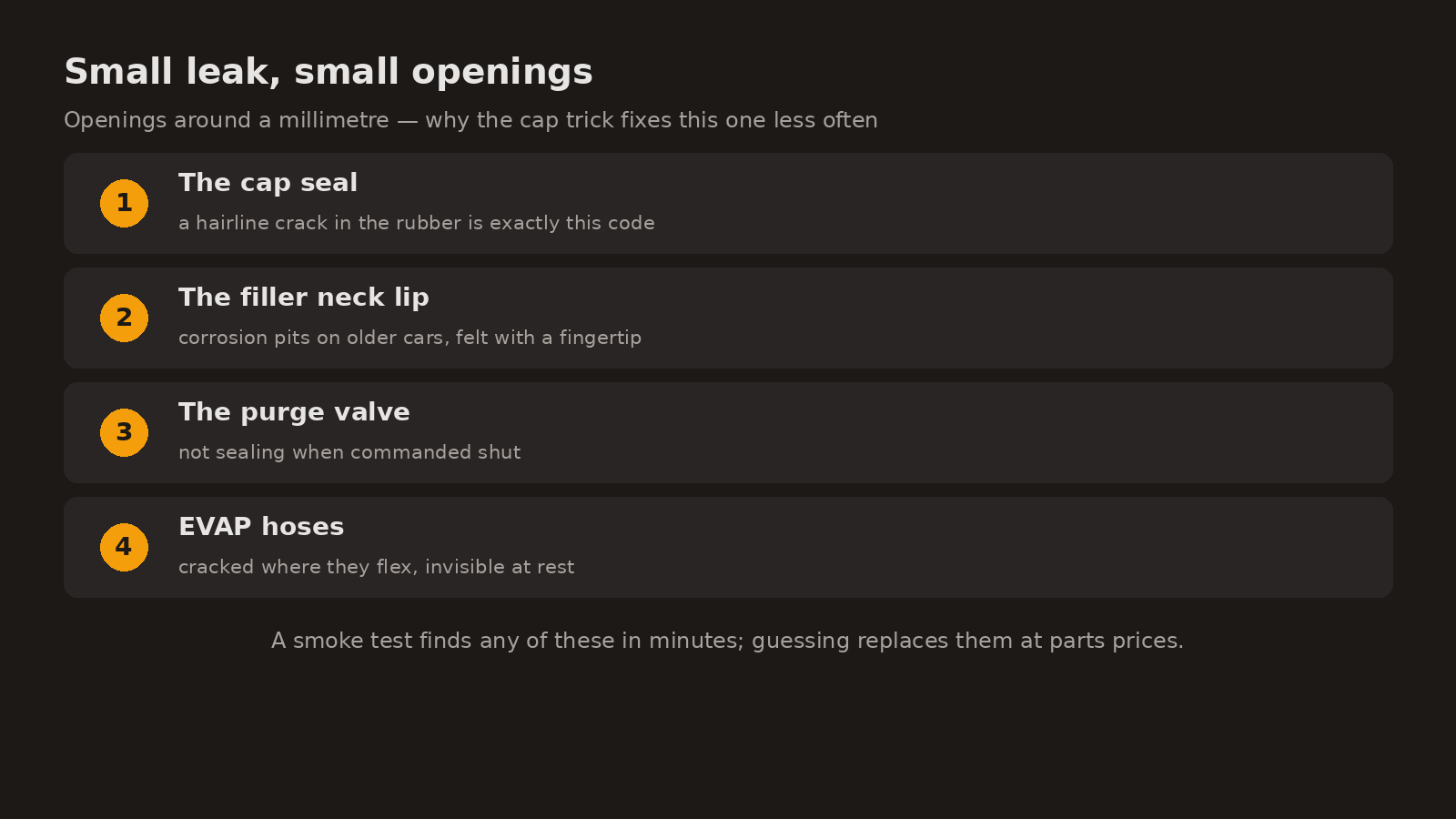
Diagram: the four usual homes of a small EVAP leak — cap seal, filler neck lip, purge valve, and hoses cracked where they bend.
Information, not instruction
CarGeek is a reference, not a service manual. Its pages are written from public sources and from what other people have found, never from a manufacturer's own service information, so they can be wrong or incomplete for your particular vehicle. Some of what they describe carries real risk: high voltage, fuel under pressure, stored energy, hot and moving parts.
Have anything you intend to act on checked by a trained person against the manufacturer's own procedure for your vehicle. Nothing here replaces that procedure.