Vehicle
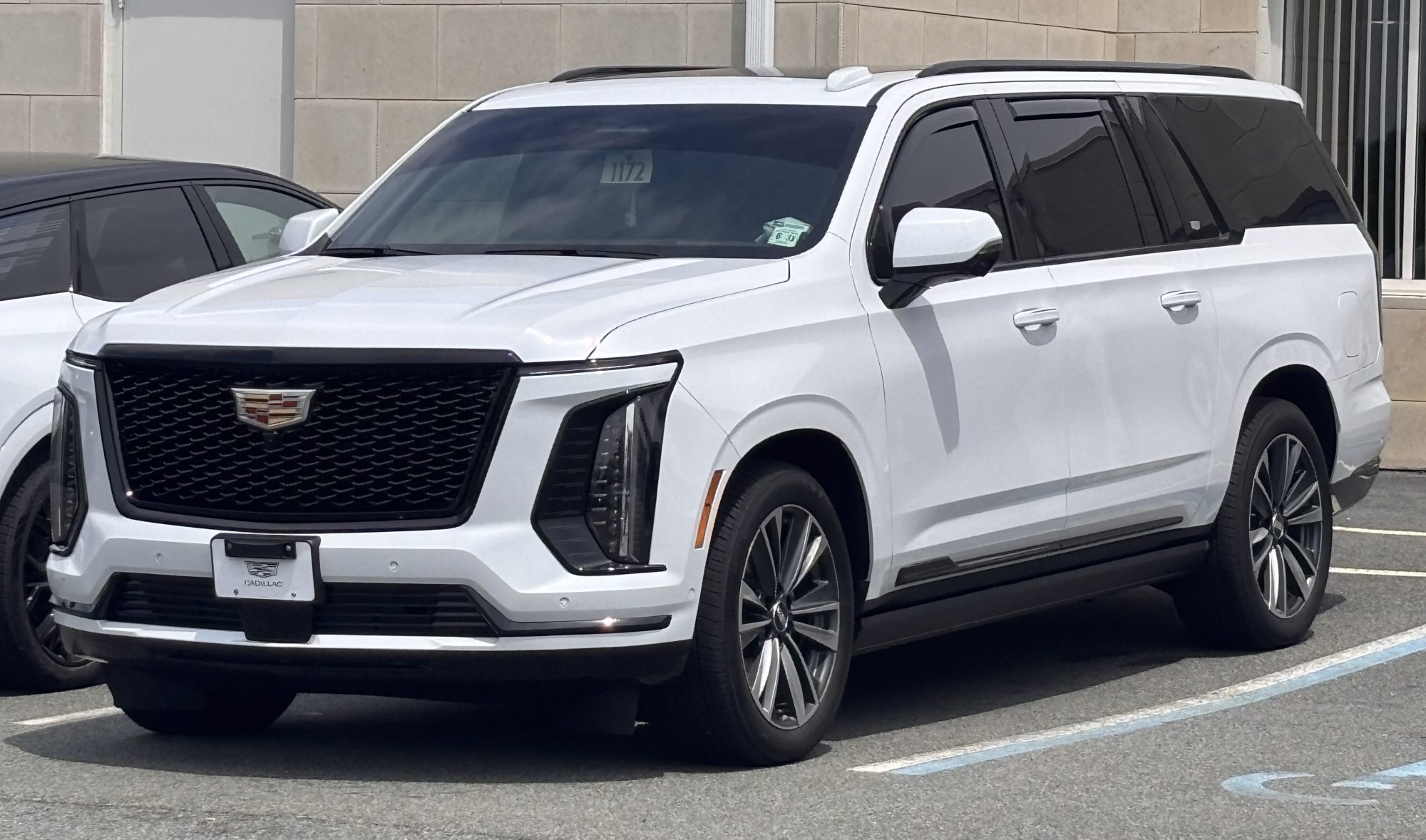
Cadillac Escalade
The full-size SUV, and mechanically a Chevrolet Tahoe with a longer options list — which is where the far larger body of information lives. Two systems are its own: Magnetic Ride Control, whose dampers are electronically controlled and store their own faults, and air suspension on most trims. Neither has anything to do with the drivetrain, and both are where a ride complaint belongs.

Generations
-
GMT800 1999–2006
The Tahoe and Yukon underneath, so their information covers the powertrain; the rear air suspension is where the Escalade-specific faults begin.
- Body styles
- SUV
- Platform
- GM GMT800
- Engines
-
- 5.3 V8 — LM7 · petrol · 213–220 kW (286–295 hp) · 441–454 Nm (325–335 lb-ft)
- 6.0 V8 — LQ9 · petrol · 257 kW (345 hp) · 515 Nm (380 lb-ft)
- 5.7 — L31 · petrol · 190 kW (255 hp) · 8-cylinder, US market 1999-2000
- Transmissions
- 4-speed 4L60-E automatic · 4-speed 4L65-E automatic
- Drivetrain
- Rear-wheel drive · Four-wheel drive
-
GMT900 2006–2014
6.2 V8 with cylinder deactivation; the era the lifter question belongs to.
- Body styles
- SUV
- Platform
- GMT900
- Engines
-
- 6.2 V8 — petrol · 301 kW (404 hp)
- 6.0 V8 hybrid — hybrid
- Transmissions
- 6-speed 6L80 automatic
- Drivetrain
- Rear-wheel drive · Four-wheel drive
-
K2XX 2014–2020
Magnetic Ride standard on most; eight- and ten-speed automatics late in the run.
- Body styles
- SUV
- Platform
- GM K2XX
- Engines
-
- 6.2 V8 — L86 · petrol · 301–313 kW (404–420 hp) · 624 Nm (460 lb-ft)
- Transmissions
- 10-speed automatic · 6-speed GM 6L80 automatic · 8-speed GM 8L90 automatic
- Drivetrain
- Rear-wheel drive · Four-wheel drive
-
T1XX 2020–present
Independent rear suspension for the first time, and a diesel straight-six option.
- Body styles
- SUV
- Platform
- GM T1XX
- Engines
-
- 6.2 V8 — L87 · petrol · 306–313 kW (410–420 hp) · 624 Nm (460 lb-ft)
- 3.0 Duramax straight-six — diesel · 207 kW (278 hp) · 624 Nm (460 lb-ft)
- 6.2 supercharged V8 — LT4 · petrol · 509 kW (682 hp) · 885 Nm (653 lb-ft) · Escalade-V
- Transmissions
- 10-speed automatic
- Drivetrain
- Rear-wheel drive · Four-wheel drive
Information, not instruction
CarGeek is a reference, not a service manual. Its pages are written from public sources and from what other people have found, never from a manufacturer's own service information, so they can be wrong or incomplete for your particular vehicle. Some of what they describe carries real risk: high voltage, fuel under pressure, stored energy, hot and moving parts.
Have anything you intend to act on checked by a trained person against the manufacturer's own procedure for your vehicle. Nothing here replaces that procedure.
Posted about the Cadillac Escalade
Be the first to write this up
Nothing posted about this yet. Whatever you found is worth writing down — even a dead end saves someone the same afternoon.
What makes one worth reading:
- The car — make, model, year and engine. The same fault behaves differently on each.
- What you measured, not only what you replaced.
- What actually fixed it — or that nothing did, which is worth knowing too.
Sign in or create an account to add what you found about Cadillac Escalade.