P0500: check where your car gets its speed from before buying a sensor
The symptoms around the code are the clue. Speedometer dead too? On cars where the cluster reads the same sensor, that points at the sensor or its wiring. Speedo fine but P0500 stored? The cluster may be fed separately — now suspect the wiring between modules, or the message not arriving over the network rather than the sensor itself.
The knock-on effects are why this code should not wait: automatic gearboxes shift by road speed, so a missing signal produces harsh or late shifts that feel like a transmission problem; cruise control disables itself; some ABS/ESP systems degrade.
With a scanner: watch the vehicle speed PID against a GPS app while someone else drives. Reading zero while moving confirms the signal is missing at the ECU. On older cars with a gearbox-mounted sensor, check the sensor's drive gear too — plastic teeth strip, and a stripped gear takes out a brand-new sensor's reading exactly as thoroughly as a dead one.
Anexos
-
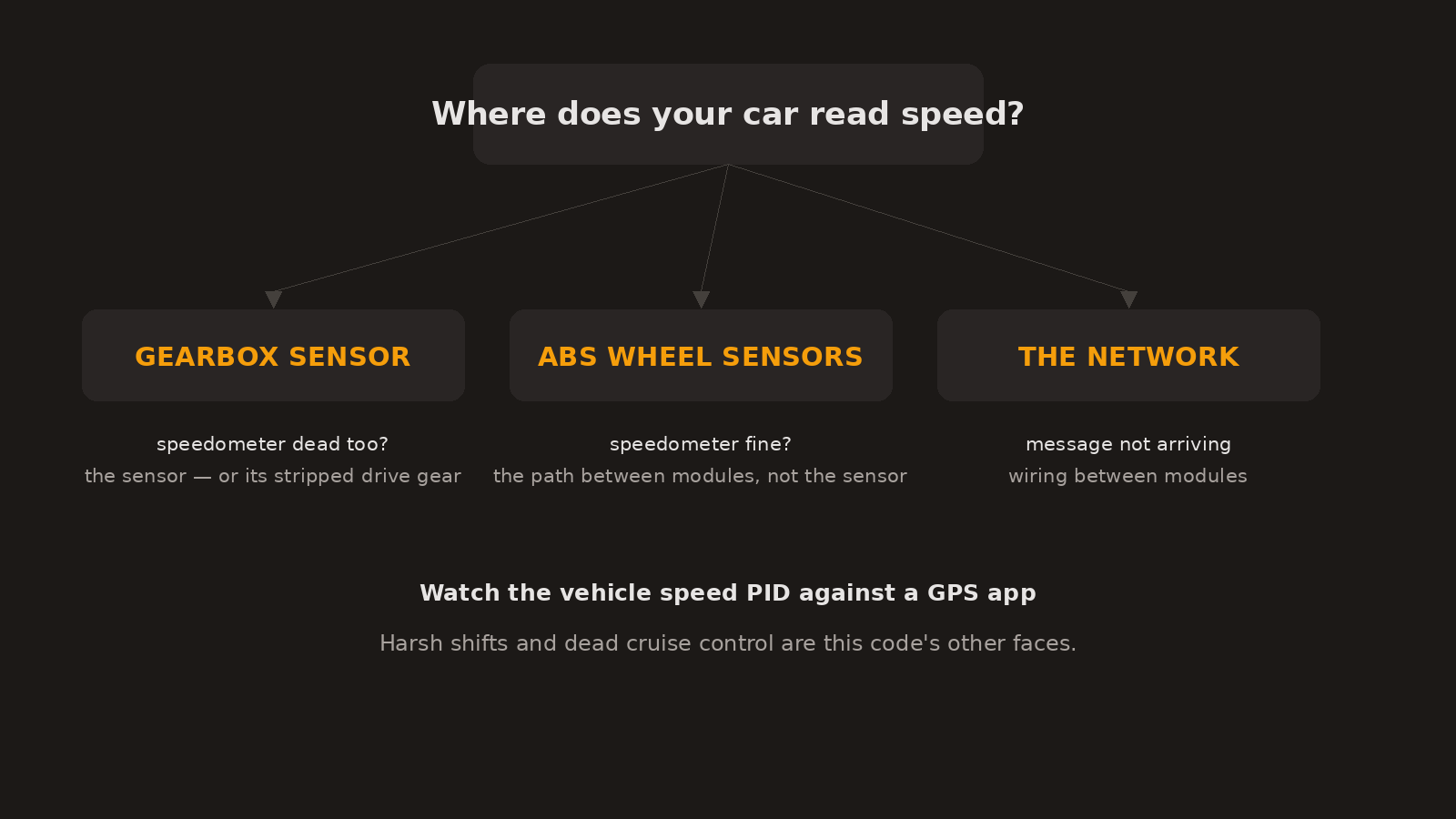
Diagram: the three places a car reads road speed from — a gearbox output sensor, the ABS wheel sensors, or the network between modules — and the symptom that points at each.
Informação, não instrução
O CarGeek é uma referência, não um manual de serviço. Suas páginas são escritas a partir de fontes públicas e do que outras pessoas constataram, nunca a partir da documentação de serviço do fabricante, de modo que podem estar erradas ou incompletas para o seu veículo específico. Parte do que descrevem envolve risco real: alta tensão, combustível sob pressão, energia acumulada e peças quentes ou em movimento.
Antes de agir com base em qualquer orientação, peça a verificação de uma pessoa com formação técnica, seguindo o procedimento do próprio fabricante para o seu veículo. Nada aqui substitui esse procedimento.