Vehicle
Acura Integra
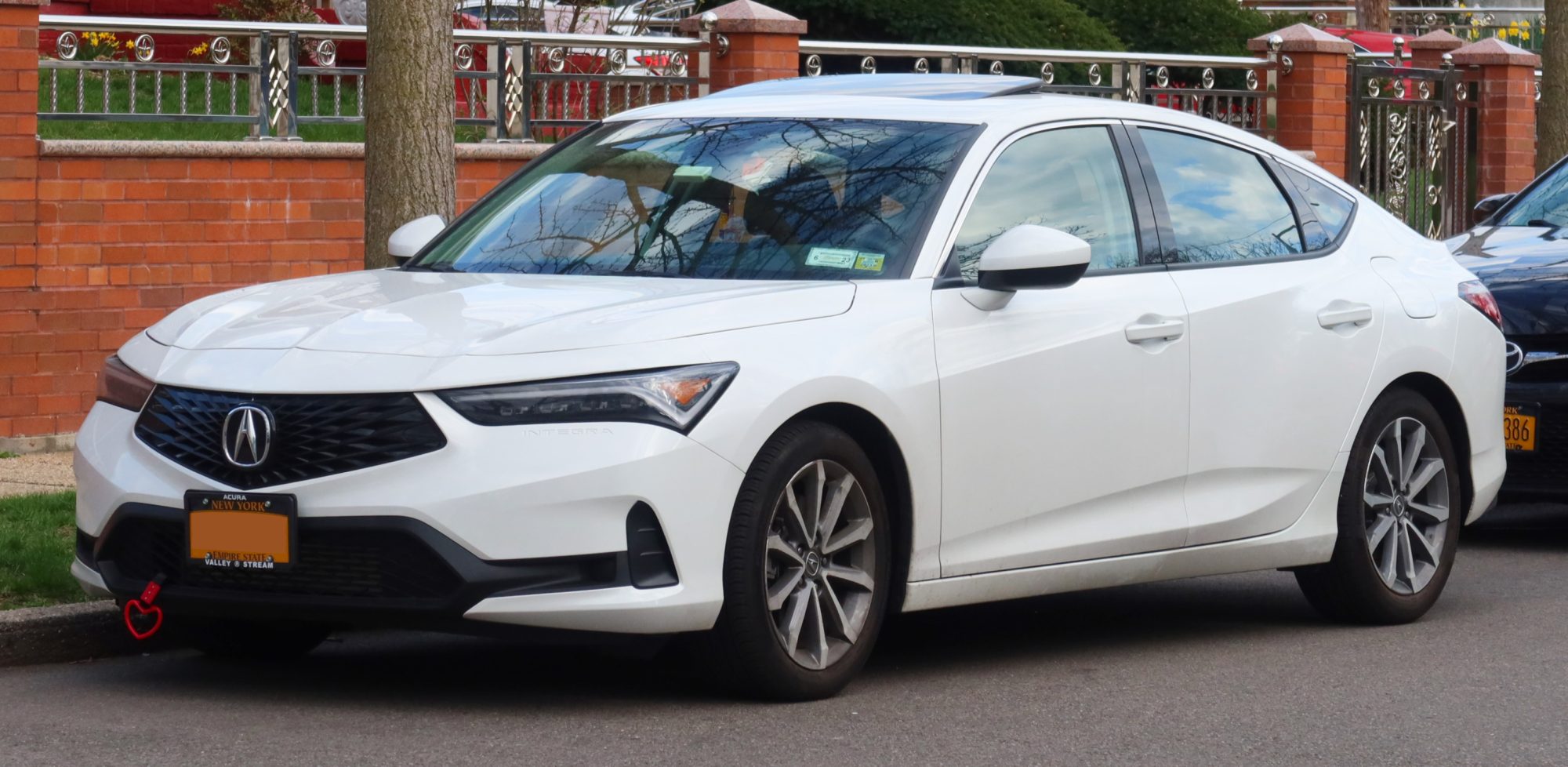
The compact car, revived in 2022 after two decades and mechanically a Honda Civic again. The older cars remain heavily modified in the enthusiast population, so a stored code on one is worth reading alongside what has been changed rather than as a description of a standard vehicle.

Generations
-
DA 1990–1993
The second-generation car on the B18A; still a double-wishbone chassis, and pre-OBD-II so a generic tool reaches little of it.
- Body styles
- Coupé · Sedan
- Platform
- Honda DA
- Engines
-
- 1.7 four-cylinder — B17A · petrol
- 1.8 four-cylinder — B18A · petrol
- 1.6 — petrol · DA5/DA7
- 1.6 — B16A · petrol · 150–157 Nm (111–116 lb-ft) · DA6/DA8
- Transmissions
- 5-speed manual · 4-speed automatic
- Drivetrain
- Front-wheel drive
-
DC2 and DB8 1994–2001
The B-series era, and the generation the Type R made famous; VTEC engagement is oil-pressure driven, so level and condition are diagnostic inputs.
- Body styles
- Coupé · Sedan
- Platform
- Honda DC
- Engines
-
- 1.8 four-cylinder — B18B1 · petrol
- 1.8 four-cylinder VTEC — B18C1 · petrol
- 1.6 — petrol · DB6, DB9, DC1
- Transmissions
- 5-speed manual · 4-speed automatic · 5-speed close-ratio manual
- Drivetrain
- Front-wheel drive
-
DC5 2001–2006
Sold as the Acura RSX in North America and the Honda Integra elsewhere — one car, three names, and heavily modified in the surviving population.
- Body styles
- Coupé
- Platform
- Honda Global Compact
- Engines
-
- 2.0 i-VTEC — petrol · K20A2 and K20Z1
- Transmissions
- 5-speed manual · 6-speed manual · 5-speed automatic
- Drivetrain
- Front-wheel drive
-
DE4 2022–present
The revived nameplate, mechanically a Honda Civic again.
- Body styles
- Liftback
- Platform
- Honda Global Compact
- Engines
-
- 1.5 turbo — L15CA · petrol · 149 kW (200 hp)
- 2.0 turbo Type S — K20C8 · petrol · 239 kW (320 hp)
- Transmissions
- 6-speed manual · CVT
- Drivetrain
- Front-wheel drive
Information, not instruction
CarGeek is a reference, not a service manual. Its pages are written from public sources and from what other people have found, never from a manufacturer's own service information, so they can be wrong or incomplete for your particular vehicle. Some of what they describe carries real risk: high voltage, fuel under pressure, stored energy, hot and moving parts.
Have anything you intend to act on checked by a trained person against the manufacturer's own procedure for your vehicle. Nothing here replaces that procedure.
Posted about the Acura Integra
Be the first to write this up
Nothing posted about this yet. Whatever you found is worth writing down — even a dead end saves someone the same afternoon.
What makes one worth reading:
- The car — make, model, year and engine. The same fault behaves differently on each.
- What you measured, not only what you replaced.
- What actually fixed it — or that nothing did, which is worth knowing too.
Sign in or create an account to add what you found about Acura Integra.