Vehicle
BMW 1 Series
The compact hatch, rear-driven until 2019 and front-driven since. Shares engines with the 3 Series, so the diagnostic knowledge transfers — check which generation before assuming layout.
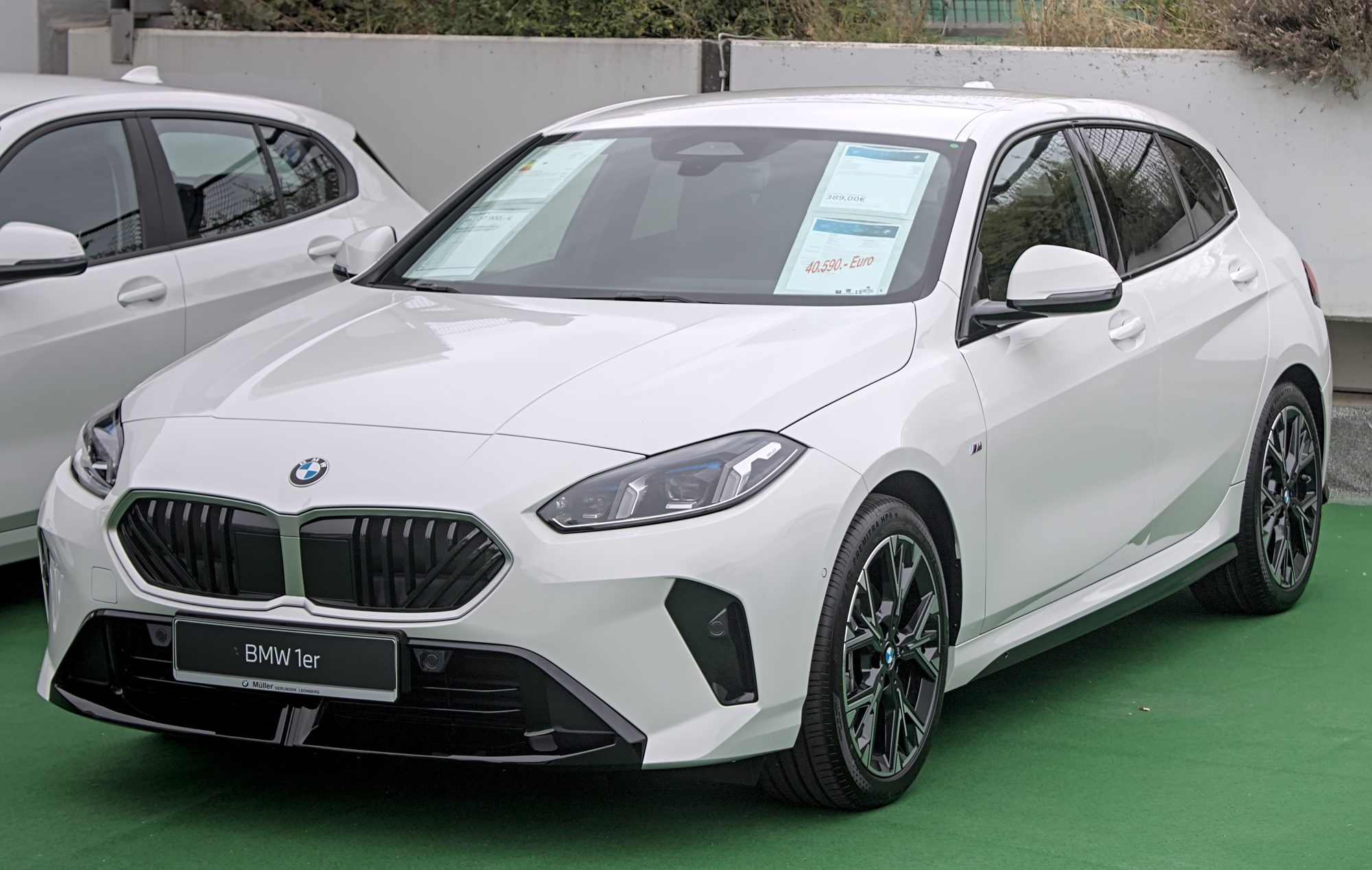
_Leonberg_2024_IMG_1068.jpg)
Generations
-
E87 2004–2013
Rear-driven, with the N47 diesel whose timing chain is the standing age fault of the period.
- Body styles
- Hatchback · Coupé · Convertible
- Platform
- E87
- Engines
-
- 1.6 / 2.0 four-cylinder — N43 · petrol · 85–125 kW (114–168 hp) · 160–210 Nm (118–155 lb-ft) · N43, N45 and N46
- 3.0 straight-six — N52 · petrol · 160–195 kW (215–261 hp) · 270–315 Nm (199–232 lb-ft)
- 3.0 turbo straight-six — N54 · petrol · 225–250 kW (302–335 hp) · 400–450 Nm (295–332 lb-ft) · 135i, N54 and N55
- 2.0d — M47 · diesel · 85–100 kW (114–134 hp) · 265–280 Nm (195–207 lb-ft) · M47 and N47
- 2.0 — N43 · petrol · 90–125 kW (121–168 hp) · 185–210 Nm (136–155 lb-ft)
- 3.0 turbo — N55 · petrol · 225 kW (302 hp) · 400 Nm (295 lb-ft)
- Transmissions
- 6-speed manual · 5-speed Manual · 6-speed ZF 6HP Automatic · 6-speed GM 6L45 automatic
- Drivetrain
- Rear-wheel drive
-
F20 2011–2019
Still rear-driven; N13/N20 petrol and N47/B47 diesel.
- B37 1.5 L
- B38 (1.2 and 1.5) 1.5 L
- B47 2.0 L
- B48 2.0 L
- B58 3.0 L
- N20 2.0 L
- N47 (1.6 and 2.0)
- N55 3.0 L
- Prince (EP6 / N13)
- Body styles
- Hatchback
- Platform
- BMW L7
- Engines
-
- 1.6 turbo — N13 · petrol · 100–125 kW (134–168 hp) · 220–250 Nm (162–184 lb-ft)
- N20 2.0 turbo — N20 · petrol · 310 Nm (229 lb-ft)
- B48 2.0 turbo — B48 · petrol · 270–310 Nm (199–229 lb-ft)
- N47/B47 2.0 — N47 · diesel · 85–165 kW (114–221 hp) · 260–450 Nm (192–332 lb-ft)
- 1.5 — B38 · petrol · 104–170 kW (139–228 hp) · 220–320 Nm (162–236 lb-ft)
- 3.0 — N55 · petrol · 225–272 kW (302–365 hp) · 400–500 Nm (295–369 lb-ft)
- 1.5 diesel — B37 · diesel · 70–85 kW (94–114 hp) · 270 Nm (199 lb-ft)
- 3.0 turbo — B58 · petrol · 250 kW (335 hp) · 500 Nm (369 lb-ft)
- Transmissions
- 6-speed manual · 8-speed automatic
- Drivetrain
- Rear-wheel drive · Four-wheel drive
-
F40 2019–present
Front-driven for the first time, on the UKL platform shared with the MINI — establish which layout before any driveline diagnosis.
- Body styles
- Hatchback
- Platform
- UKL2
- Engines
-
- 1.5 turbo three-cylinder — B38 · petrol · 104–170 kW (139–228 hp) · 220–320 Nm (162–236 lb-ft)
- 2.0 turbo four-cylinder — B48 · petrol · 131–225 kW (176–302 hp) · 280–450 Nm (207–332 lb-ft) · B48, 128ti and M135i
- 1.5d three-cylinder — B37 · diesel · 85 kW (114 hp) · 270 Nm (199 lb-ft)
- 2.0d — B47 · diesel · 110–140 kW (148–188 hp) · 350–400 Nm (258–295 lb-ft)
- Transmissions
- 7-speed dual-clutch · 6-speed Getrag manual · 8-speed Aisin AWF8F35 automatic
- Drivetrain
- Front-wheel drive · xDrive four-wheel drive
CAN data
Bus databases covering this vehicle, mirrored from the open-source opendbc project.
Service information
Information, not instruction
CarGeek is a reference, not a service manual. Its pages are written from public sources and from what other people have found, never from a manufacturer's own service information, so they can be wrong or incomplete for your particular vehicle. Some of what they describe carries real risk: high voltage, fuel under pressure, stored energy, hot and moving parts.
Have anything you intend to act on checked by a trained person against the manufacturer's own procedure for your vehicle. Nothing here replaces that procedure.
Posted about the BMW 1 Series
Be the first to write this up
Nothing posted about this yet. Whatever you found is worth writing down — even a dead end saves someone the same afternoon.
What makes one worth reading:
- The car — make, model, year and engine. The same fault behaves differently on each.
- What you measured, not only what you replaced.
- What actually fixed it — or that nothing did, which is worth knowing too.
Sign in or create an account to add what you found about BMW 1 Series.