Vehicle
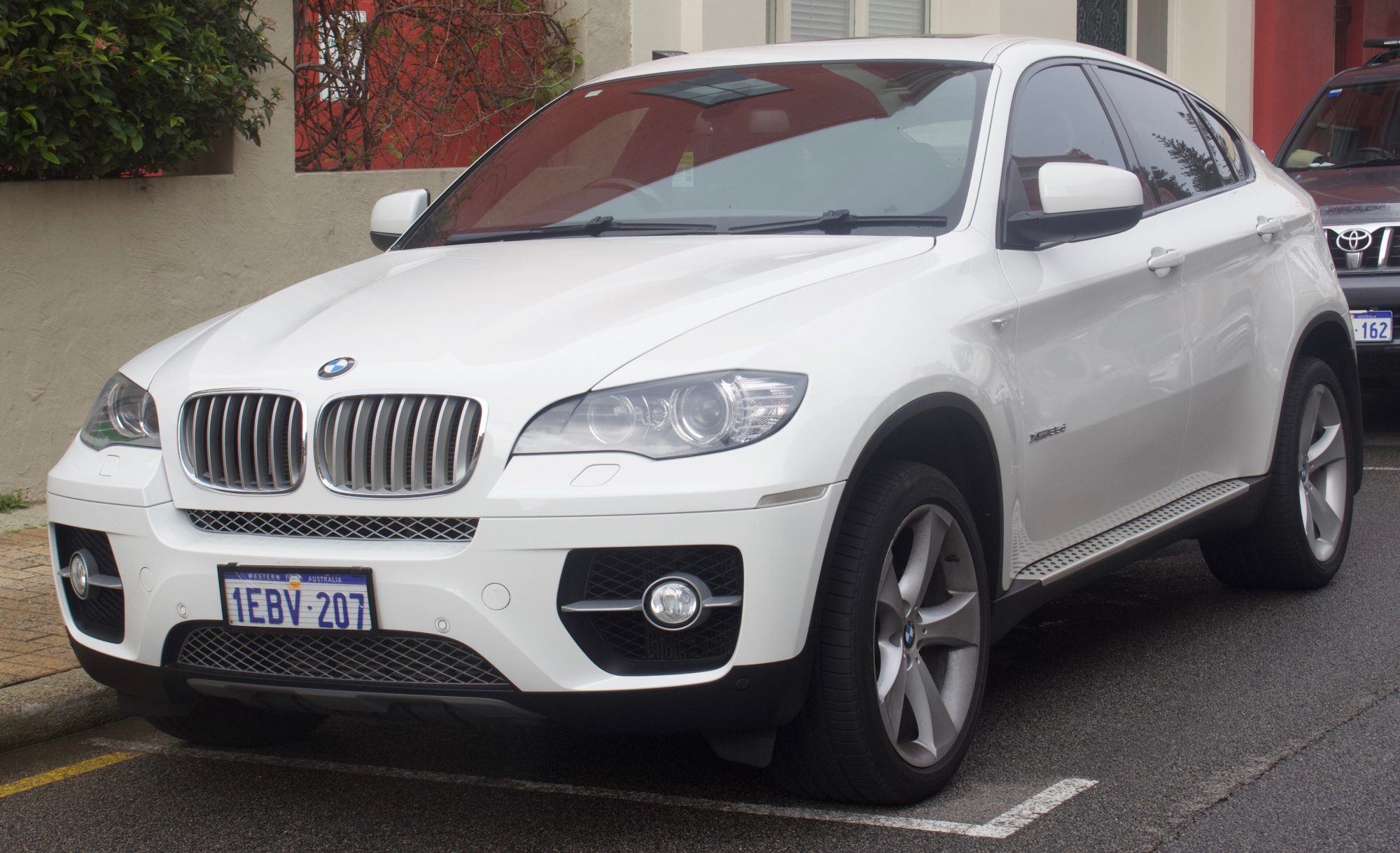
BMW X6
The coupé-bodied X5, and mechanically that car in almost every respect — X5 information applies to the powertrain and the chassis completely, which is the most useful thing to know since far more has been written under that name. The E71 is the interesting one: it was offered with Dynamic Performance Control, an active rear differential that vectors torque between the rear wheels with its own clutch packs and control unit, and its faults present as handling complaints and chassis codes rather than driveline ones.
_xDrive35d_wagon_(2018-09-03)_01.jpg)
Generations
-
E71 2008–2014
An E70 X5 with a coupé roof; the active rear differential is its own system and reports as a chassis fault when it misbehaves.
- Body styles
- SUV · Coupé
- Platform
- BMW E70
- Engines
-
- 3.0 turbo straight-six — petrol · 225 kW (302 hp) · 400 Nm (295 lb-ft) · N54 and N55
- 4.4 twin-turbo V8 — petrol · 408 kW (547 hp) · 680 Nm (502 lb-ft) · N63, and S63 in the X6 M
- 3.0d — diesel · 173–280 kW (232–375 hp) · 520–740 Nm (384–546 lb-ft) · M57 and N57
- 3.0 twin-turbo diesel — N57 · diesel · 180–225 kW (241–302 hp) · 540–600 Nm (398–443 lb-ft) · 35d
- Transmissions
- 6-speed automatic · 8-speed automatic · 7-speed automatic · 7-speed Two-mode Active ECVT
- Drivetrain
- xDrive four-wheel drive
-
F16 2014–2019
An F15 X5 with the coupé roof; the N63's turbocharger and valve-stem-seal history applies here unchanged.
- Body styles
- SUV · Coupé
- Platform
- BMW F15
- Engines
-
- 3.0 turbo straight-six — N55 · petrol · 225 kW (302 hp) · 400 Nm (295 lb-ft)
- 4.4 twin-turbo V8 — petrol · 408–423 kW (547–567 hp) · 650–750 Nm (479–553 lb-ft) · N63, and S63 in the X6 M
- 3.0d — N57 · diesel · 190–280 kW (255–375 hp) · 560–630 Nm (413–465 lb-ft)
- Transmissions
- 8-speed automatic
- Drivetrain
- xDrive four-wheel drive
-
G06 2019–present
CLAR with 48-volt assistance across the range; the hot-vee V8's oil feeds sit inside the vee, so a leak reads as a smell before it reads as a code.
- Body styles
- SUV · Coupé
- Platform
- BMW CLAR
- Engines
-
- 3.0 turbo straight-six mild hybrid — B58 · mild hybrid · 450–520 Nm (332–384 lb-ft)
- 3.0 d straight-six — B57 · mild hybrid · B57
- 4.4 twin-turbo V8 — N63 · mild hybrid · 300–390 kW (402–523 hp) · 600–750 Nm (443–553 lb-ft) · N63 and S63
- 2.0 turbo — B48 · petrol · 195 kW (261 hp) · 400 Nm (295 lb-ft)
- 2.0 turbo diesel — B47 · diesel · 85–170 kW (114–228 hp) · 270–500 Nm (199–369 lb-ft)
- 3.0 turbo straight-six diesel — B57 · diesel · 190–294 kW (255–394 hp) · 620–760 Nm (457–561 lb-ft)
- 4.4 turbo V8 — S63 · petrol · 408–460 kW (547–617 hp) · 680–750 Nm (502–553 lb-ft) · 2019–2023
- 4.4 turbo V8 — S68 · petrol · 390–460 kW (523–617 hp) · since 2023
- Transmissions
- 8-speed ZF automatic · 8-speed ZF 8HP automatic
- Drivetrain
- xDrive four-wheel drive
Service information
Information, not instruction
CarGeek is a reference, not a service manual. Its pages are written from public sources and from what other people have found, never from a manufacturer's own service information, so they can be wrong or incomplete for your particular vehicle. Some of what they describe carries real risk: high voltage, fuel under pressure, stored energy, hot and moving parts.
Have anything you intend to act on checked by a trained person against the manufacturer's own procedure for your vehicle. Nothing here replaces that procedure.
Posted about the BMW X6
Be the first to write this up
Nothing posted about this yet. Whatever you found is worth writing down — even a dead end saves someone the same afternoon.
What makes one worth reading:
- The car — make, model, year and engine. The same fault behaves differently on each.
- What you measured, not only what you replaced.
- What actually fixed it — or that nothing did, which is worth knowing too.
Sign in or create an account to add what you found about BMW X6.