Vehicle
Hyundai Tucson
The compact SUV, badged ix35 in some markets for one generation. Now the brand's global volume leader; hybrid and plug-in versions bring P0Axx-block codes into the mainstream of the range.
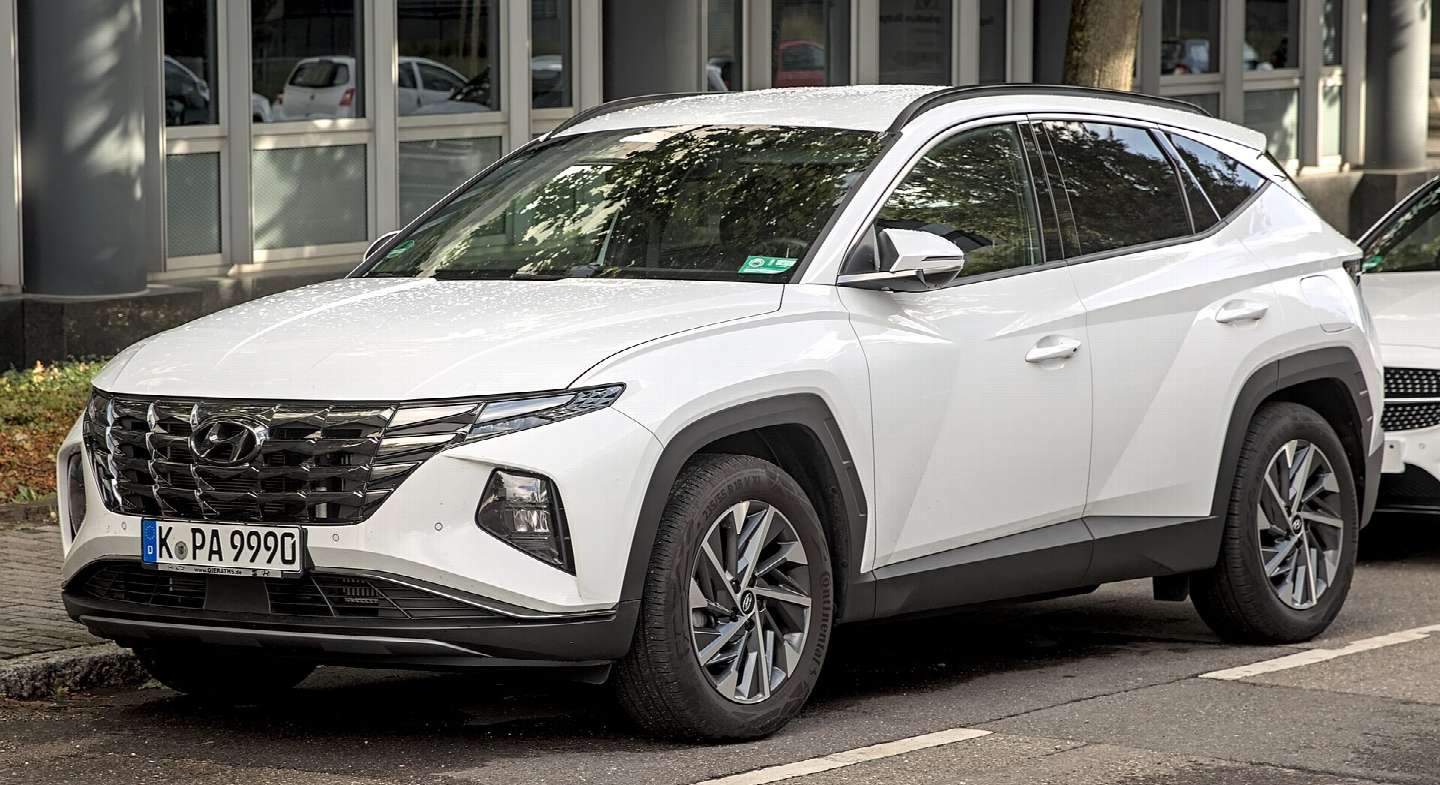
_1X7A0424.jpg)
Generations
-
JM 2004–2009
The original Tucson on the Elantra's platform, with the 2.0 Beta and 2.7 Delta V6 — no direct injection, so none of the later carbon story applies.
- Body styles
- SUV
- Platform
- Hyundai-Kia J
- Engines
-
- 2.0 four-cylinder — petrol · 104 kW (139 hp) · 184 Nm (136 lb-ft) · Beta II
- 2.7 V6 — petrol · 129 kW (173 hp) · 241 Nm (178 lb-ft) · Delta
- 2.0 CRDi — diesel · 83–110 kW (111–148 hp) · 245–305 Nm (181–225 lb-ft)
- Transmissions
- 5-speed manual · 4-speed automatic · 6-speed manual · 5-speed automatic
- Drivetrain
- Front-wheel drive · Four-wheel drive
-
LM 2009–2015
The ix35 years in Europe; Theta and diesel options.
- Body styles
- SUV
- Platform
- Hyundai LM
- Engines
-
- 1.6 GDi — GAMMA · petrol · 97–130 kW (130–174 hp) · 164 Nm (121 lb-ft)
- 2.0 II — THETA · petrol · 120–122 kW (161–164 hp)
- 2.4 II — THETA · petrol
- 1.7 CRDi — diesel · 85 kW (114 hp) · 260 Nm (192 lb-ft)
- 2.0 CRDi — diesel · 100–136 kW (134–182 hp) · 320–383 Nm (236–282 lb-ft)
- Transmissions
- 6-speed manual · 6-speed automatic · 5-speed manual
- Drivetrain
- Front-wheel drive · Four-wheel drive
-
TL 2015–2020
Back to the Tucson name everywhere; 1.6 T-GDI with dual-clutch enters.
- CRDi (badge, not an engine)
- Gamma
- Nu 2.0 L
- R-family (CRDi)
- T-GDi (badge, not an engine)
- Theta II 2.4 L
- U-family (CRDi, 1.5 and 1.7)
- Body styles
- SUV
- Engines
-
- 1.6 GDI — petrol · 97 kW (130 hp) · 161 Nm (119 lb-ft)
- 1.6 T-GDI — petrol · 130 kW (174 hp) · 265 Nm (195 lb-ft)
- 1.7 CRDi — diesel · 85–104 kW (114–139 hp) · 280–340 Nm (207–251 lb-ft)
- 2.0 CRDi — diesel · 100–136 kW (134–182 hp) · 373–400 Nm (275–295 lb-ft)
- 2.0 — petrol · 122 kW (164 hp)
- 2.4 — petrol
- Transmissions
- 6-speed manual · 6-speed automatic · 7-speed dual-clutch
- Drivetrain
- Front-wheel drive · Four-wheel drive
-
NX4 2020–present
Current car; hybrid is a core variant, not a niche.
- Automated manual (AMT) automated-manual
- D6KF1 (6DCT) 6-speed dual-clutch
- D7UF1 (7DCT) 7-speed dual-clutch
- Dual-clutch (DCT / DSG) dual-clutch
- Body styles
- SUV
- Platform
- Hyundai N3
- Engines
-
- 1.6 turbo GDi — petrol · 110–132 kW (148–177 hp) · 250–265 Nm (184–195 lb-ft)
- 2.0 Smartstream — petrol
- 2.5 GDi — SMARTSTREAM · petrol
- 1.6 turbo GDi hybrid — hybrid
- 1.6 turbo GDi plug-in hybrid — plug-in hybrid
- 1.6 CRDi mild hybrid — mild hybrid · 100 kW (134 hp) · 320 Nm (236 lb-ft)
- 2.0 CRDi — diesel · 136 kW (182 hp) · 417 Nm (308 lb-ft)
- Transmissions
- 6-speed automatic · 8-speed automatic · 6-speed M6CF3 manual · 6-speed M6CF3 clutchless manual · 6-speed D6KF1 DCT · 7-speed D7UF1 DCT
- Drivetrain
- Front-wheel drive · Four-wheel drive
CAN data
Bus databases covering this vehicle, mirrored from the open-source opendbc project.
Service information
Information, not instruction
CarGeek is a reference, not a service manual. Its pages are written from public sources and from what other people have found, never from a manufacturer's own service information, so they can be wrong or incomplete for your particular vehicle. Some of what they describe carries real risk: high voltage, fuel under pressure, stored energy, hot and moving parts.
Have anything you intend to act on checked by a trained person against the manufacturer's own procedure for your vehicle. Nothing here replaces that procedure.
Posted about the Hyundai Tucson
Be the first to write this up
Nothing posted about this yet. Whatever you found is worth writing down — even a dead end saves someone the same afternoon.
What makes one worth reading:
- The car — make, model, year and engine. The same fault behaves differently on each.
- What you measured, not only what you replaced.
- What actually fixed it — or that nothing did, which is worth knowing too.
Sign in or create an account to add what you found about Hyundai Tucson.