Vehicle
Kia Sportage
Kia's compact SUV and global volume leader, platform-shared with the Hyundai Tucson — which means the Tucson's community knowledge usually applies directly, engine cautions included.
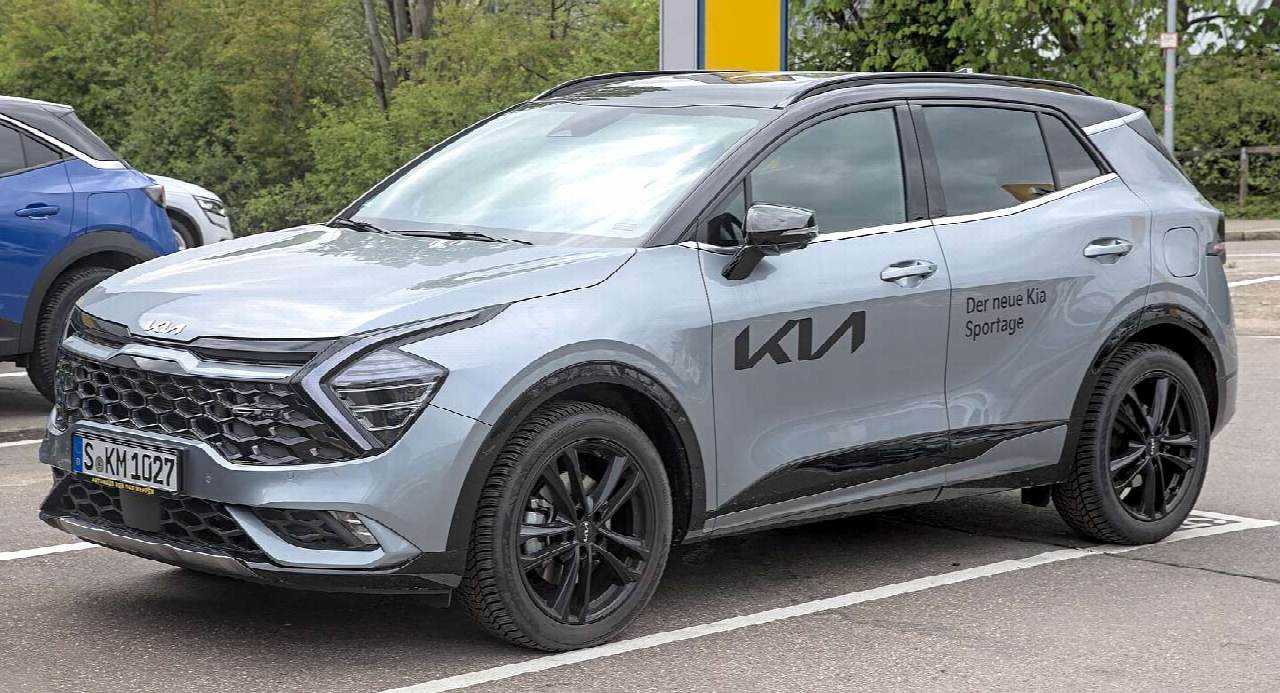
_1X7A0326.jpg)
Generations
-
First generation 1993–2005
Body-on-frame with Mazda engines and a transfer case — mechanically a small truck, and nothing like the Sportage that took the name after it.
- Body styles
- SUV
- Platform
- Kia Sportage
- Engines
-
- 2.0 SOHC — FE · petrol · Mazda FE
- 2.0 DOHC — FE · petrol · Mazda FE
- 2.0 turbo diesel — RF · diesel · Mazda RF
- Transmissions
- 5-speed manual · 4-speed automatic
- Drivetrain
- Rear-wheel drive · Four-wheel drive
-
Second generation 2004–2010
A Hyundai Tucson underneath — unibody, transverse, and diagnosed from Hyundai material rather than anything the first Sportage shared.
- Body styles
- SUV
- Platform
- Hyundai-Kia J
- Engines
-
- 2.0 CVVT — G4GC · petrol · 104 kW (139 hp) · 184 Nm (136 lb-ft) · Beta II
- 2.7 V6 — G6BA · petrol · 129 kW (173 hp) · 241 Nm (178 lb-ft) · Delta
- 2.0 CRDi — D4EA · diesel · 83–110 kW (111–148 hp) · 245–305 Nm (181–225 lb-ft) · variable-geometry turbo
- Transmissions
- 5-speed manual · 6-speed manual · 4-speed automatic
- Drivetrain
- Front-wheel drive · Four-wheel drive
-
SL 2010–2015
Theta II years; the engine-recall question applies here too.
- Body styles
- SUV
- Platform
- Hyundai LM
- Engines
-
- 1.6 GDi — GAMMA · petrol · 97–103 kW (130–138 hp) · 164 Nm (121 lb-ft)
- 2.0 II — THETA · petrol · 104–122 kW (139–164 hp)
- 2.4 II — THETA · petrol
- 1.7 CRDi — diesel · 85 kW (114 hp) · 260 Nm (192 lb-ft)
- 2.0 CRDi — diesel · 100–135 kW (134–181 hp) · 320–392 Nm (236–289 lb-ft)
- 2.0 turbo — petrol · 365 Nm (269 lb-ft)
- Transmissions
- 6-speed manual · 6-speed automatic · 5/6-speed manual
- Drivetrain
- Front-wheel drive · Four-wheel drive
-
QL 2015–2021
1.6 T-GDI and diesel spread; dual-clutch gearboxes on some.
- CRDi (badge, not an engine)
- Nu 2.0 L
- R-family (CRDi)
- T-GDi (badge, not an engine)
- Theta II 2.4 L
- U-family (CRDi, 1.5 and 1.7)
- Body styles
- SUV
- Engines
-
- 1.6 GDI — petrol · 97 kW (130 hp) · 161 Nm (119 lb-ft)
- 1.6 T-GDI — petrol · 130 kW (174 hp) · 265 Nm (195 lb-ft)
- 1.7 CRDi — diesel · 85–104 kW (114–139 hp) · 280–340 Nm (207–251 lb-ft)
- 2.0 CRDi — diesel · 100–136 kW (134–182 hp) · 373–400 Nm (275–295 lb-ft)
- 2.0 — petrol
- 2.0 turbo — petrol
- 2.4 — petrol
- Transmissions
- 6-speed manual · 6-speed automatic · 7-speed dual-clutch · 8-speed automatic
- Drivetrain
- Front-wheel drive · Four-wheel drive
-
NQ5 2021–present
Current generation, hybrid variants central.
- Body styles
- SUV
- Platform
- Hyundai N3
- Engines
-
- 1.6 turbo GDi — petrol · 110–132 kW (148–177 hp) · 250–265 Nm (184–195 lb-ft)
- 2.0 Smartstream — petrol
- 2.5 GDi — SMARTSTREAM · petrol
- 1.6 turbo GDi hybrid — hybrid · 169 kW (227 hp) combined · 350 Nm (258 lb-ft) combined
- 1.6 turbo GDi plug-in hybrid — plug-in hybrid · 195 kW (262 hp) combined · 350 Nm (258 lb-ft) combined
- 1.6 CRDi mild hybrid — mild hybrid · 100 kW (134 hp) · 280–320 Nm (207–236 lb-ft)
- 2.0 CRDi — diesel · 136 kW (182 hp) · 417 Nm (308 lb-ft)
- Transmissions
- 6-speed manual · 6-speed automatic · 7-speed dual-clutch · 8-speed automatic
- Drivetrain
- Front-wheel drive · Four-wheel drive
CAN data
Bus databases covering this vehicle, mirrored from the open-source opendbc project.
Service information
Information, not instruction
CarGeek is a reference, not a service manual. Its pages are written from public sources and from what other people have found, never from a manufacturer's own service information, so they can be wrong or incomplete for your particular vehicle. Some of what they describe carries real risk: high voltage, fuel under pressure, stored energy, hot and moving parts.
Have anything you intend to act on checked by a trained person against the manufacturer's own procedure for your vehicle. Nothing here replaces that procedure.
Posted about the Kia Sportage
Be the first to write this up
Nothing posted about this yet. Whatever you found is worth writing down — even a dead end saves someone the same afternoon.
What makes one worth reading:
- The car — make, model, year and engine. The same fault behaves differently on each.
- What you measured, not only what you replaced.
- What actually fixed it — or that nothing did, which is worth knowing too.
Sign in or create an account to add what you found about Kia Sportage.