Vehicle
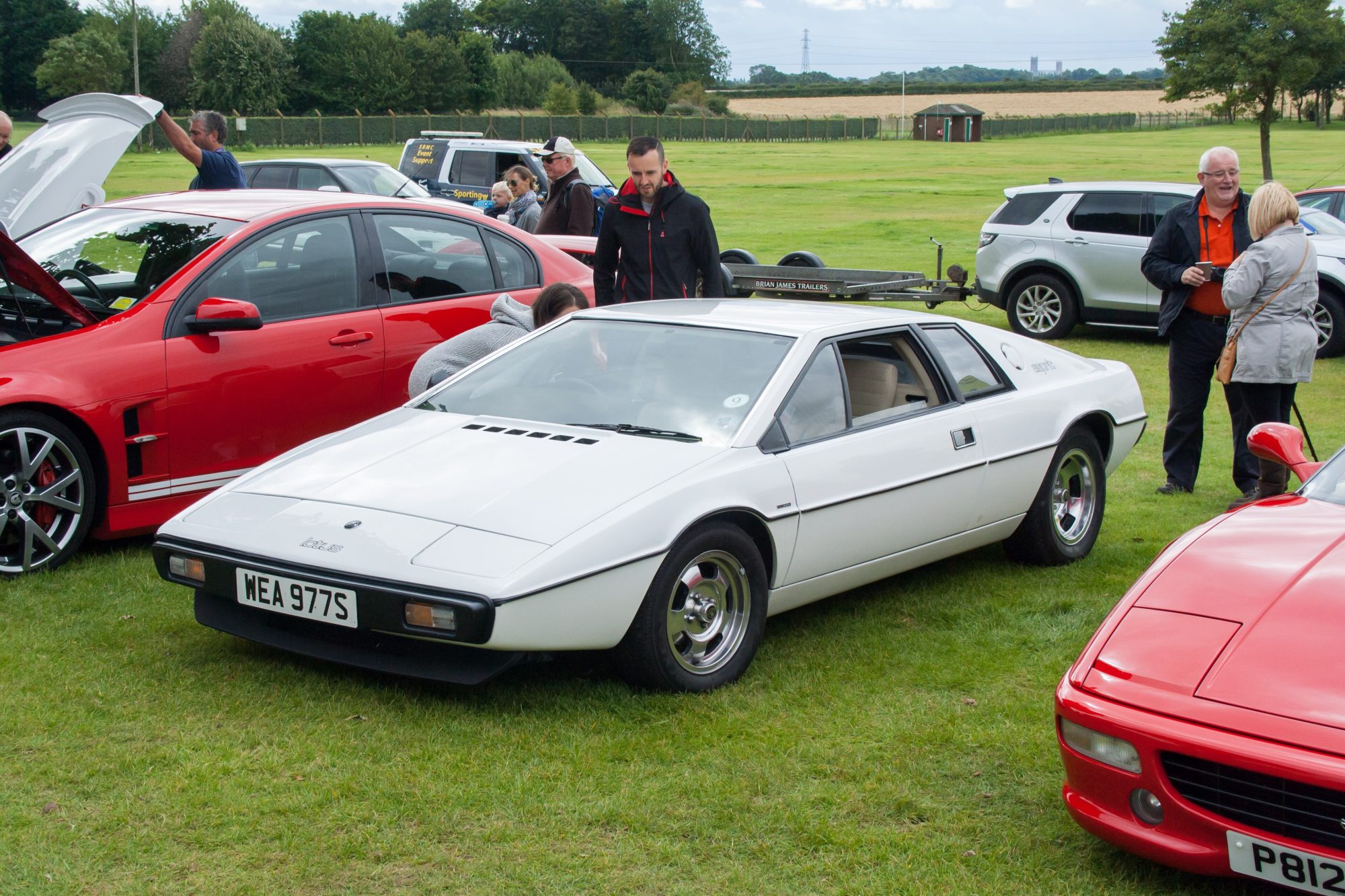
Lotus Esprit
The mid-engined car that ran for nearly thirty years, and the generation decides the engine entirely. Most are the turbocharged 2.2 four-cylinder — Lotus's own sixteen-valve unit, aluminium and with a well-known appetite for head-gasket work if the cooling system is neglected, which on a mid-engined car with long coolant runs and multiple bleed points is easy to do. The twin-turbo 3.5 V8 from 1996 is a different proposition and its early cars are known for clutch and gearbox trouble rather than engine trouble, the Renault-sourced transaxle behind it being the limiting component. Chassis-wise it is a steel backbone with a glassfibre body, so corrosion hides where no panel shows it.
.jpg)
Generations
-
S3 1981–1987
The Giugiaro-bodied car on the 2.2 four, turbocharged on the Turbo Esprit; pre-dates any diagnostic connector worth the name.
- Body styles
- Coupé
- Platform
- Lotus backbone chassis
- Engines
-
- 2.2 four-cylinder — 912 · petrol
- 2.2 turbo four-cylinder — 910S · petrol · 910
- Transmissions
- 5-speed Citroën C35 manual
- Drivetrain
- Rear-wheel drive
-
X180 1987–1993
The Stevens rebody, still on the 2.2 turbo; the long coolant runs to a front radiator are what makes cooling neglect expensive here.
- Body styles
- Coupé
- Platform
- Lotus backbone chassis
- Engines
-
- 2.2 turbo four-cylinder — 910S · petrol · 910
- 2.0 turbo — petrol · Italy only
- 2.2 — petrol
- Transmissions
- 5-speed Citroën C35 manual · 5-speed Renault UN-1 manual
- Drivetrain
- Rear-wheel drive
-
V8 1996–2004
The twin-turbo 3.5 V8, whose limiting component is the Renault-sourced transaxle behind it rather than the engine.
- Body styles
- Coupé
- Platform
- Lotus backbone chassis
- Engines
-
- 3.5 twin-turbo V8 — petrol · 918
- 2.0 turbo four-cylinder GT3 — petrol
- 2.2 turbo — 910S · petrol
- Transmissions
- 5-speed manual · 6-speed manual
- Drivetrain
- Rear-wheel drive
Information, not instruction
CarGeek is a reference, not a service manual. Its pages are written from public sources and from what other people have found, never from a manufacturer's own service information, so they can be wrong or incomplete for your particular vehicle. Some of what they describe carries real risk: high voltage, fuel under pressure, stored energy, hot and moving parts.
Have anything you intend to act on checked by a trained person against the manufacturer's own procedure for your vehicle. Nothing here replaces that procedure.
Posted about the Lotus Esprit
Be the first to write this up
Nothing posted about this yet. Whatever you found is worth writing down — even a dead end saves someone the same afternoon.
What makes one worth reading:
- The car — make, model, year and engine. The same fault behaves differently on each.
- What you measured, not only what you replaced.
- What actually fixed it — or that nothing did, which is worth knowing too.
Sign in or create an account to add what you found about Lotus Esprit.