Vehicle
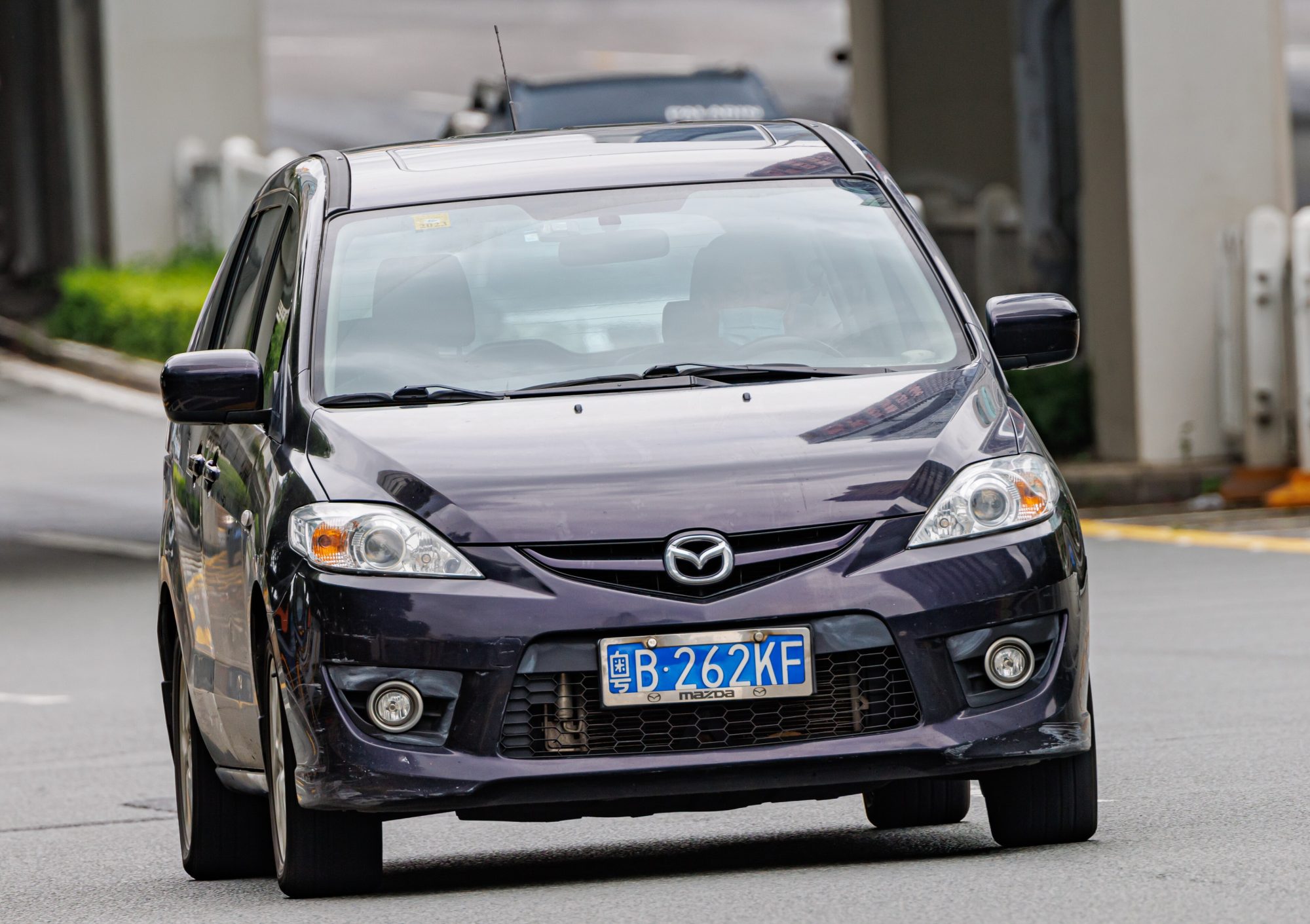
Mazda 5
The compact MPV with sliding rear doors, sold as Premacy in Japan — the same vehicle, and a useful second search term. It is built on Mazda 3 mechanicals, so 3 information covers the powertrain: the MZR 2.0 and 2.3 petrols and the Ford-Mazda 1.6 and 2.0 diesels in Europe. Two faults are its own rather than the 3's. The sliding doors run on electric motors with position sensors and pinch protection, and they are the commonest single complaint — a door that stops or reverses reports a position or obstruction code, not a motor failure. And on 2.0 petrol cars sold in Europe the variable valve timing actuator and its oil control valve foul on extended intervals, which shows first as a rattle on cold start.
_China.jpg)
Generations
-
First generation (CR) 2005–2010
MZR petrols and the Ford-Mazda diesels in Europe; the sliding-door motors and their position sensors are already the model's own fault.
- Body styles
- MPV
- Platform
- Ford C1
- Engines
-
- 1.8 MZR — petrol
- 2.0 MZR — petrol
- 2.3 MZR — petrol
- 1.6 MZ-CD — diesel
- 2.0 MZR-CD — diesel
- Transmissions
- 5-speed manual · 6-speed manual · 4-speed automatic · 5-speed automatic
- Drivetrain
- Front-wheel drive
-
Second generation (CW) 2010–2018
Adds SkyActiv-G on later cars; the 2.0 petrol's valve-timing actuator and oil control valve foul on extended intervals.
- Body styles
- MPV
- Platform
- Ford C1
- Engines
-
- 1.8 MZR — L8-DE · petrol · 93 kW (125 hp) · 167 Nm (123 lb-ft)
- 2.0 MZR — petrol · 106–110 kW (142–148 hp)
- 2.0 SkyActiv-G — petrol · 106–110 kW (142–148 hp)
- 1.6 MZ-CD — diesel · 85 kW (114 hp)
- 2.5 — L5-VE · petrol · 125 kW (168 hp) · 226 Nm (167 lb-ft) · 4-cylinder, US market 2012-2015
- Transmissions
- 5-speed manual · 6-speed manual · 5-speed automatic · 4-speed automatic · 6-speed Skyactiv-Drive automatic
- Drivetrain
- Front-wheel drive
Information, not instruction
CarGeek is a reference, not a service manual. Its pages are written from public sources and from what other people have found, never from a manufacturer's own service information, so they can be wrong or incomplete for your particular vehicle. Some of what they describe carries real risk: high voltage, fuel under pressure, stored energy, hot and moving parts.
Have anything you intend to act on checked by a trained person against the manufacturer's own procedure for your vehicle. Nothing here replaces that procedure.
Posted about the Mazda 5
Be the first to write this up
Nothing posted about this yet. Whatever you found is worth writing down — even a dead end saves someone the same afternoon.
What makes one worth reading:
- The car — make, model, year and engine. The same fault behaves differently on each.
- What you measured, not only what you replaced.
- What actually fixed it — or that nothing did, which is worth knowing too.
Sign in or create an account to add what you found about Mazda 5.