Vehicle
MINI Hatch
The core car, and diagnostically a BMW throughout — which is the first thing to establish, because its parts, its module names and its fault behaviour all belong to that world rather than to the badge's history. The middle generation's Prince engine was developed with PSA, so its timing-chain and carbon patterns are documented under Peugeot and Citroën badges as well, and often more thoroughly.
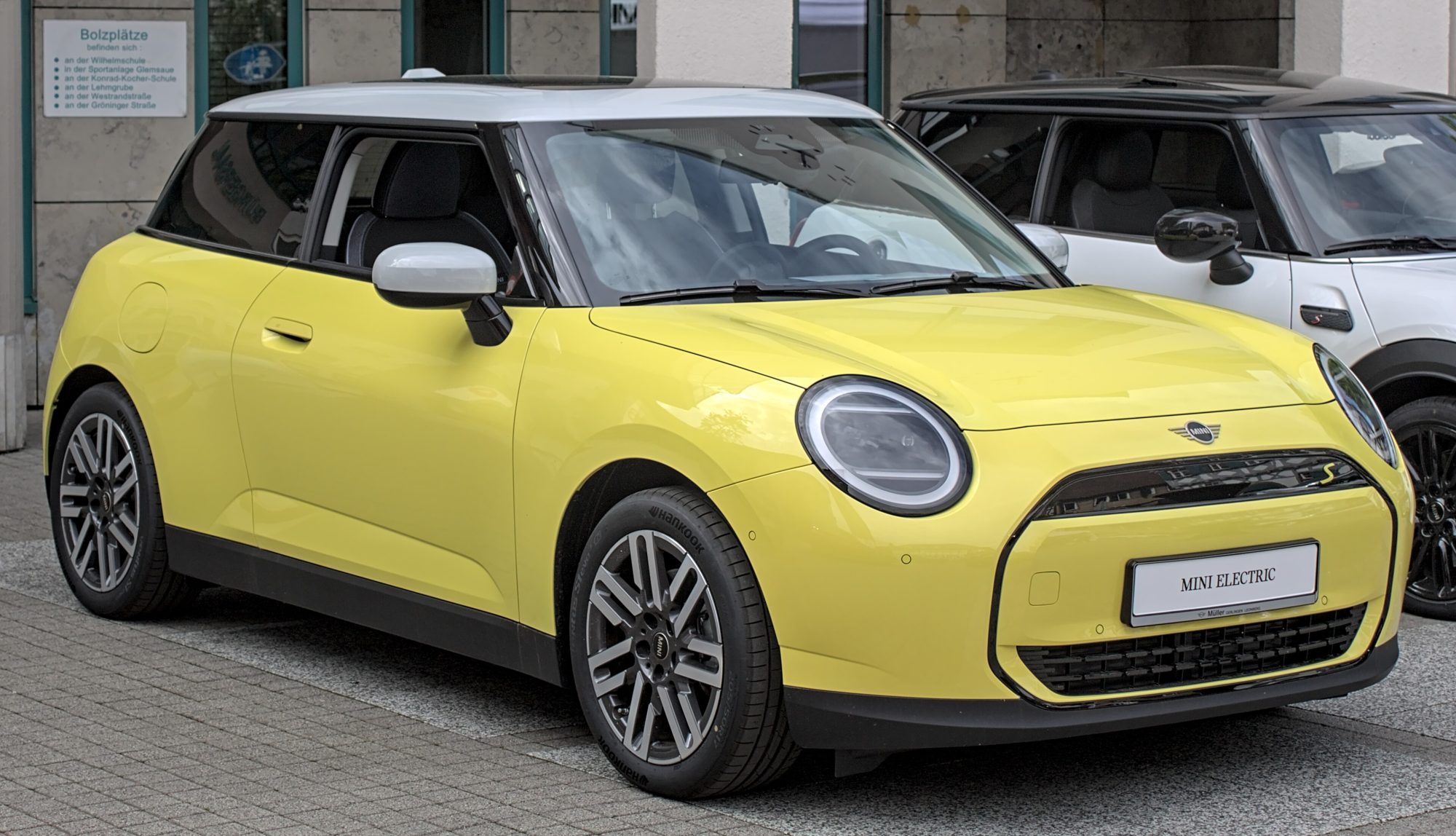
_Ditzingen_Mobil_IMG_9772_(cropped).jpg)
Generations
-
R50 2001–2006
Chrysler-designed Tritec engine, supercharged in the Cooper S; the CVT on early automatics is its own diagnosis.
- Body styles
- Hatchback
- Platform
- BMW R50
- Engines
-
- 1.6 petrol — petrol · Tritec W10
- 1.6 supercharged — petrol · Cooper S
- 1.4 diesel — diesel · Toyota 1ND-TV
- Transmissions
- 5-speed manual · 6-speed manual · CVT · 5/6-speed manual · 6-speed Aisin GA6F21WA Steptronic automatic
- Drivetrain
- Front-wheel drive
-
R56 2006–2013
Prince N12/N14/N18 engines — timing-chain wear and direct-injection carbon are this generation's signature.
- Body styles
- Hatchback
- Platform
- BMW UKL
- Engines
-
- 1.4 petrol — N12B14 · petrol · 55 kW (74 hp) · Prince N12
- 1.6 petrol — petrol · 55–120 kW (74–161 hp) · Prince N12 and N16
- 1.6 turbo — petrol · 55–120 kW (74–161 hp) · Cooper S and JCW, N14 and N18
- 1.6 diesel — diesel · N47
- 2.0 diesel — N47D20 · diesel · 107 kW (143 hp) · 305 Nm (225 lb-ft) · N47
- Transmissions
- 6-speed manual · 5/6-speed manual · 6-speed Aisin GA6F21WA Steptronic automatic · 6-speed manual / Steptronic
- Drivetrain
- Front-wheel drive
-
F56 2014–present
BMW B-series three- and four-cylinder engines, shared with the 1 Series of the period.
- Aisin AWF8F35 8-speed automatic
- Aisin TF-60SN (09G) 6-speed automatic
- Dual-clutch (DCT / DSG) dual-clutch
- Single-speed reduction gear (EV drive unit) reduction
- Body styles
- Hatchback
- Platform
- BMW UKL2
- Engines
-
- 1.2 turbo three-cylinder — B38A12 · petrol · 55–75 kW (74–101 hp) · 150–180 Nm (111–133 lb-ft) · B38
- 1.5 turbo three-cylinder — B38A15 · petrol · 100 kW (134 hp) · 220 Nm (162 lb-ft) · B38
- 2.0 turbo — B48A20 · petrol · 120–170 kW (161–228 hp) · 280–450 Nm (207–332 lb-ft) · Cooper S and JCW, B48
- 1.5 diesel three-cylinder — B37C15 · diesel · 85 kW (114 hp) · 270 Nm (199 lb-ft) · B37
- 2.0 diesel — B47D20 · diesel · 82–125 kW (110–168 hp) · B47
- 32.6 kWh electric — electric · Cooper SE
- Transmissions
- 6-speed manual · 7-speed dual-clutch · Single-speed reduction · 6-speed Aisin GA6F21WA Steptronic automatic · 8-speed Aisin AWF8F35 Steptronic automatic
- Drivetrain
- Front-wheel drive
Information, not instruction
CarGeek is a reference, not a service manual. Its pages are written from public sources and from what other people have found, never from a manufacturer's own service information, so they can be wrong or incomplete for your particular vehicle. Some of what they describe carries real risk: high voltage, fuel under pressure, stored energy, hot and moving parts.
Have anything you intend to act on checked by a trained person against the manufacturer's own procedure for your vehicle. Nothing here replaces that procedure.
Posted about the MINI Hatch
Be the first to write this up
Nothing posted about this yet. Whatever you found is worth writing down — even a dead end saves someone the same afternoon.
What makes one worth reading:
- The car — make, model, year and engine. The same fault behaves differently on each.
- What you measured, not only what you replaced.
- What actually fixed it — or that nothing did, which is worth knowing too.
Sign in or create an account to add what you found about MINI Hatch.