Vehicle
Renault Twingo
The city car, and the third generation is the interesting one: rear-engined and rear-wheel drive, developed with Daimler and sharing its platform with the Smart Forfour — which makes it the only rear-engined car in this catalogue and reorganises everything about where its components physically are. A cooling or exhaust fault on one is not in the place experience with any other supermini would suggest. The first two generations are conventional front-engined cars.
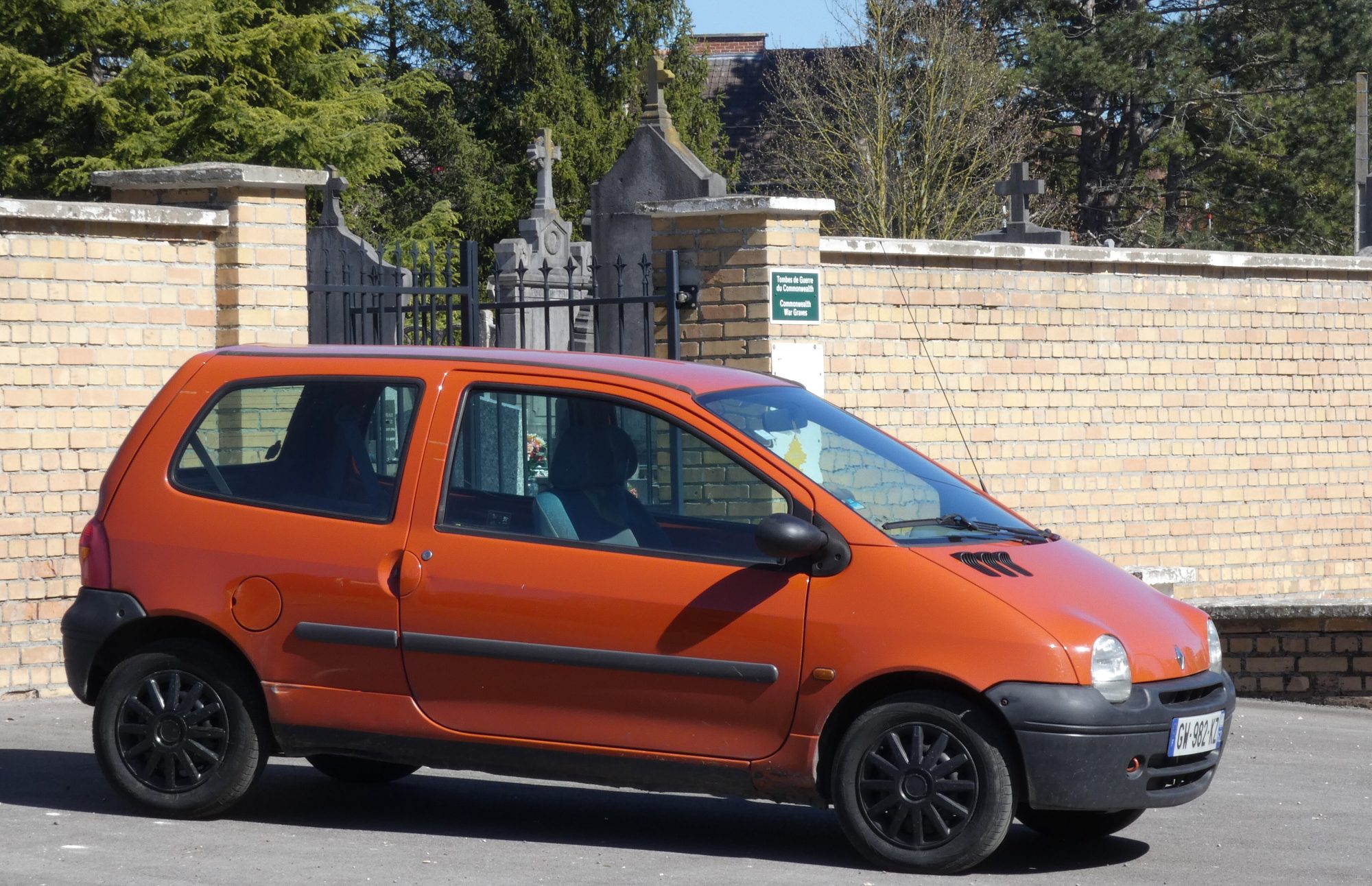
.JPG)
Generations
-
II 2007–2014
A conventional front-engined supermini on the Clio platform — the last Twingo before the rear-engined car.
- Body styles
- Hatchback
- Platform
- Renault–Nissan B
- Engines
-
- 1.2 16v — petrol
- 1.2 TCe — petrol
- 1.6 16v Renault Sport — K4M-RS · petrol · 98–99 kW (131–133 hp) · 160 Nm (118 lb-ft)
- 1.5 dCi — diesel · 55–63 kW (74–84 hp)
- 1.2 turbo — D4FT · petrol
- Transmissions
- 5-speed manual · 6-speed manual · 5-speed automatic
- Drivetrain
- Front-wheel drive
-
III 2014–2024
Rear-engined and rear-driven, shared with the Smart Forfour — the only such layout here, and it moves every component from where experience expects it.
- Body styles
- Hatchback
- Platform
- Renault–Daimler Edison
- Engines
-
- 1.0 SCe — H4D · petrol · 48–54 kW (64–72 hp) · 91–95 Nm (67–70 lb-ft)
- 0.9 TCe three-cylinder — petrol · 66–80 kW (89–107 hp)
- 22 kWh electric — electric · 60 kW (80 hp) · Twingo Z.E.
- 0.9 turbo — petrol · 66–80 kW (89–107 hp)
- Transmissions
- 5-speed manual · 6-speed dual-clutch · Single-speed reduction
- Drivetrain
- Rear-wheel drive
Service information
Information, not instruction
CarGeek is a reference, not a service manual. Its pages are written from public sources and from what other people have found, never from a manufacturer's own service information, so they can be wrong or incomplete for your particular vehicle. Some of what they describe carries real risk: high voltage, fuel under pressure, stored energy, hot and moving parts.
Have anything you intend to act on checked by a trained person against the manufacturer's own procedure for your vehicle. Nothing here replaces that procedure.
Posted about the Renault Twingo
Be the first to write this up
Nothing posted about this yet. Whatever you found is worth writing down — even a dead end saves someone the same afternoon.
What makes one worth reading:
- The car — make, model, year and engine. The same fault behaves differently on each.
- What you measured, not only what you replaced.
- What actually fixed it — or that nothing did, which is worth knowing too.
Sign in or create an account to add what you found about Renault Twingo.