Vehicle
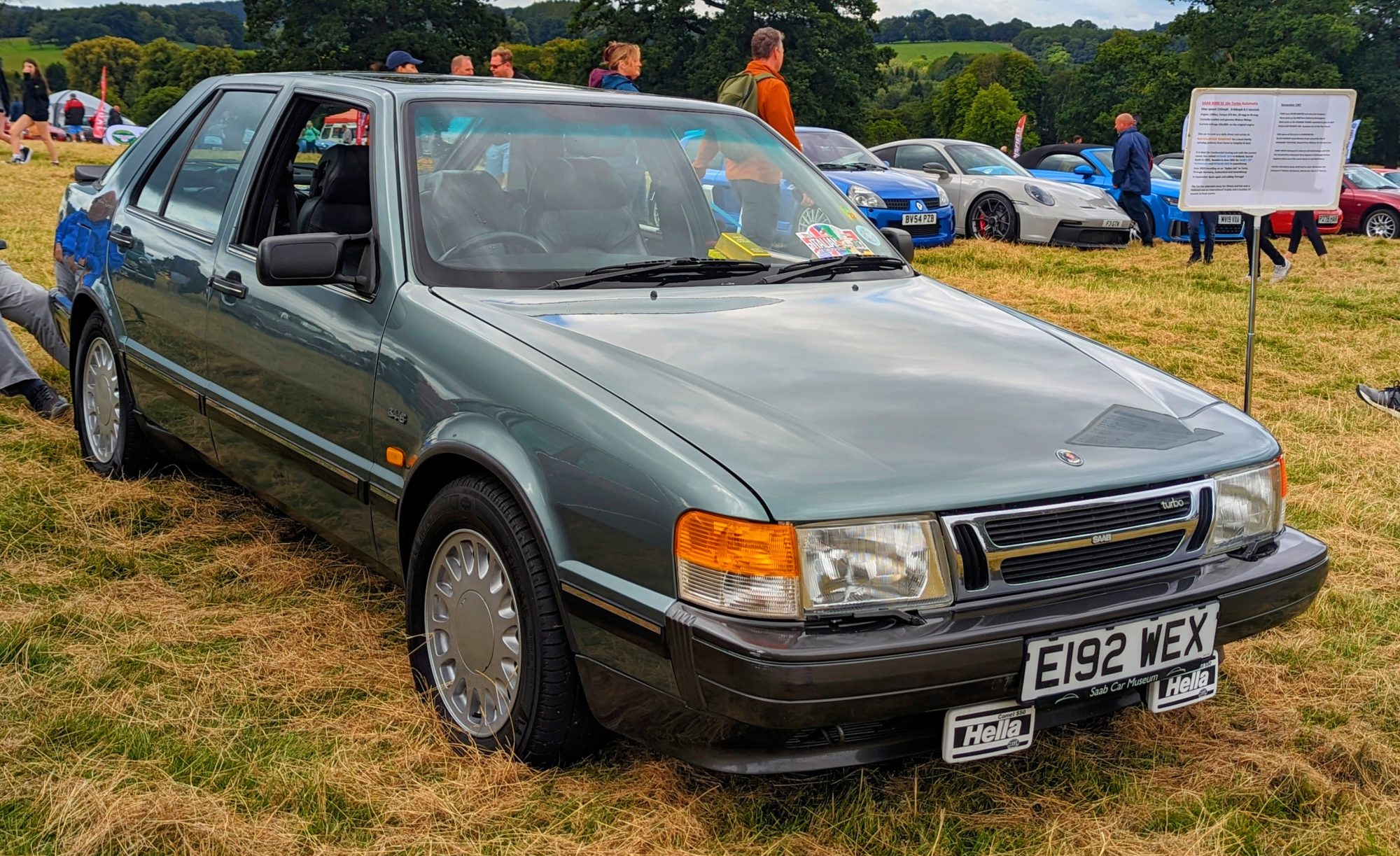
Saab 9000
The large hatchback and saloon built on the Type Four platform Saab shared with the Fiat Croma, Lancia Thema and Alfa 164 — though the engine and its management are entirely Saab's, which is the part that matters. The B234 sixteen-valve turbo is the engine most carry, and two faults define it: the direct ignition cassette sitting on the plugs fails with heat and produces a misfire or a total no-spark with no distributor to inspect, and the crankcase ventilation system blocks with age, pressurising the crankcase and pushing oil past the seals — a fault that presents as leaks everywhere at once. Trionic engine management is early but capable, and it needs Saab-specific tooling to read fully.

Generations
-
First generation 1984–1998
Saab's own turbo engines and Trionic management; the direct ignition cassette and a blocked crankcase ventilation system dominate.
- Body styles
- Hatchback · Sedan
- Platform
- Type Four
- Engines
-
- 2.0 turbo — B202 · petrol · 96–150 kW (129–201 hp) · 173–290 Nm (128–214 lb-ft) · B202 and B204
- 2.3 sixteen-valve — B234 · petrol · 125–165 kW (168–221 hp) · 260–342 Nm (192–252 lb-ft)
- 2.3 turbo — petrol · 125–165 kW (168–221 hp) · 260–342 Nm (192–252 lb-ft) · B234R, Aero
- 3.0 V6 — B308 · petrol · 154 kW (207 hp) · 270 Nm (199 lb-ft)
- 2.0 — B202 · petrol · 96 kW (129 hp)
- Transmissions
- 4-speed ZF 4HP18 automatic · 5-speed F25 manual
- Drivetrain
- Front-wheel drive
Information, not instruction
CarGeek is a reference, not a service manual. Its pages are written from public sources and from what other people have found, never from a manufacturer's own service information, so they can be wrong or incomplete for your particular vehicle. Some of what they describe carries real risk: high voltage, fuel under pressure, stored energy, hot and moving parts.
Have anything you intend to act on checked by a trained person against the manufacturer's own procedure for your vehicle. Nothing here replaces that procedure.
Posted about the Saab 9000
Be the first to write this up
Nothing posted about this yet. Whatever you found is worth writing down — even a dead end saves someone the same afternoon.
What makes one worth reading:
- The car — make, model, year and engine. The same fault behaves differently on each.
- What you measured, not only what you replaced.
- What actually fixed it — or that nothing did, which is worth knowing too.
Sign in or create an account to add what you found about Saab 9000.