Vehicle
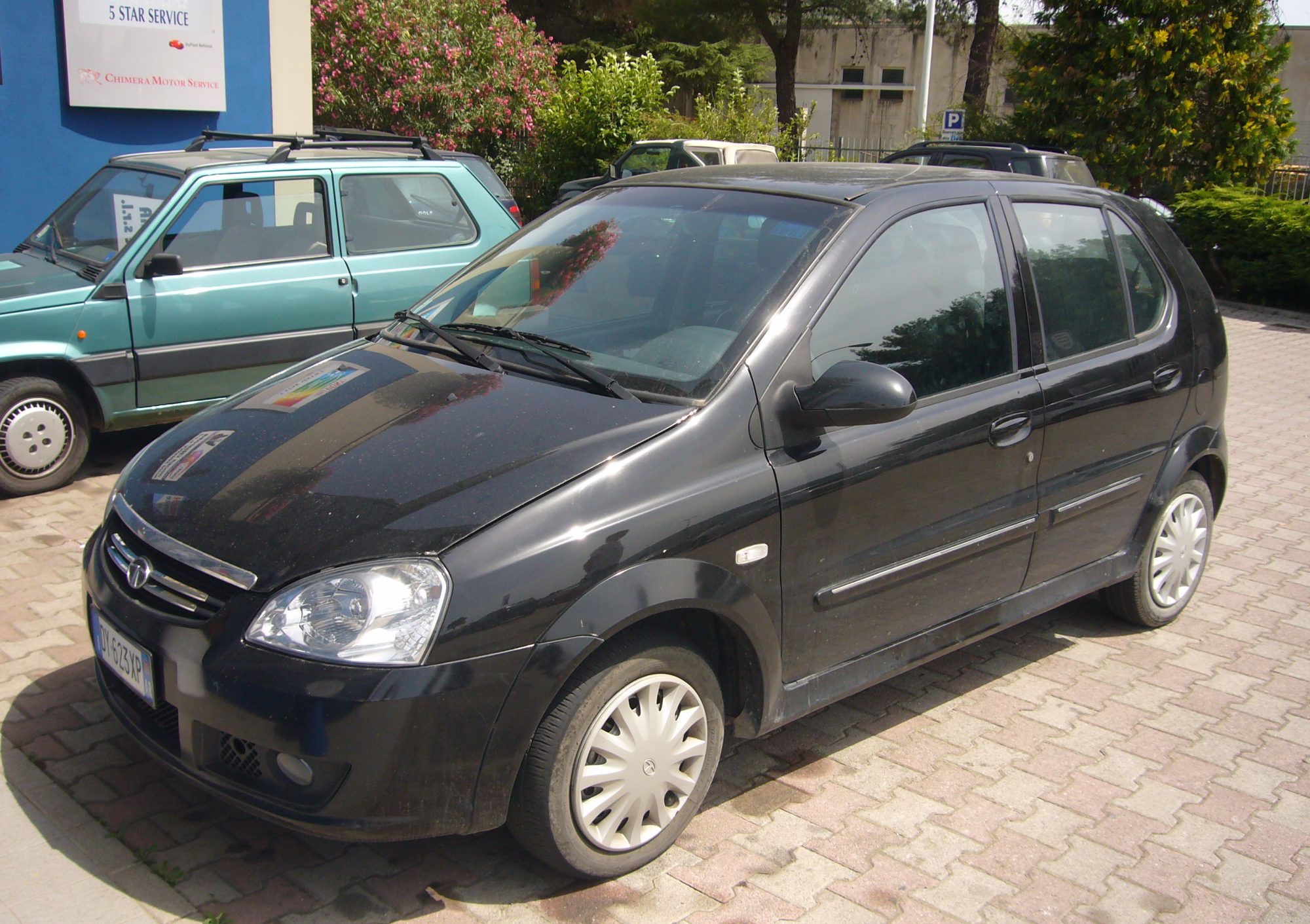
Tata Indica
The car that put Tata into the passenger market and still numerous across India and export markets, which is exactly the population that reads its own codes. Mechanically it is simple, and the 475 IDI and later DICOR diesels are what most carry. The pre-common-rail cars are largely mechanical and will set almost nothing, so a scan tool is of limited use on them — establishing which injection system is fitted is the first step rather than an afterthought. On the DICOR cars the recurring items are injector return flow and a fuel-filter water sensor that corrodes. Electrically, earth points at the gearbox and behind the battery are a classic source of unrelated faults.

Generations
-
First generation 1998–2008
Largely mechanical IDI diesels that set almost nothing — establish the injection system before reaching for a scan tool.
- Body styles
- Hatchback
- Platform
- Tata X1
- Engines
-
- 1.2 petrol — 475 · petrol · 48 kW (64 hp) · the 1,193 cc MPFi, and the older engine than the Vista's 1,172 cc SaFire below despite the identical output — es.wikipedia and ru.wikipedia both state 65 PS for it, simple.wikipedia 49 kW, and de.wikipedia's engine range for this generation opens at 49 kW. fr.wikipedia's 63 ch is the one outlier. No torque, re-tested across all twenty-three versions the article has. Three tables carry a torque and none of them is this engine: it.wikipedia's and pl.wikipedia's, which is transposed, both hold the 1,405 cc petrol at 120 Nm and the 1,396 cc Dicor at 140 and not this engine at all — and en.wikipedia's transposed table, mirrored cell for cell in gu and kn, gives its `1.2 Safire` 1,172 cc, 65 PS and 96 N.m, which is the Vista's engine on the row below and not this 1,193 cc one. Worth knowing how the it and pl tables read: both state `(Nm)` in the column HEADER and leave the cells bare, so a reader asking a cell for a digit beside a unit reports those articles as carrying no torque at all
- 1.4 petrol — 475 · petrol · 52–62 kW (70–83 hp) · 120 Nm (89 lb-ft) · 1,405 cc, and the span is two market tunes of one engine rather than a range: the Indian Xeta is 70 PS (en.wikipedia, ru.wikipedia, simple.wikipedia) and the European MPFi 85 PS (it.wikipedia's own table at 1,405 cc and 62 kW, de.wikipedia at 62.5 kW, fr.wikipedia at 83 ch, pl.wikipedia at 86 KM). The displacement is what separates it from the Vista's SaFire, which is 1,368 cc. The torque is 120 Nm, and it took a second table the lane could not read: it.wikipedia gives it in the same cell the 62 kW comes from, and pl.wikipedia — transposed, in Polish, sourced to autocentrum.pl — gives 120 Nm at 3,500 beside 62.5 kW at 6,000. The differing power rendering is what makes that a second reading rather than a copy. This note used to say pl stated no torque; it always did, in a shape no reader in the lane parses, because a transposed table puts the unit in the row LABEL and leaves the cell a bare number
- 1.4 IDI diesel — 475 · diesel · 475 DL, 1,396 cc — and deliberately unfigured, because five sources give five outputs for it: 40 kW (simple.wikipedia, whose own parenthetical says 44 hp, which 40 kW is not), de.wikipedia's diesel range opening at 40 kW, 49 ch (fr.wikipedia), 50 hp (tr.wikipedia) and 63 CV (es.wikipedia, whose diesel labels look shifted one tune). No two of them agree — and re-tested across eight languages the reason is now structural rather than untidy. tr.wikipedia states outright that Turkey imported the Indica with 50 hp AND 70 hp diesels, and pl.wikipedia names a 1.4 DICOR at 70 KM; de.wikipedia's range for this generation is 1.4–1.9 litres at 40–52 kW. So the readings fall into two clusters — about 36–40 kW and 52 kW — which are two different engines, the indirect-injection 475 DL and the common-rail DICOR, and nothing in any of the five sources says which of them it is describing. A range across both would publish one engine's floor and another's ceiling. The upper cluster is now named rather than inferred: it.wikipedia's table and pl.wikipedia's both label their 1,396 cc 52 kW diesel a Dicor and give it 140 Nm, so 52 kW belongs to the common-rail engine and this row is the other one. What it does not settle is the displacement — both give the Dicor the same 1,396 cc this row carries, and en.wikipedia's table gives the 475 IDI Turbo 1,406 cc, so the capacity no longer separates them and the refusal rests on the injection system alone
- Transmissions
- 5-speed manual
- Drivetrain
- Front-wheel drive
-
Second generation (Vista) 2008–2018
The Vista brings the common-rail DICOR, which does read normally — injector return flow and the fuel-filter water sensor are the recurring items.
- Body styles
- Hatchback
- Platform
- Tata X1
- Engines
-
- 1.2 petrol — SAFIRE · petrol · 48 kW (64 hp) · 96 Nm (71 lb-ft)
- 1.4 petrol — SAFIRE · petrol · 66–67 kW (88–90 hp) · 116 Nm (86 lb-ft)
- 1.3 DICOR — SDE · diesel · 55–66 kW (74–89 hp) · 190–200 Nm (140–148 lb-ft) · Multijet-derived
- 1.4 turbo — 475 · diesel · 52 kW (70 hp) · 135 Nm (100 lb-ft)
- Transmissions
- 5-speed manual
- Drivetrain
- Front-wheel drive
Information, not instruction
CarGeek is a reference, not a service manual. Its pages are written from public sources and from what other people have found, never from a manufacturer's own service information, so they can be wrong or incomplete for your particular vehicle. Some of what they describe carries real risk: high voltage, fuel under pressure, stored energy, hot and moving parts.
Have anything you intend to act on checked by a trained person against the manufacturer's own procedure for your vehicle. Nothing here replaces that procedure.
Posted about the Tata Indica
Be the first to write this up
Nothing posted about this yet. Whatever you found is worth writing down — even a dead end saves someone the same afternoon.
What makes one worth reading:
- The car — make, model, year and engine. The same fault behaves differently on each.
- What you measured, not only what you replaced.
- What actually fixed it — or that nothing did, which is worth knowing too.
Sign in or create an account to add what you found about Tata Indica.