Vehicle
Tata Manza
Tata's saloon on the X1 platform, launched on 14 October 2009 as the Indigo Manza. It never replaced the Indigo — that car stayed in production beside it until 2018 — which is why this is a page of its own rather than a second generation of that one. Tata's own product names drop the Indigo from 2011, and the car is generally just the Manza.
Both engines are Fiat's, built at Ranjangaon, and that is the single most useful thing to know before connecting anything. The 1.4 petrol wears a Safire badge and is Fiat's FIRE; the 1.3 diesel wears Quadrajet 90 and is the MultiJet. So Fiat's common-rail conventions apply here, not Tata's, and the literature worth reading is Fiat's. Anyone arriving from the Indigo's indirect-injection 1.4 TDI is holding the wrong model of the car entirely.
Its platform sibling is the Indica Vista, which is where to look when nothing useful is published under this name — the 2011 Vista 'Sedan-class' shares this car's front panels, grille and lamp clusters outright. The Zest arrived in 2014 as the replacement and the Manza ran on until 2016.
Three badges, one car: Indigo Manza from 2009, the leather-trimmed Manza Elan from 2011, and the Manza Club-class refresh of 2012. None of them changed the mechanicals, so parts and procedures cross over.
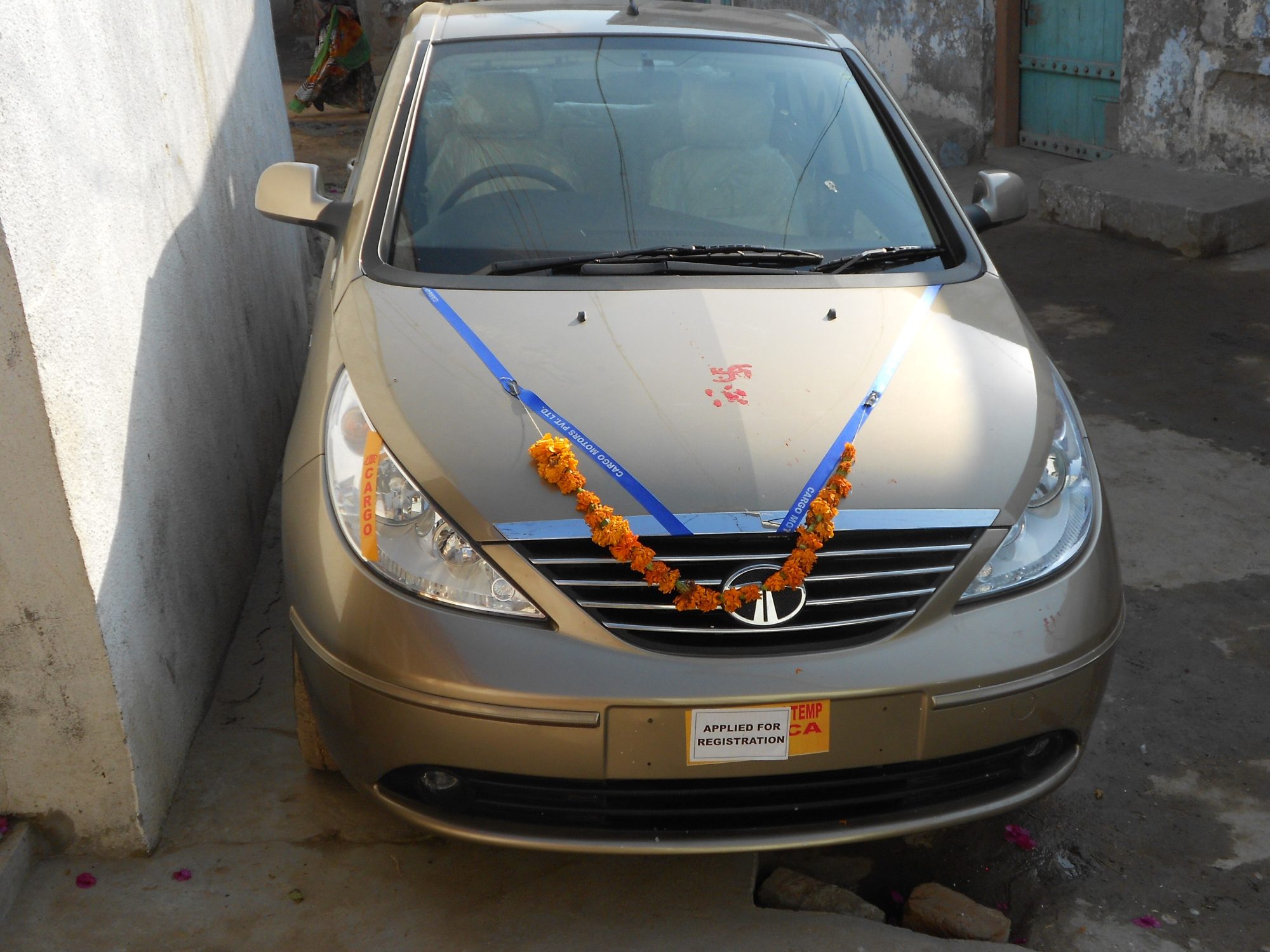
.JPG)
Generations
-
First generation 2009–2016
Tata's X1 saloon on Fiat power — sold beside the Indigo rather than replacing it, and diagnosed by Fiat's conventions rather than Tata's.
- Body styles
- Sedan
- Platform
- Tata X1
- Engines
-
- 1.4 petrol — SAFIRE · petrol · 66 kW (88 hp) · 116 Nm (86 lb-ft)
- 1.3 Quadrajet — SDE · diesel · 67 kW (90 hp) · 200 Nm (148 lb-ft) · the Fiat Multijet built at Ranjangaon — Fiat common-rail conventions apply, not Tata's
- Transmissions
- 5-speed manual
- Drivetrain
- Front-wheel drive
Information, not instruction
CarGeek is a reference, not a service manual. Its pages are written from public sources and from what other people have found, never from a manufacturer's own service information, so they can be wrong or incomplete for your particular vehicle. Some of what they describe carries real risk: high voltage, fuel under pressure, stored energy, hot and moving parts.
Have anything you intend to act on checked by a trained person against the manufacturer's own procedure for your vehicle. Nothing here replaces that procedure.
Posted about the Tata Manza
Be the first to write this up
Nothing posted about this yet. Whatever you found is worth writing down — even a dead end saves someone the same afternoon.
What makes one worth reading:
- The car — make, model, year and engine. The same fault behaves differently on each.
- What you measured, not only what you replaced.
- What actually fixed it — or that nothing did, which is worth knowing too.
Sign in or create an account to add what you found about Tata Manza.