Vehicle
Tata Sumo
The ladder-frame utility MPV that served fleets, rural transport and small operators for two decades, and a great many are still working. It is built around Tata's 483 and 497 direct-injection diesels, which are mechanical rather than common-rail on most examples — so it sets few codes and diagnosis is compression, timing and fuel delivery rather than data. Knowing that before connecting a tool saves a wasted hour. The Sumo Grande moved to a common-rail DICOR engine and does read normally. Chassis-wise the recurring items are the leaf-sprung rear and the front torsion-bar setup, and the wiring where the loom passes the engine mounts.
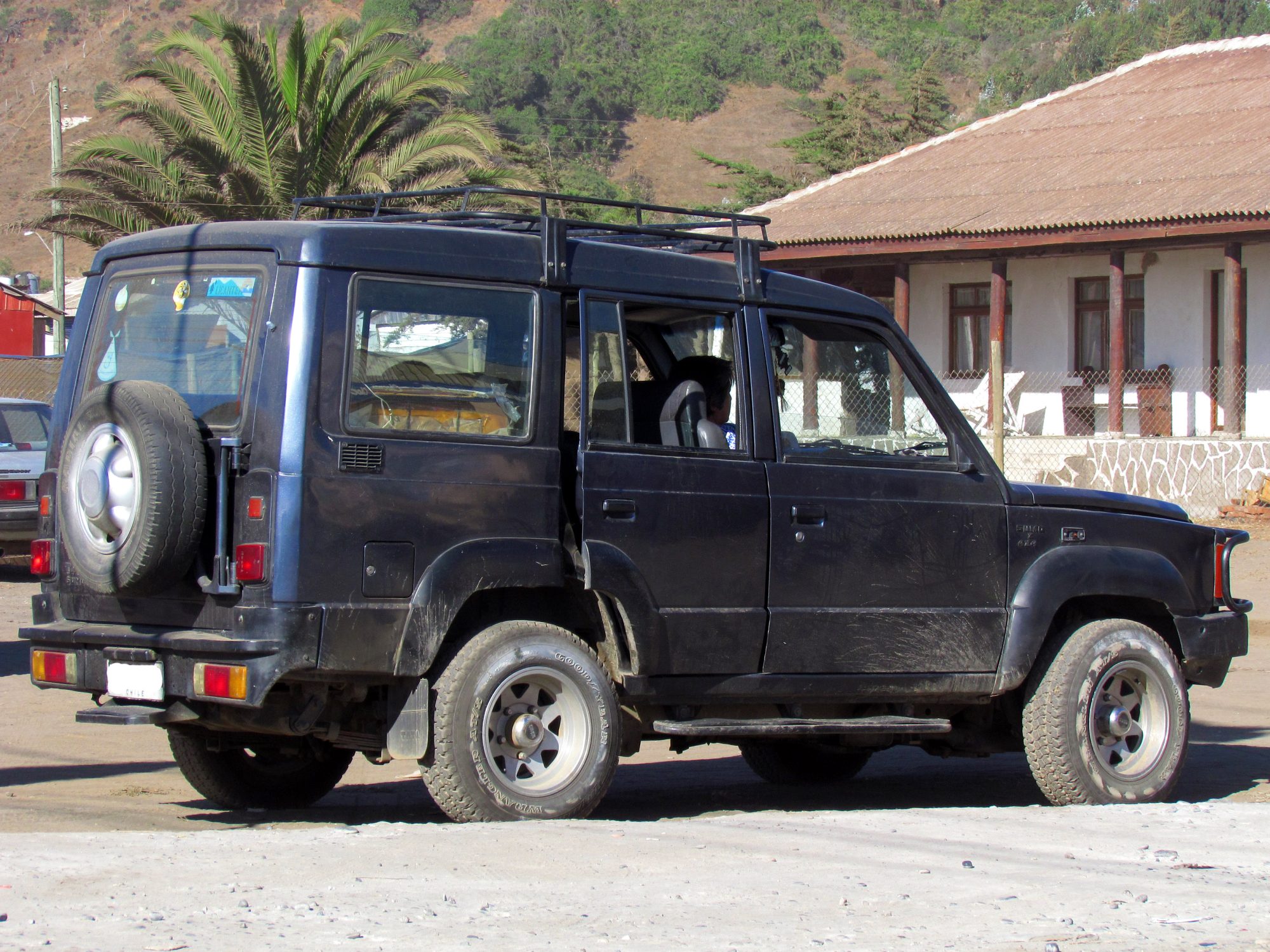
.jpg)
Generations
-
First generation 1994–2019
Mechanical direct-injection diesels on most examples, so it sets few codes; the Grande's DICOR engine reads normally.
- Body styles
- MPV · SUV
- Platform
- Tata ladder frame
- Engines
-
- 3.0 turbo — 497 SPTC · diesel · 52 kW (70 hp) · 225 Nm (166 lb-ft) · the 2,956 cc Tata 497 from the 407 truck, turbocharged on a mechanical pump — the Spacio Gold Plus and the Victa. it.wikipedia's Telcoline table states the same pair at 52.5 kW (71 CV) and 225 Nm, holding the torque from 1,500. That low peak is why `power-mine ratios` reports this row at 4.33 Nm/kW against a diesel ceiling of 4.1 and why it is not a fault: a truck engine making its torque at 1,500 and its 52 kW well above it sits outside a band drawn on modern passenger diesels
- 3.0 common rail — 497 SPTC · diesel · 63 kW (85 hp) · 250 Nm (184 lb-ft) · the Sumo Gold, badged CR4 and sixteen-valve. Three sources carry the figures, not the one this note used to claim: de.wikipedia's technical table adds the peak speeds en.wikipedia has no room for — 85 PS at 3,000 and 250 Nm held from 1,000 to 2,000 — and it.wikipedia and ja.wikipedia state 85 and 250 as well
- 2.2 DICOR — DW12 · diesel · 88 kW (118 hp) · 250 Nm (184 lb-ft) · Sumo Grande
- 2.0 — XD88 · diesel · 47 kW (63 hp) · 1,948 cc, licence-built from the Peugeot XD88 — indirect injection with a pre-chamber, two valves per cylinder. No torque, and the reason is worth stating because a cell exists that looks like it: it.wikipedia's Telcoline table gives a 2.0 D 115 Nm at 2,500, but that is the 483 DL, which is a different engine of the same 1,948 cc — 83 by 90 mm against this one's 88 by 80 — so the figure belongs to the Sierra's row and not to this one. Nothing states a torque for the XD88 as Tata built it
- 2.0 turbo — diesel · 69 kW (92 hp) · turbocharged from 1998 for export and 2001 in India; Euro 3 brought it back to 88 hp. Left uncoded on purpose: the Sumo article turbocharges the XD88 and the Telcoline article the 483 DL, at the same 92 hp. The torque is refused for that same reason rather than for want of a figure, and this note used to describe the refusal wrongly: it said there were two figures, one for each candidate engine. There are two figures and they describe the SAME candidate. it.wikipedia's Telcoline table gives its 2.0 TDI 200 Nm at 2,500 and de.wikipedia's Sierra gives 190 Nm at 2,500, and the Telcoline is the Sierra's own pickup sibling carrying the 483 DL at the 83 × 90 bore and stroke de states — so both are the 483 DLTC, which is where they now sit. Something does state one for the XD88 side and it is not a source, which is a correction to what this note used to claim: fa.wikipedia gives the Sumo a 2.0L TCIC at 90 bhp and 186 Nm, and its own reference section declares the article a translation of en.wikipedia's Tata Sumo at revision 386274959, retrieved 29 October 2010 — so that is en.wikipedia's 2010 text, which the article no longer carries, rather than a second reading of the engine. Every one of the fourteen languages the Sumo article has was swept and it is the only torque anybody states for the Peugeot XD88 as Tata turbocharged it. So this row has a figure for one of its two candidates and none for the other, which is a stronger reason to withhold than the one it replaces
- Transmissions
- 5-speed manual
- Drivetrain
- Rear-wheel drive · Part-time four-wheel drive with low range
Information, not instruction
CarGeek is a reference, not a service manual. Its pages are written from public sources and from what other people have found, never from a manufacturer's own service information, so they can be wrong or incomplete for your particular vehicle. Some of what they describe carries real risk: high voltage, fuel under pressure, stored energy, hot and moving parts.
Have anything you intend to act on checked by a trained person against the manufacturer's own procedure for your vehicle. Nothing here replaces that procedure.
Posted about the Tata Sumo
Be the first to write this up
Nothing posted about this yet. Whatever you found is worth writing down — even a dead end saves someone the same afternoon.
What makes one worth reading:
- The car — make, model, year and engine. The same fault behaves differently on each.
- What you measured, not only what you replaced.
- What actually fixed it — or that nothing did, which is worth knowing too.
Sign in or create an account to add what you found about Tata Sumo.