Vehicle
Toyota MR2
The mid-engined two-seater, and the two generations here are different enough to be different cars. The SW20 is a heavy, well-equipped coupé whose 3S-GTE turbo is the version most of the writing is about; the W30 Spyder that follows is stripped back, naturally aspirated and roughly two hundred kilograms lighter, with the 1ZZ-FE and no boost at all. Nothing about forced induction transfers between them. The W30's known killer is the pre-catalyst: it sits close to the engine, and when its substrate breaks up the debris can be drawn back into the bores. An oil-consumption complaint on one of these is worth taking seriously rather than topping up, because by the time compression falls the cause is usually upstream and already through the engine.
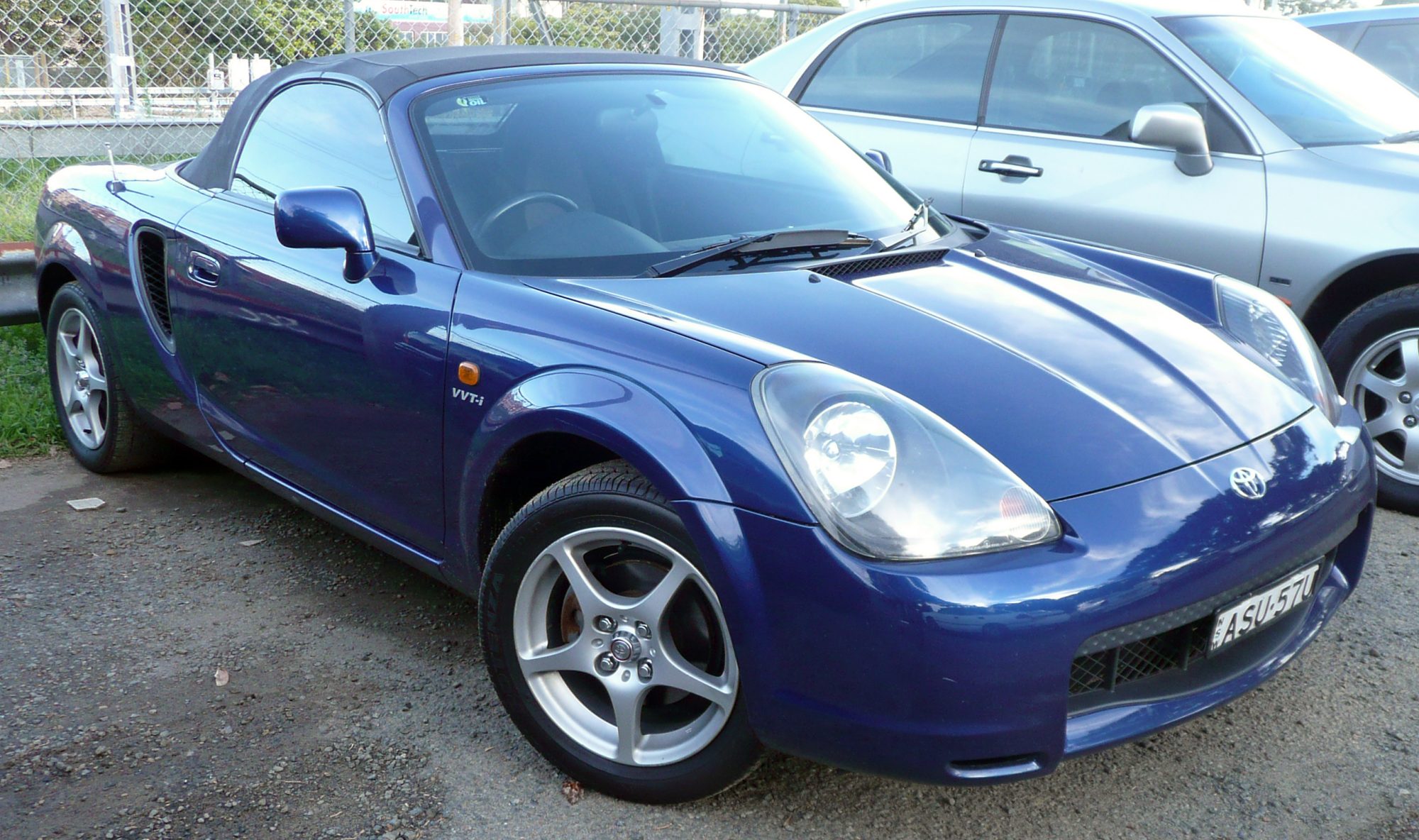
_Spyder_convertible_01.jpg)
Generations
-
SW20 1989–1999
The turbocharged 3S-GTE car; heavier and far more powerful than the Spyder that replaced it.
- Body styles
- Coupé
- Platform
- Toyota SW20
- Engines
-
- 2.0 turbo — 3S-GTE · petrol · 136–191 kW (182–256 hp) · 250–324 Nm (184–239 lb-ft)
- 2.0 four-cylinder — 3S-GE · petrol · 175–220 Nm (129–162 lb-ft)
- 2.2 four-cylinder — 5S-FE · petrol · 97–101 kW (130–135 hp) · 197–203 Nm (145–150 lb-ft)
- 2.0 — 3S-FE · petrol · 162–178 Nm (119–131 lb-ft) · SW20
- Transmissions
- 5-speed manual · 4-speed automatic
- Drivetrain
- Rear-wheel drive
-
W30 1999–2007
The Spyder: naturally aspirated 1ZZ-FE, much lighter, and vulnerable to pre-catalyst breakup.
- Body styles
- Convertible
- Platform
- Toyota W30
- Engines
-
- 1.8 four-cylinder — 1ZZ-FE · petrol · 161–172 Nm (119–127 lb-ft)
- Transmissions
- 5-speed manual · 6-speed manual · 5-speed sequential manual · 5-speed SMT · 6-speed SMT
- Drivetrain
- Rear-wheel drive
Service information
Information, not instruction
CarGeek is a reference, not a service manual. Its pages are written from public sources and from what other people have found, never from a manufacturer's own service information, so they can be wrong or incomplete for your particular vehicle. Some of what they describe carries real risk: high voltage, fuel under pressure, stored energy, hot and moving parts.
Have anything you intend to act on checked by a trained person against the manufacturer's own procedure for your vehicle. Nothing here replaces that procedure.
Posted about the Toyota MR2
Be the first to write this up
Nothing posted about this yet. Whatever you found is worth writing down — even a dead end saves someone the same afternoon.
What makes one worth reading:
- The car — make, model, year and engine. The same fault behaves differently on each.
- What you measured, not only what you replaced.
- What actually fixed it — or that nothing did, which is worth knowing too.
Sign in or create an account to add what you found about Toyota MR2.