نصيحة
رمز العطل P0335
P0335 and the engine that dies hot and restarts after lunch
HO
@hhh
منذ شهر
The crankshaft position sensor is the one sensor the engine cannot run without — no crank signal, no spark, no injection. So P0335 comes with a distinctive story: the engine stalls or refuses to start, often with no warning, and often it restarts perfectly once it has cooled down.
That heat-soak pattern is nearly diagnostic by itself. These are mostly inductive sensors, and a winding that has cracked with age goes open-circuit as it heats and expands, then reconnects as it cools. The classic sequence: dies in traffic on a hot day, cranks uselessly for twenty minutes, starts like nothing happened once the fan has been off for a while. If that is your story, this sensor is the prime suspect even before you read the code.
Testing has a trap: a resistance check with the sensor cold and the engine cold will often pass, because the failure only exists hot. If you can, measure at the moment of failure — or heat the sensor gently with a heat gun while watching resistance. A scope showing the AC signal while cranking is the honest test; a healthy inductive sensor makes a clean sine-like pattern with a gap for the missing tooth.
While it is out, look at the tip. These sensors are magnetic, and they collect metal dust off the reluctor ring. A tip wearing a beard of swarf can corrupt the signal — and is also telling you something is shedding metal in there.
That heat-soak pattern is nearly diagnostic by itself. These are mostly inductive sensors, and a winding that has cracked with age goes open-circuit as it heats and expands, then reconnects as it cools. The classic sequence: dies in traffic on a hot day, cranks uselessly for twenty minutes, starts like nothing happened once the fan has been off for a while. If that is your story, this sensor is the prime suspect even before you read the code.
Testing has a trap: a resistance check with the sensor cold and the engine cold will often pass, because the failure only exists hot. If you can, measure at the moment of failure — or heat the sensor gently with a heat gun while watching resistance. A scope showing the AC signal while cranking is the honest test; a healthy inductive sensor makes a clean sine-like pattern with a gap for the missing tooth.
While it is out, look at the tip. These sensors are magnetic, and they collect metal dust off the reluctor ring. A tip wearing a beard of swarf can corrupt the signal — and is also telling you something is shedding metal in there.
المرفقات
-
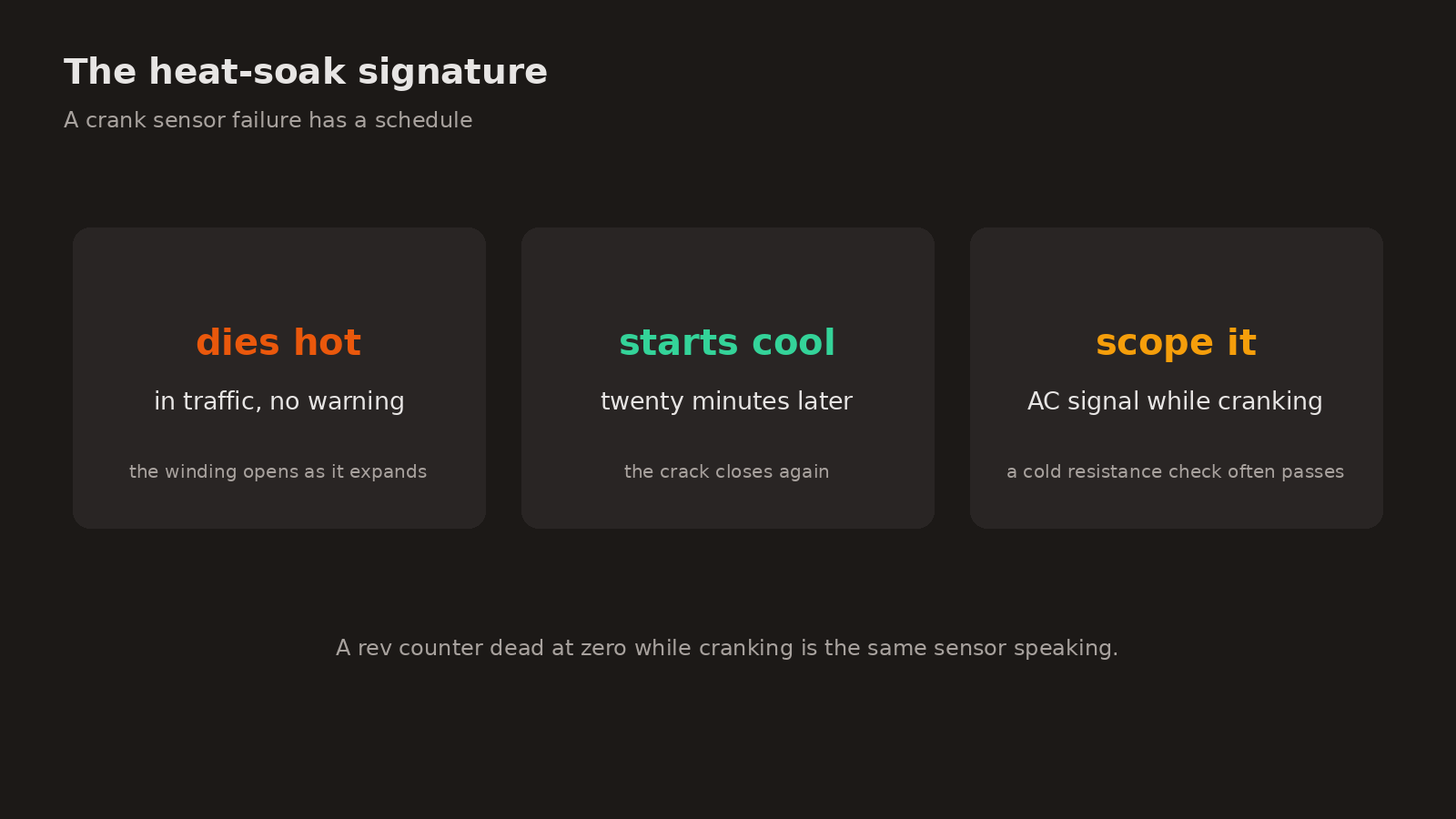
Diagram: the crankshaft position sensor's heat-soak pattern — dies hot, restarts after cooling, and needs testing at temperature rather than cold.
معلومات لا تعليمات
موقع CarGeek مرجع وليس دليل صيانة. تُكتب صفحاته من مصادر عامة ومما توصّل إليه آخرون، لا من وثائق الصيانة الخاصة بالشركة الصانعة، ولذلك قد تكون خاطئة أو ناقصة بالنسبة لمركبتك تحديدًا. وبعض ما تصفه ينطوي على خطر حقيقي: جهد عالٍ، ووقود تحت ضغط، وطاقة مخزَّنة، وأجزاء ساخنة أو متحركة.
قبل العمل بأي مما هنا، اطلب من شخص مدرَّب التحقق منه وفق الإجراء المعتمد من الشركة الصانعة لمركبتك. ولا شيء هنا يغني عن ذلك الإجراء.