P0335 and the engine that dies hot and restarts after lunch
That heat-soak pattern is nearly diagnostic by itself. These are mostly inductive sensors, and a winding that has cracked with age goes open-circuit as it heats and expands, then reconnects as it cools. The classic sequence: dies in traffic on a hot day, cranks uselessly for twenty minutes, starts like nothing happened once the fan has been off for a while. If that is your story, this sensor is the prime suspect even before you read the code.
Testing has a trap: a resistance check with the sensor cold and the engine cold will often pass, because the failure only exists hot. If you can, measure at the moment of failure — or heat the sensor gently with a heat gun while watching resistance. A scope showing the AC signal while cranking is the honest test; a healthy inductive sensor makes a clean sine-like pattern with a gap for the missing tooth.
While it is out, look at the tip. These sensors are magnetic, and they collect metal dust off the reluctor ring. A tip wearing a beard of swarf can corrupt the signal — and is also telling you something is shedding metal in there.
Archivos adjuntos
-
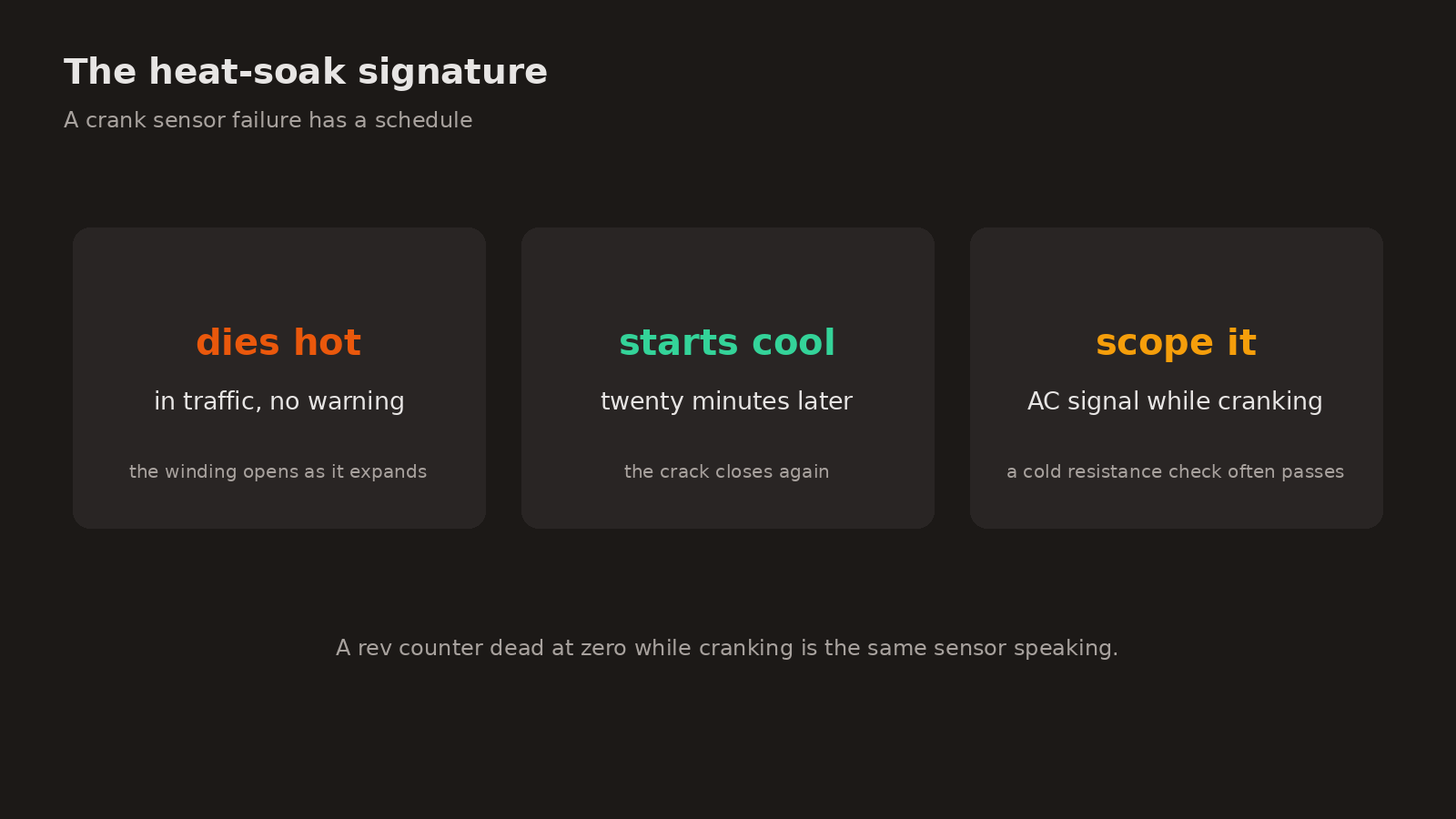
Diagram: the crankshaft position sensor's heat-soak pattern — dies hot, restarts after cooling, and needs testing at temperature rather than cold.
Información, no instrucciones
CarGeek es una obra de referencia, no un manual de taller. Sus páginas se escriben a partir de fuentes públicas y de lo que otras personas han comprobado, nunca a partir de la documentación de servicio del fabricante, de modo que pueden ser incorrectas o incompletas para su vehículo concreto. Parte de lo que describen entraña un riesgo real: alta tensión, combustible a presión, energía acumulada y piezas calientes o en movimiento.
Antes de actuar sobre cualquier indicación, hágala verificar por una persona con formación técnica siguiendo el procedimiento propio del fabricante para su vehículo. Nada de lo que hay aquí sustituye ese procedimiento.