P0335 and the engine that dies hot and restarts after lunch
That heat-soak pattern is nearly diagnostic by itself. These are mostly inductive sensors, and a winding that has cracked with age goes open-circuit as it heats and expands, then reconnects as it cools. The classic sequence: dies in traffic on a hot day, cranks uselessly for twenty minutes, starts like nothing happened once the fan has been off for a while. If that is your story, this sensor is the prime suspect even before you read the code.
Testing has a trap: a resistance check with the sensor cold and the engine cold will often pass, because the failure only exists hot. If you can, measure at the moment of failure — or heat the sensor gently with a heat gun while watching resistance. A scope showing the AC signal while cranking is the honest test; a healthy inductive sensor makes a clean sine-like pattern with a gap for the missing tooth.
While it is out, look at the tip. These sensors are magnetic, and they collect metal dust off the reluctor ring. A tip wearing a beard of swarf can corrupt the signal — and is also telling you something is shedding metal in there.
Bijlagen
-
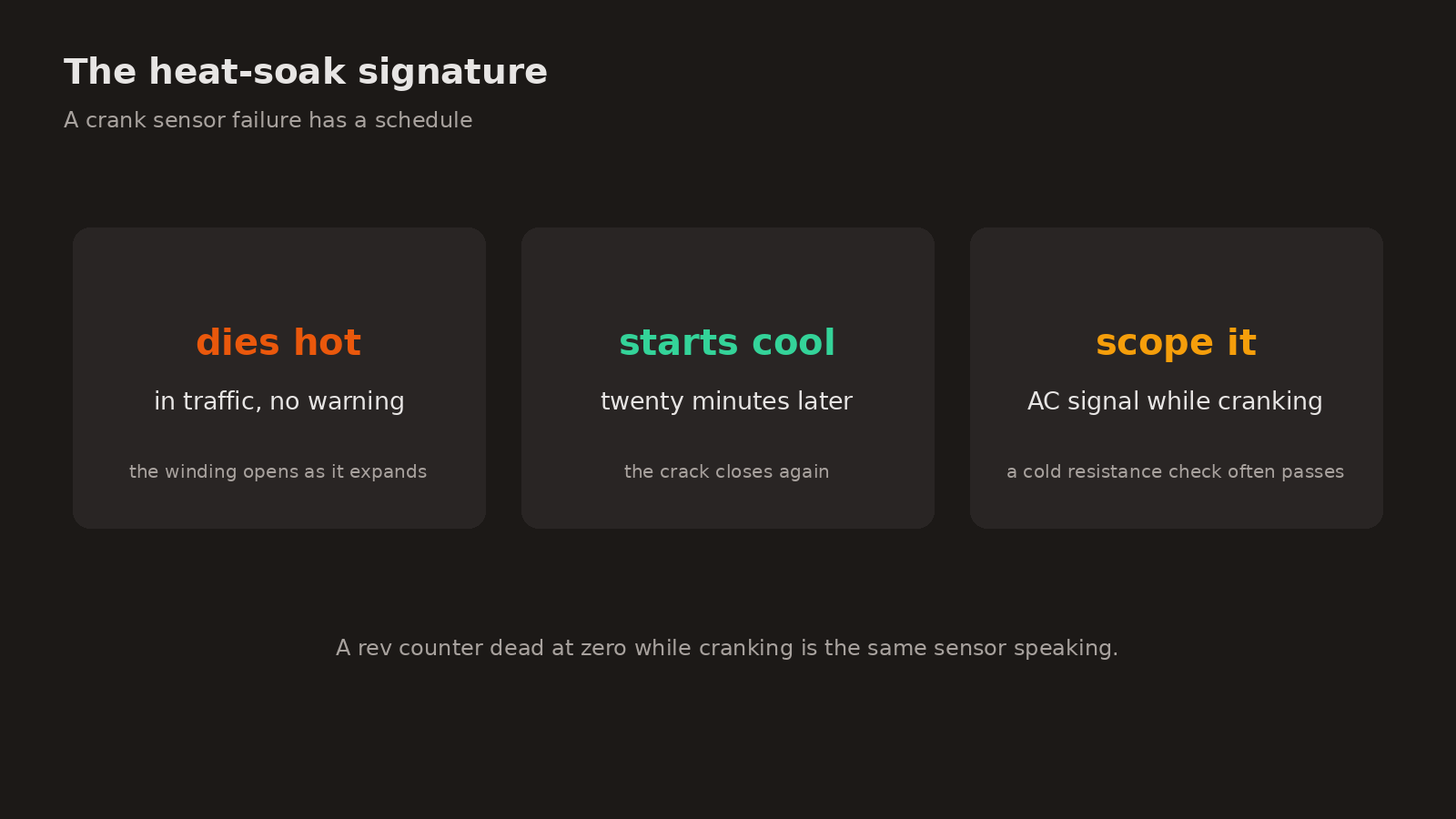
Diagram: the crankshaft position sensor's heat-soak pattern — dies hot, restarts after cooling, and needs testing at temperature rather than cold.
Informatie, geen instructie
CarGeek is een naslagwerk, geen werkplaatshandboek. De pagina's zijn geschreven op basis van openbare bronnen en van wat anderen hebben ondervonden, nooit op basis van de servicedocumentatie van de fabrikant zelf, dus ze kunnen onjuist of onvolledig zijn voor jouw specifieke voertuig. Een deel van wat erin staat brengt echt gevaar met zich mee: hoogspanning, brandstof onder druk, opgeslagen energie en hete of bewegende delen.
Laat alles waarnaar je wilt handelen eerst controleren door iemand met een technische opleiding, aan de hand van de eigen procedure van de fabrikant voor jouw voertuig. Niets hier vervangt die procedure.