نصيحة
رمز العطل P0401
P0401 is usually the passages, not the valve
CA
@cargeek
منذ شهر
P0401 — EGR flow insufficient — reads like a broken valve, and the valve is what gets replaced. But the monitor is measuring the *effect* of EGR flow (a change in manifold pressure or O2 when the valve opens), and the commonest reason the effect is missing is that the passages the gas flows through are closed with carbon, with a perfectly working valve bolted to them.
So the honest fix is often cleaning, not parts: the valve's ports, the supply passage — which on some engines narrows through a drilling small enough to close completely — and the pipe from the exhaust side. A new valve on blocked passages sets the same code again a few hundred miles later, which is exactly the pattern of repeat P0401s workshops know too well.
Command the valve with a scanner if you can: watch it open at idle. A commanded EGR valve that opens and *stalls or shakes the engine* has just proven both the valve and the passages flow — look elsewhere (the sensor reporting flow, typically). A commanded valve that opens with no effect at all is the blocked-passage signature.
Ford owners: several engines of the DPFE era measure EGR flow through a delta-pressure sensor and its two rubber hoses to the EGR tube. The hoses rot; the sensor drifts. On those, the sensor and hoses outscore the valve *and* the passages as the cause — check which measurement design your engine uses before assuming.
Symptoms are quiet — maybe light pinging under load, a rougher idle if a valve sticks open. The stakes are NOx and an inspection failure, not breakdown. But repeat-cleaning intervals shorten as carbon builds; the second P0401 is the argument for doing the passages properly.
So the honest fix is often cleaning, not parts: the valve's ports, the supply passage — which on some engines narrows through a drilling small enough to close completely — and the pipe from the exhaust side. A new valve on blocked passages sets the same code again a few hundred miles later, which is exactly the pattern of repeat P0401s workshops know too well.
Command the valve with a scanner if you can: watch it open at idle. A commanded EGR valve that opens and *stalls or shakes the engine* has just proven both the valve and the passages flow — look elsewhere (the sensor reporting flow, typically). A commanded valve that opens with no effect at all is the blocked-passage signature.
Ford owners: several engines of the DPFE era measure EGR flow through a delta-pressure sensor and its two rubber hoses to the EGR tube. The hoses rot; the sensor drifts. On those, the sensor and hoses outscore the valve *and* the passages as the cause — check which measurement design your engine uses before assuming.
Symptoms are quiet — maybe light pinging under load, a rougher idle if a valve sticks open. The stakes are NOx and an inspection failure, not breakdown. But repeat-cleaning intervals shorten as carbon builds; the second P0401 is the argument for doing the passages properly.
المرفقات
-
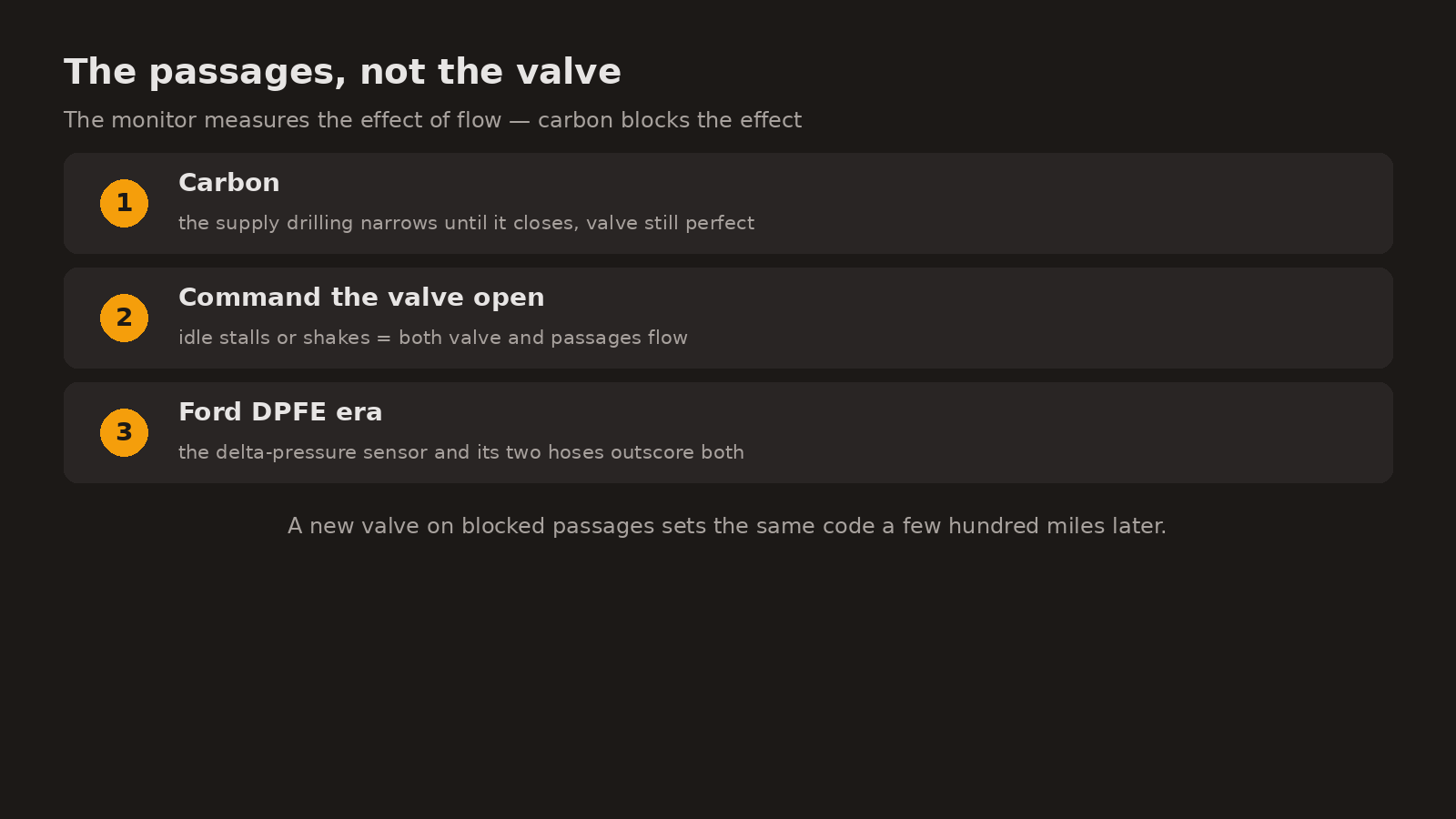
Diagram: why EGR insufficient-flow codes are usually carbon in the passages rather than the valve, the commanded-open test, and the Ford DPFE exception.
معلومات لا تعليمات
موقع CarGeek مرجع وليس دليل صيانة. تُكتب صفحاته من مصادر عامة ومما توصّل إليه آخرون، لا من وثائق الصيانة الخاصة بالشركة الصانعة، ولذلك قد تكون خاطئة أو ناقصة بالنسبة لمركبتك تحديدًا. وبعض ما تصفه ينطوي على خطر حقيقي: جهد عالٍ، ووقود تحت ضغط، وطاقة مخزَّنة، وأجزاء ساخنة أو متحركة.
قبل العمل بأي مما هنا، اطلب من شخص مدرَّب التحقق منه وفق الإجراء المعتمد من الشركة الصانعة لمركبتك. ولا شيء هنا يغني عن ذلك الإجراء.