P0401 is usually the passages, not the valve
So the honest fix is often cleaning, not parts: the valve's ports, the supply passage — which on some engines narrows through a drilling small enough to close completely — and the pipe from the exhaust side. A new valve on blocked passages sets the same code again a few hundred miles later, which is exactly the pattern of repeat P0401s workshops know too well.
Command the valve with a scanner if you can: watch it open at idle. A commanded EGR valve that opens and *stalls or shakes the engine* has just proven both the valve and the passages flow — look elsewhere (the sensor reporting flow, typically). A commanded valve that opens with no effect at all is the blocked-passage signature.
Ford owners: several engines of the DPFE era measure EGR flow through a delta-pressure sensor and its two rubber hoses to the EGR tube. The hoses rot; the sensor drifts. On those, the sensor and hoses outscore the valve *and* the passages as the cause — check which measurement design your engine uses before assuming.
Symptoms are quiet — maybe light pinging under load, a rougher idle if a valve sticks open. The stakes are NOx and an inspection failure, not breakdown. But repeat-cleaning intervals shorten as carbon builds; the second P0401 is the argument for doing the passages properly.
Bijlagen
-
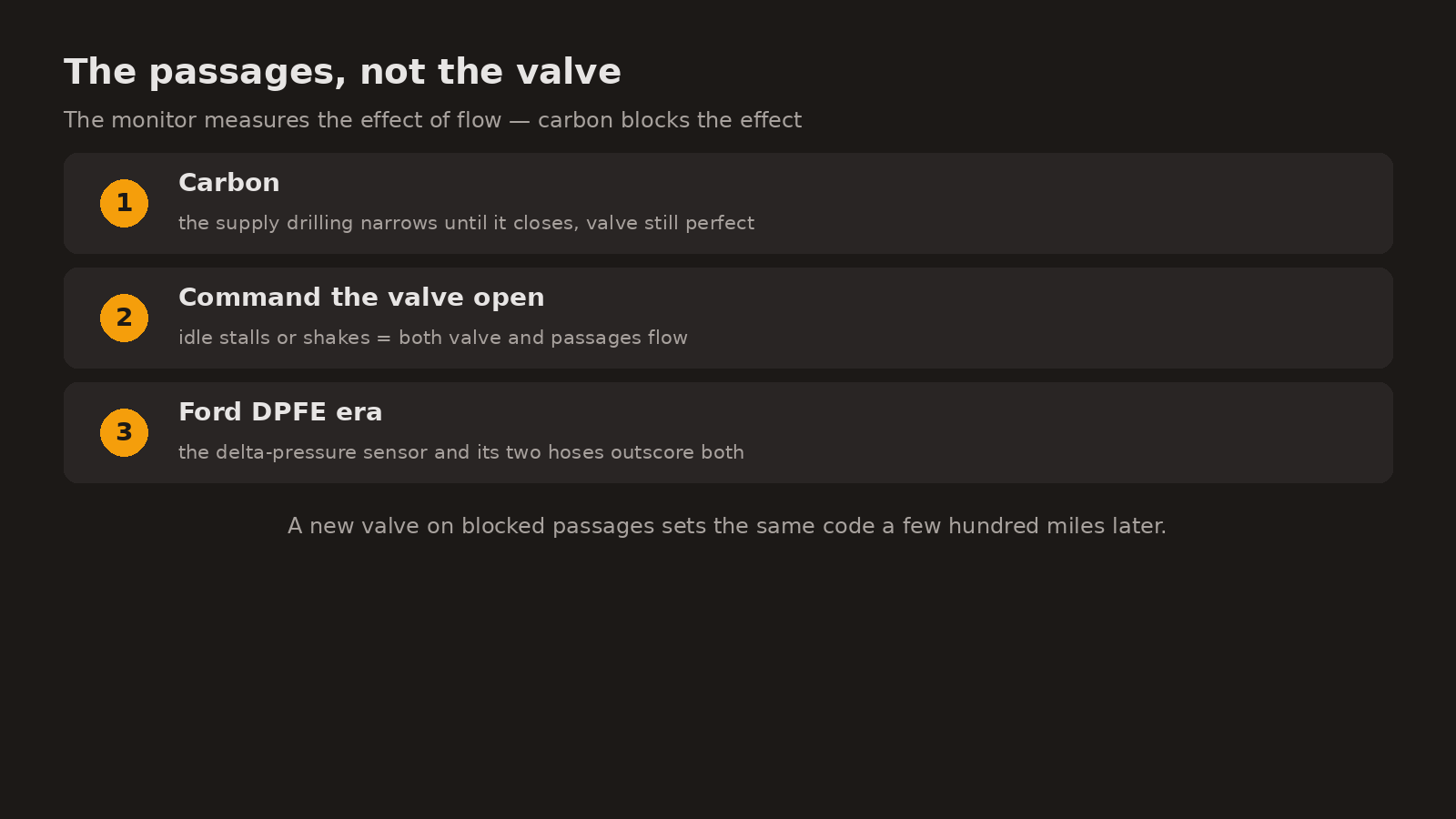
Diagram: why EGR insufficient-flow codes are usually carbon in the passages rather than the valve, the commanded-open test, and the Ford DPFE exception.
Informatie, geen instructie
CarGeek is een naslagwerk, geen werkplaatshandboek. De pagina's zijn geschreven op basis van openbare bronnen en van wat anderen hebben ondervonden, nooit op basis van de servicedocumentatie van de fabrikant zelf, dus ze kunnen onjuist of onvolledig zijn voor jouw specifieke voertuig. Een deel van wat erin staat brengt echt gevaar met zich mee: hoogspanning, brandstof onder druk, opgeslagen energie en hete of bewegende delen.
Laat alles waarnaar je wilt handelen eerst controleren door iemand met een technische opleiding, aan de hand van de eigen procedure van de fabrikant voor jouw voertuig. Niets hier vervangt die procedure.