P0401 is usually the passages, not the valve
So the honest fix is often cleaning, not parts: the valve's ports, the supply passage — which on some engines narrows through a drilling small enough to close completely — and the pipe from the exhaust side. A new valve on blocked passages sets the same code again a few hundred miles later, which is exactly the pattern of repeat P0401s workshops know too well.
Command the valve with a scanner if you can: watch it open at idle. A commanded EGR valve that opens and *stalls or shakes the engine* has just proven both the valve and the passages flow — look elsewhere (the sensor reporting flow, typically). A commanded valve that opens with no effect at all is the blocked-passage signature.
Ford owners: several engines of the DPFE era measure EGR flow through a delta-pressure sensor and its two rubber hoses to the EGR tube. The hoses rot; the sensor drifts. On those, the sensor and hoses outscore the valve *and* the passages as the cause — check which measurement design your engine uses before assuming.
Symptoms are quiet — maybe light pinging under load, a rougher idle if a valve sticks open. The stakes are NOx and an inspection failure, not breakdown. But repeat-cleaning intervals shorten as carbon builds; the second P0401 is the argument for doing the passages properly.
Anhänge
-
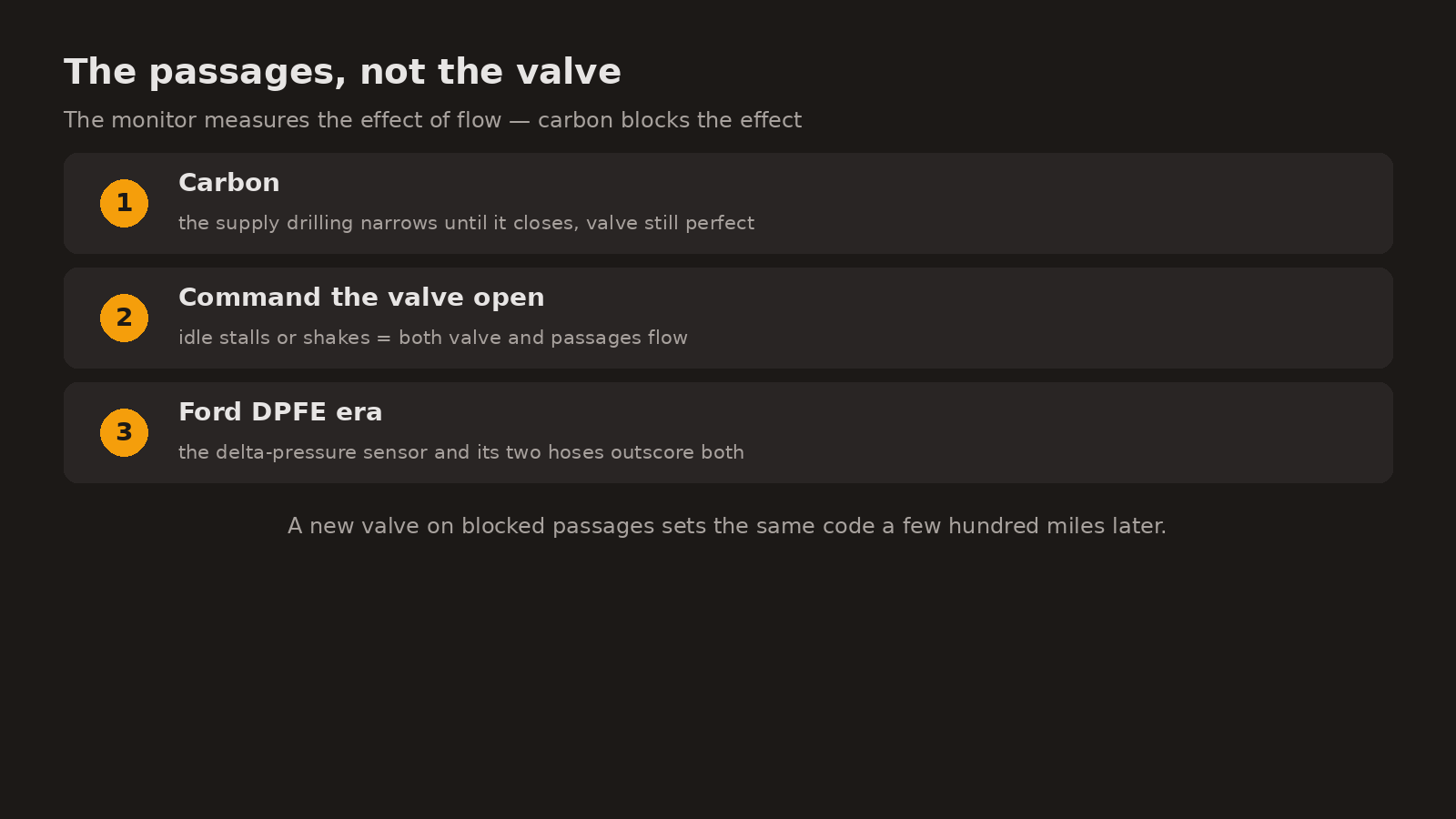
Diagram: why EGR insufficient-flow codes are usually carbon in the passages rather than the valve, the commanded-open test, and the Ford DPFE exception.
Information, keine Handlungsanweisung
CarGeek ist ein Nachschlagewerk, kein Werkstatthandbuch. Die Seiten entstehen aus öffentlichen Quellen und aus dem, was andere festgestellt haben, nie aus den Serviceunterlagen des Herstellers; für Ihr konkretes Fahrzeug können sie daher falsch oder unvollständig sein. Ein Teil des Beschriebenen birgt echte Gefahren: Hochspannung, Kraftstoff unter Druck, gespeicherte Energie sowie heiße oder bewegte Teile.
Lassen Sie alles, wonach Sie handeln wollen, von einer fachlich geschulten Person anhand der herstellereigenen Vorgehensweise für Ihr Fahrzeug prüfen. Nichts hiervon ersetzt diese Vorgehensweise.