P0401 is usually the passages, not the valve
So the honest fix is often cleaning, not parts: the valve's ports, the supply passage — which on some engines narrows through a drilling small enough to close completely — and the pipe from the exhaust side. A new valve on blocked passages sets the same code again a few hundred miles later, which is exactly the pattern of repeat P0401s workshops know too well.
Command the valve with a scanner if you can: watch it open at idle. A commanded EGR valve that opens and *stalls or shakes the engine* has just proven both the valve and the passages flow — look elsewhere (the sensor reporting flow, typically). A commanded valve that opens with no effect at all is the blocked-passage signature.
Ford owners: several engines of the DPFE era measure EGR flow through a delta-pressure sensor and its two rubber hoses to the EGR tube. The hoses rot; the sensor drifts. On those, the sensor and hoses outscore the valve *and* the passages as the cause — check which measurement design your engine uses before assuming.
Symptoms are quiet — maybe light pinging under load, a rougher idle if a valve sticks open. The stakes are NOx and an inspection failure, not breakdown. But repeat-cleaning intervals shorten as carbon builds; the second P0401 is the argument for doing the passages properly.
Archivos adjuntos
-
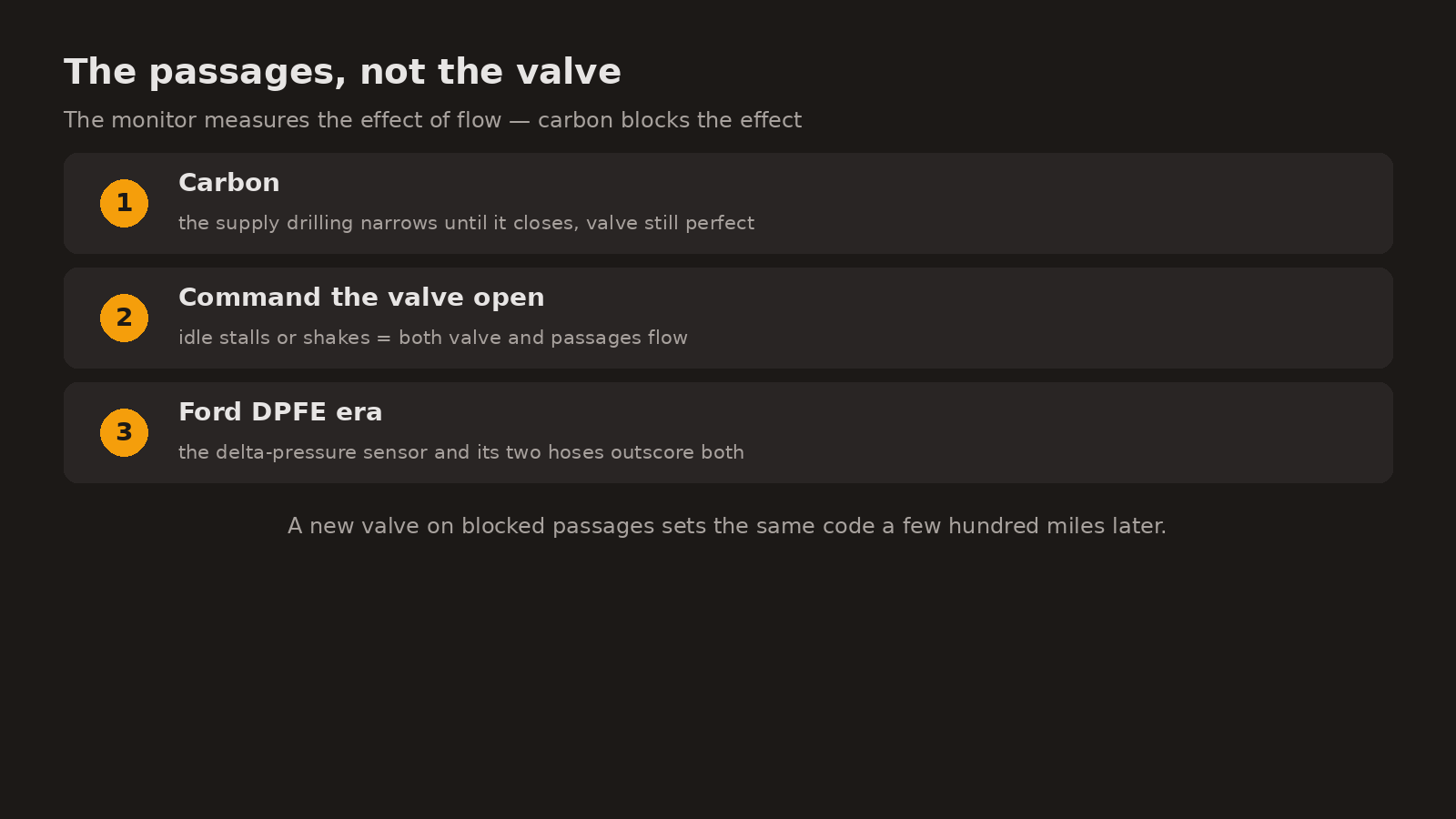
Diagram: why EGR insufficient-flow codes are usually carbon in the passages rather than the valve, the commanded-open test, and the Ford DPFE exception.
Información, no instrucciones
CarGeek es una obra de referencia, no un manual de taller. Sus páginas se escriben a partir de fuentes públicas y de lo que otras personas han comprobado, nunca a partir de la documentación de servicio del fabricante, de modo que pueden ser incorrectas o incompletas para su vehículo concreto. Parte de lo que describen entraña un riesgo real: alta tensión, combustible a presión, energía acumulada y piezas calientes o en movimiento.
Antes de actuar sobre cualquier indicación, hágala verificar por una persona con formación técnica siguiendo el procedimiento propio del fabricante para su vehículo. Nada de lo que hay aquí sustituye ese procedimiento.