P0401 is usually the passages, not the valve
So the honest fix is often cleaning, not parts: the valve's ports, the supply passage — which on some engines narrows through a drilling small enough to close completely — and the pipe from the exhaust side. A new valve on blocked passages sets the same code again a few hundred miles later, which is exactly the pattern of repeat P0401s workshops know too well.
Command the valve with a scanner if you can: watch it open at idle. A commanded EGR valve that opens and *stalls or shakes the engine* has just proven both the valve and the passages flow — look elsewhere (the sensor reporting flow, typically). A commanded valve that opens with no effect at all is the blocked-passage signature.
Ford owners: several engines of the DPFE era measure EGR flow through a delta-pressure sensor and its two rubber hoses to the EGR tube. The hoses rot; the sensor drifts. On those, the sensor and hoses outscore the valve *and* the passages as the cause — check which measurement design your engine uses before assuming.
Symptoms are quiet — maybe light pinging under load, a rougher idle if a valve sticks open. The stakes are NOx and an inspection failure, not breakdown. But repeat-cleaning intervals shorten as carbon builds; the second P0401 is the argument for doing the passages properly.
Вложения
-
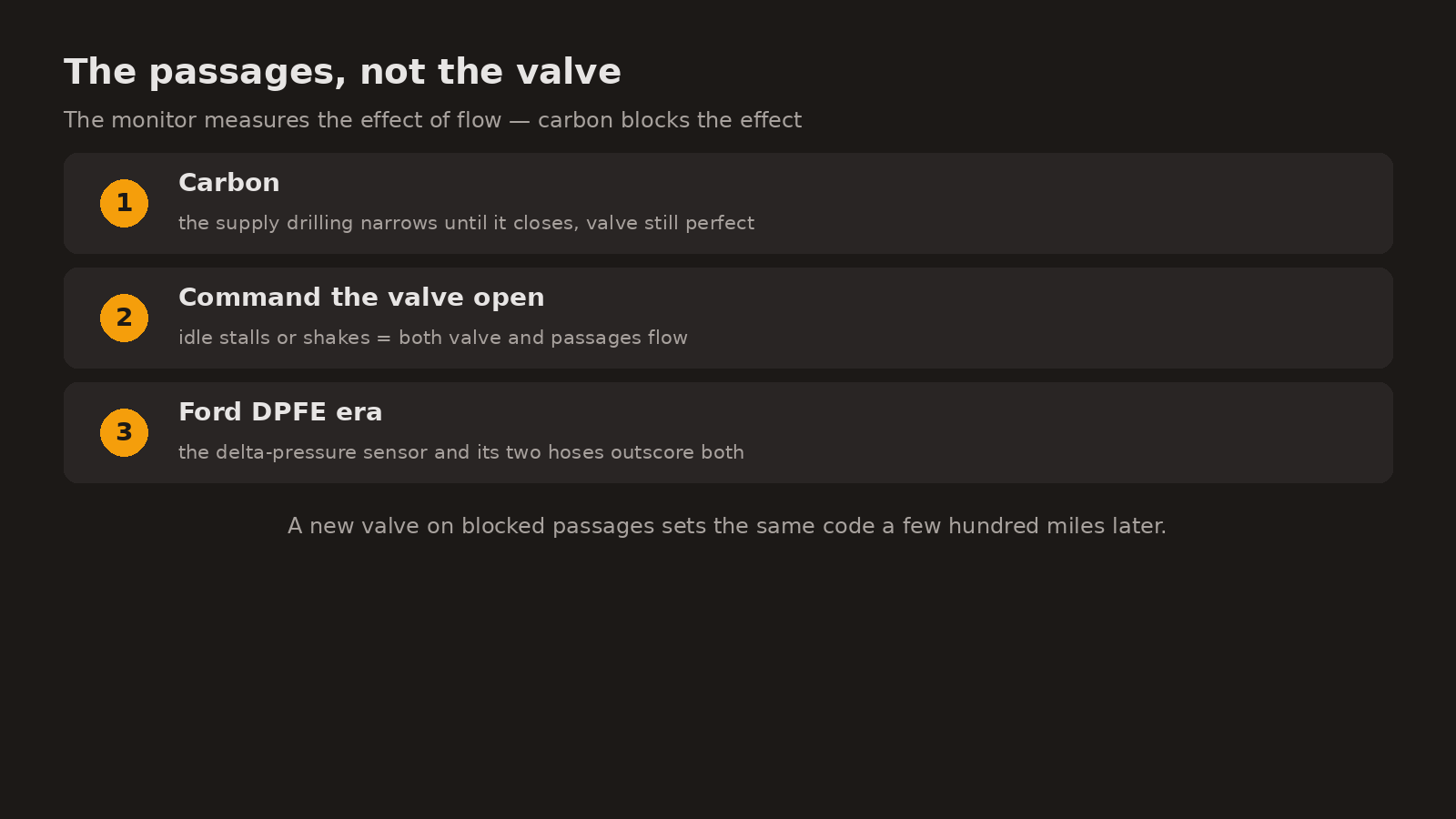
Diagram: why EGR insufficient-flow codes are usually carbon in the passages rather than the valve, the commanded-open test, and the Ford DPFE exception.
Информация, а не инструкция
CarGeek — это справочник, а не руководство по ремонту. Его страницы составлены по открытым источникам и по опыту других людей, но не по сервисной документации производителя, поэтому для вашего конкретного автомобиля они могут быть неверными или неполными. Часть описанного связана с реальной опасностью: высокое напряжение, топливо под давлением, накопленная энергия, горячие и движущиеся детали.
Всё, по чему вы собираетесь действовать, сначала проверьте с человеком, имеющим техническую подготовку, по собственной процедуре производителя для вашего автомобиля. Ничто здесь не заменяет эту процедуру.