نصيحة
رمز العطل P0562
P0562: when ten codes appear at once, believe this one first
HO
@hhh
منذ شهر
P0562 says system voltage dropped below what the ECU considers workable. On its own it points at the charging system. Arriving in a crowd — with communication codes, random sensor plausibility codes, maybe an ABS light — it is the crowd's ringleader, because every module misbehaves when the supply sags. Diagnose this one first and most of the crowd usually disappears with it.
Three measurements tell the story, all at the battery with a basic meter:
Engine off, after the car has sat: 12.4 V or better is a healthy battery at rest. Engine running: 13.5 to 14.7 V says the alternator is charging. Running with load — headlights, rear demister, blower on full: it should hold above roughly 13 V. Sagging into the twelves under load is an alternator on its way out, even though it passed the no-load check.
If the battery reads fine but the code returns, measure the same things again *at the ECU end* or at the underbonnet fuse box. A corroded battery terminal or a failing main ground strap drops voltage between the battery and everything else — the battery tests healthy, the modules starve anyway. Voltage drop across each main cable while cranking should be fractions of a volt; a full volt lost in a cable is the fault.
Slow cranking on cold mornings plus this code is the same story told twice. Batteries fail gradually, then suddenly — and they take a surprising amount of electronics theatre down with them.
Three measurements tell the story, all at the battery with a basic meter:
Engine off, after the car has sat: 12.4 V or better is a healthy battery at rest. Engine running: 13.5 to 14.7 V says the alternator is charging. Running with load — headlights, rear demister, blower on full: it should hold above roughly 13 V. Sagging into the twelves under load is an alternator on its way out, even though it passed the no-load check.
If the battery reads fine but the code returns, measure the same things again *at the ECU end* or at the underbonnet fuse box. A corroded battery terminal or a failing main ground strap drops voltage between the battery and everything else — the battery tests healthy, the modules starve anyway. Voltage drop across each main cable while cranking should be fractions of a volt; a full volt lost in a cable is the fault.
Slow cranking on cold mornings plus this code is the same story told twice. Batteries fail gradually, then suddenly — and they take a surprising amount of electronics theatre down with them.
المرفقات
-
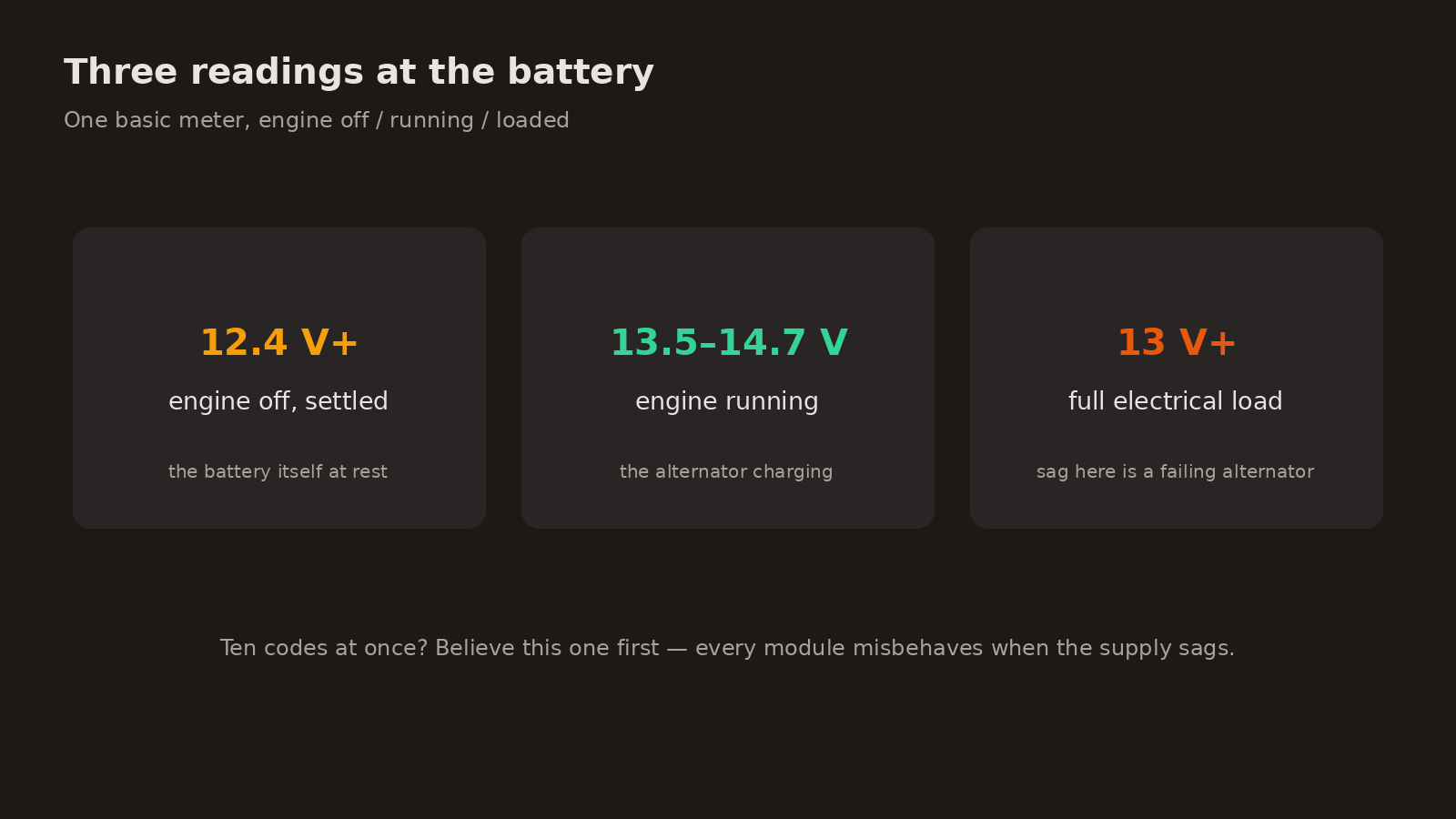
Diagram: the three battery voltage readings that diagnose a system-voltage code — at rest, charging, and under full electrical load.
معلومات لا تعليمات
موقع CarGeek مرجع وليس دليل صيانة. تُكتب صفحاته من مصادر عامة ومما توصّل إليه آخرون، لا من وثائق الصيانة الخاصة بالشركة الصانعة، ولذلك قد تكون خاطئة أو ناقصة بالنسبة لمركبتك تحديدًا. وبعض ما تصفه ينطوي على خطر حقيقي: جهد عالٍ، ووقود تحت ضغط، وطاقة مخزَّنة، وأجزاء ساخنة أو متحركة.
قبل العمل بأي مما هنا، اطلب من شخص مدرَّب التحقق منه وفق الإجراء المعتمد من الشركة الصانعة لمركبتك. ولا شيء هنا يغني عن ذلك الإجراء.