P0562: when ten codes appear at once, believe this one first
Three measurements tell the story, all at the battery with a basic meter:
Engine off, after the car has sat: 12.4 V or better is a healthy battery at rest. Engine running: 13.5 to 14.7 V says the alternator is charging. Running with load — headlights, rear demister, blower on full: it should hold above roughly 13 V. Sagging into the twelves under load is an alternator on its way out, even though it passed the no-load check.
If the battery reads fine but the code returns, measure the same things again *at the ECU end* or at the underbonnet fuse box. A corroded battery terminal or a failing main ground strap drops voltage between the battery and everything else — the battery tests healthy, the modules starve anyway. Voltage drop across each main cable while cranking should be fractions of a volt; a full volt lost in a cable is the fault.
Slow cranking on cold mornings plus this code is the same story told twice. Batteries fail gradually, then suddenly — and they take a surprising amount of electronics theatre down with them.
Anexos
-
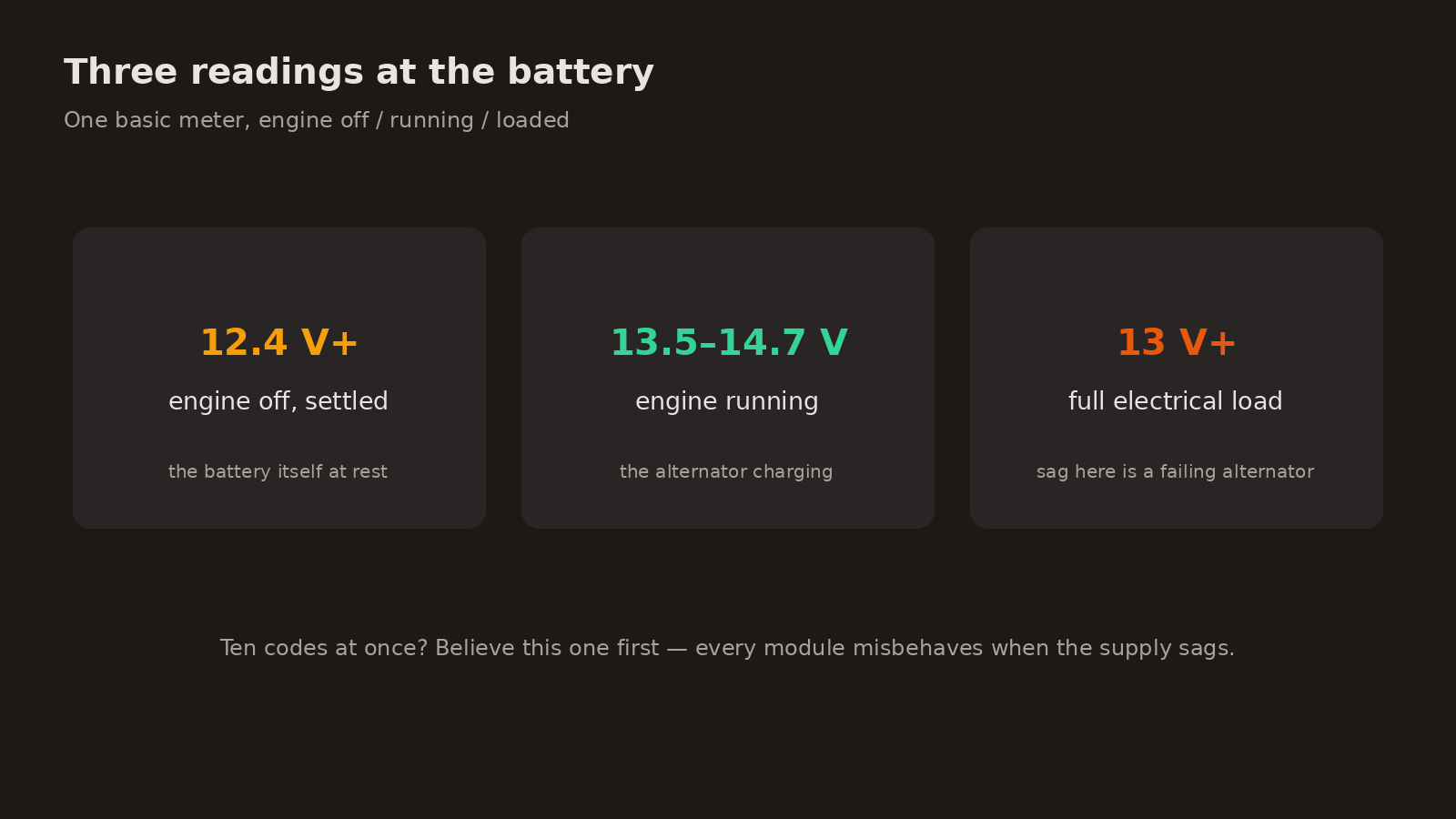
Diagram: the three battery voltage readings that diagnose a system-voltage code — at rest, charging, and under full electrical load.
Informação, não instrução
O CarGeek é uma referência, não um manual de serviço. Suas páginas são escritas a partir de fontes públicas e do que outras pessoas constataram, nunca a partir da documentação de serviço do fabricante, de modo que podem estar erradas ou incompletas para o seu veículo específico. Parte do que descrevem envolve risco real: alta tensão, combustível sob pressão, energia acumulada e peças quentes ou em movimento.
Antes de agir com base em qualquer orientação, peça a verificação de uma pessoa com formação técnica, seguindo o procedimento do próprio fabricante para o seu veículo. Nada aqui substitui esse procedimento.