P0562: when ten codes appear at once, believe this one first
Three measurements tell the story, all at the battery with a basic meter:
Engine off, after the car has sat: 12.4 V or better is a healthy battery at rest. Engine running: 13.5 to 14.7 V says the alternator is charging. Running with load — headlights, rear demister, blower on full: it should hold above roughly 13 V. Sagging into the twelves under load is an alternator on its way out, even though it passed the no-load check.
If the battery reads fine but the code returns, measure the same things again *at the ECU end* or at the underbonnet fuse box. A corroded battery terminal or a failing main ground strap drops voltage between the battery and everything else — the battery tests healthy, the modules starve anyway. Voltage drop across each main cable while cranking should be fractions of a volt; a full volt lost in a cable is the fault.
Slow cranking on cold mornings plus this code is the same story told twice. Batteries fail gradually, then suddenly — and they take a surprising amount of electronics theatre down with them.
Archivos adjuntos
-
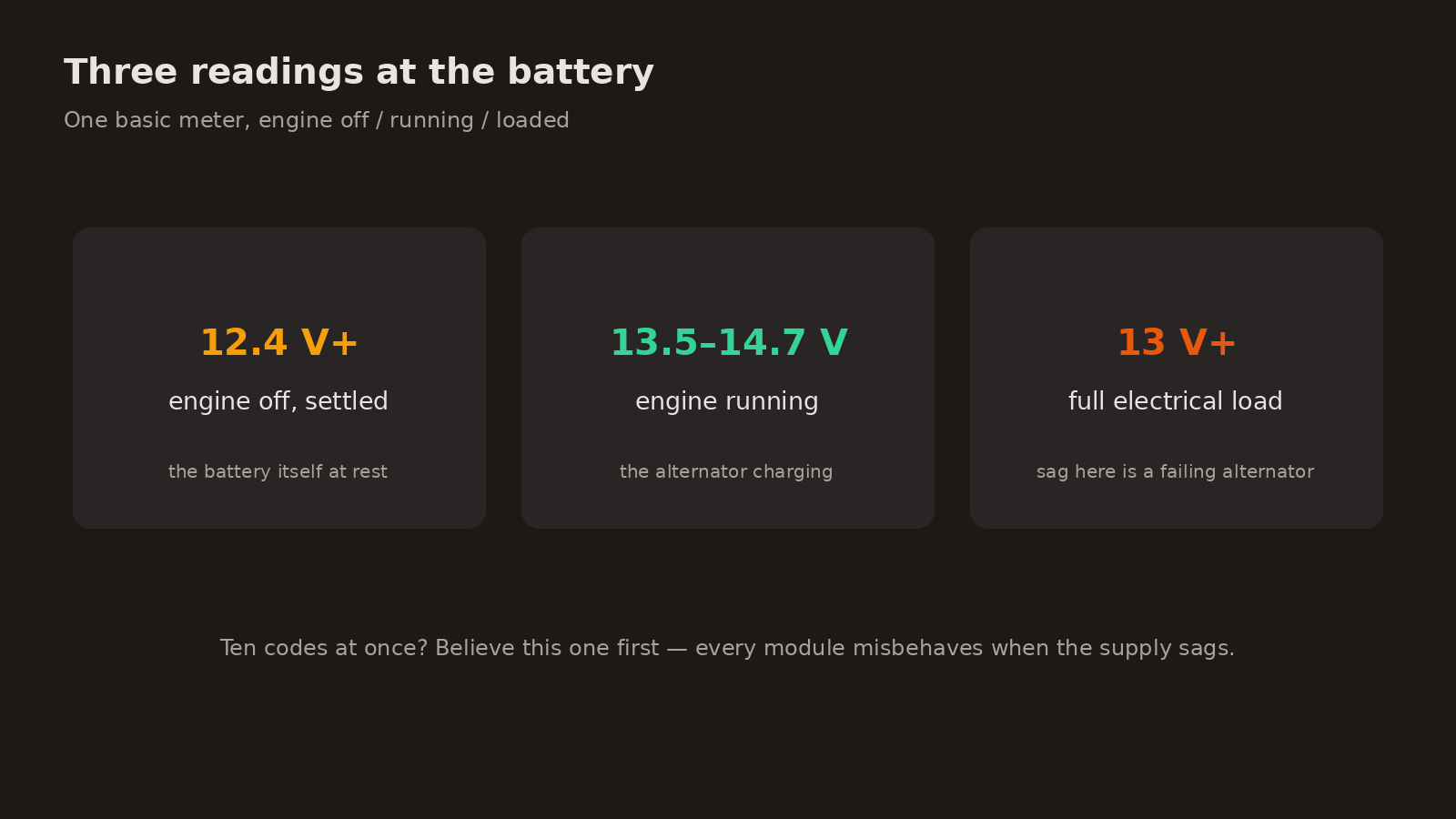
Diagram: the three battery voltage readings that diagnose a system-voltage code — at rest, charging, and under full electrical load.
Información, no instrucciones
CarGeek es una obra de referencia, no un manual de taller. Sus páginas se escriben a partir de fuentes públicas y de lo que otras personas han comprobado, nunca a partir de la documentación de servicio del fabricante, de modo que pueden ser incorrectas o incompletas para su vehículo concreto. Parte de lo que describen entraña un riesgo real: alta tensión, combustible a presión, energía acumulada y piezas calientes o en movimiento.
Antes de actuar sobre cualquier indicación, hágala verificar por una persona con formación técnica siguiendo el procedimiento propio del fabricante para su vehículo. Nada de lo que hay aquí sustituye ese procedimiento.