P0562: when ten codes appear at once, believe this one first
Three measurements tell the story, all at the battery with a basic meter:
Engine off, after the car has sat: 12.4 V or better is a healthy battery at rest. Engine running: 13.5 to 14.7 V says the alternator is charging. Running with load — headlights, rear demister, blower on full: it should hold above roughly 13 V. Sagging into the twelves under load is an alternator on its way out, even though it passed the no-load check.
If the battery reads fine but the code returns, measure the same things again *at the ECU end* or at the underbonnet fuse box. A corroded battery terminal or a failing main ground strap drops voltage between the battery and everything else — the battery tests healthy, the modules starve anyway. Voltage drop across each main cable while cranking should be fractions of a volt; a full volt lost in a cable is the fault.
Slow cranking on cold mornings plus this code is the same story told twice. Batteries fail gradually, then suddenly — and they take a surprising amount of electronics theatre down with them.
Вложения
-
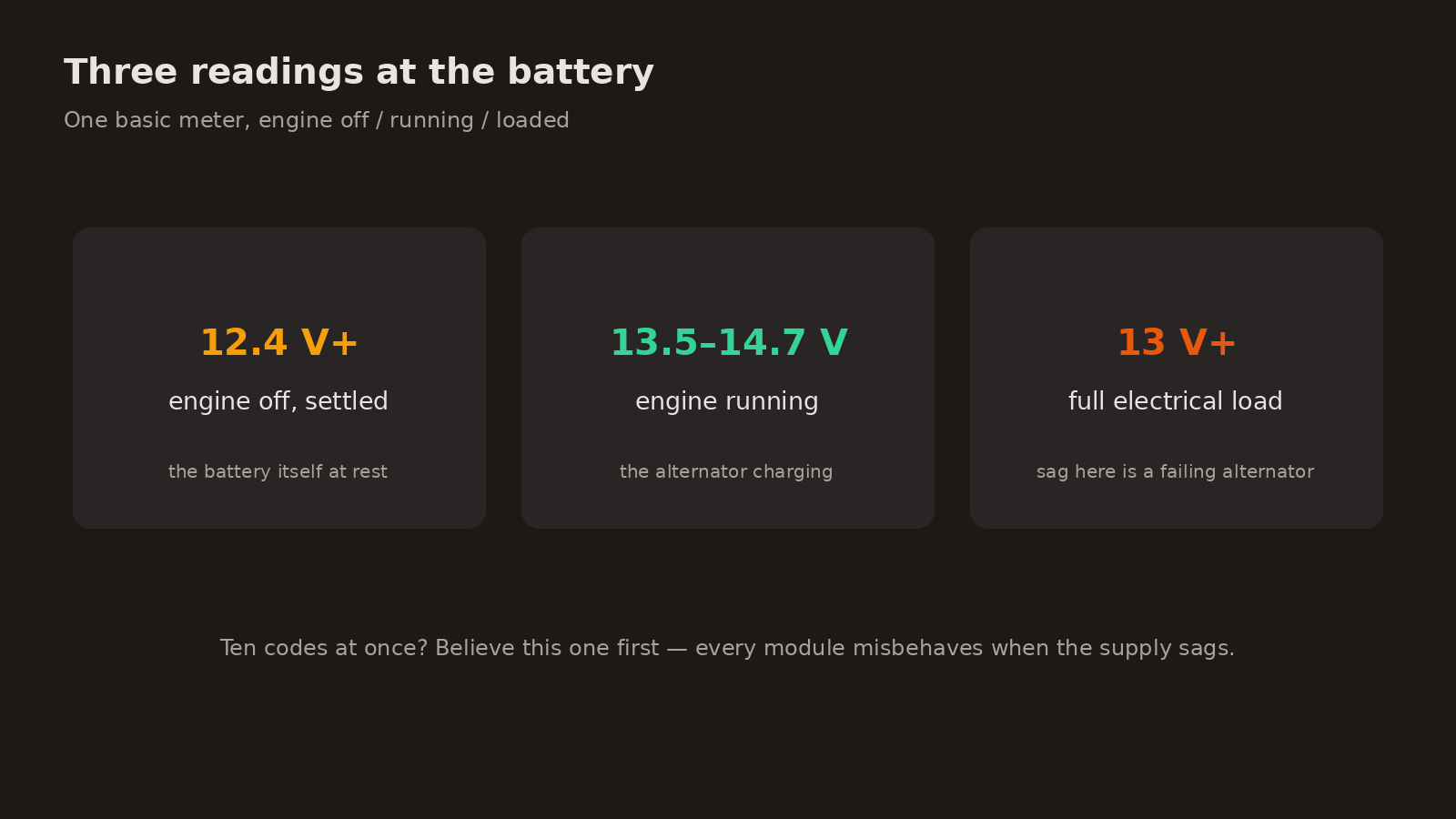
Diagram: the three battery voltage readings that diagnose a system-voltage code — at rest, charging, and under full electrical load.
Информация, а не инструкция
CarGeek — это справочник, а не руководство по ремонту. Его страницы составлены по открытым источникам и по опыту других людей, но не по сервисной документации производителя, поэтому для вашего конкретного автомобиля они могут быть неверными или неполными. Часть описанного связана с реальной опасностью: высокое напряжение, топливо под давлением, накопленная энергия, горячие и движущиеся детали.
Всё, по чему вы собираетесь действовать, сначала проверьте с человеком, имеющим техническую подготовку, по собственной процедуре производителя для вашего автомобиля. Ничто здесь не заменяет эту процедуру.