Finding unmetered air without a smoke machine
Air that enters after the airflow sensor is air the ECU never metered — the engine runs lean, trims climb, and half this site's most-visited codes trace back to it. A smoke machine finds it in minutes; here is the honest version of hunting it without one.
Confirm the kind of leak first. Combined fuel trim high at idle but near normal at 2,500 rpm is the unmetered-air signature — a fixed-size hole matters most when total airflow is small. Trims high everywhere point at fuel supply or the meter instead; stop here and test those.
Then, in order of cost:
- Hands. Engine off. Flex every rubber boot and elbow between the airflow sensor and the engine — cracks gape under a thumb and close at rest, which is why looking is not enough. Check hose clamps for shine where a loose joint has been moving.
- Ears. At idle, a length of garden hose held to one ear and wanded around joints turns a faint hiss into a loud one. Quiet morning, cold engine, no fan running.
- The oil filler cap. Pull it at idle: a healthy engine stumbles. Barely any change means the crankcase is already open to a leak — on many engines that verdict points straight at the PCV system's diaphragm.
- Water mist. A spray bottle of plain water on suspect joints: water pulled into a leak momentarily smooths or dips the idle, and it is safer than flammable search methods. If you do use carb cleaner or unlit propane instead, small amounts, well away from the exhaust manifold, fire extinguisher in reach — the rpm rise when it finds the hole is unmistakable, and so is the fire risk.
- Clamp tests. Briefly pinch candidate hoses (purge line, brake booster line) and watch trims: the one that drops the trim when clamped just confessed.
A leak found is confirmed the same way it was hunted: fix it, then watch the trims settle over a drive or two. Numbers, not vibes.
Diese Anleitung erscheint unter CC BY-SA 4.0 — frei zum Nachmachen, Weiterverwenden und Verbessern, mit Namensnennung und Weitergabe unter gleichen Bedingungen.
Anhänge
-
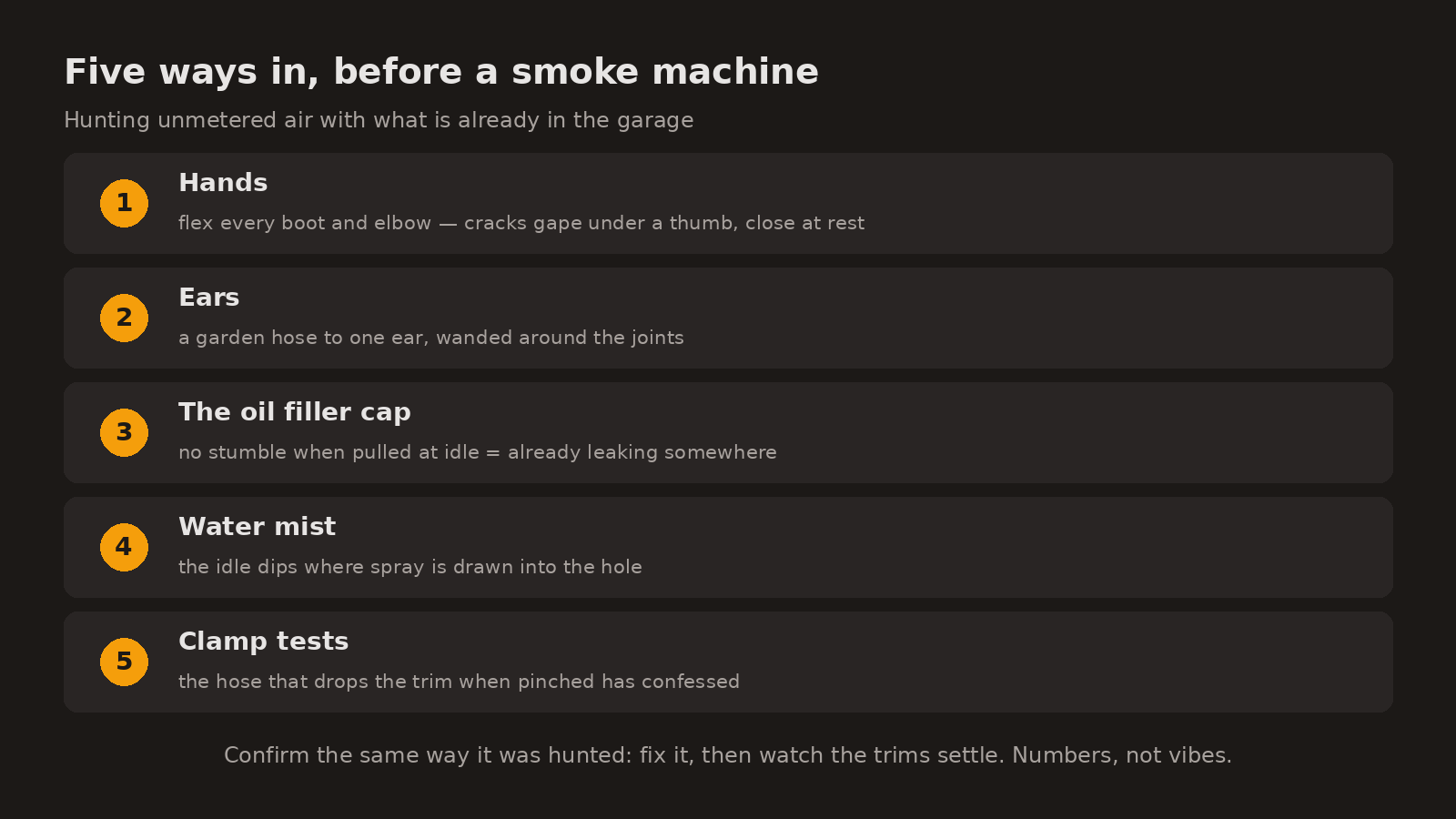
Diagram: five smoke-machine-free ways to find unmetered air — by hand, by ear, the oil cap test, water mist, and clamping candidate hoses while watching fuel trim.
Information, keine Handlungsanweisung
CarGeek ist ein Nachschlagewerk, kein Werkstatthandbuch. Die Seiten entstehen aus öffentlichen Quellen und aus dem, was andere festgestellt haben, nie aus den Serviceunterlagen des Herstellers; für Ihr konkretes Fahrzeug können sie daher falsch oder unvollständig sein. Ein Teil des Beschriebenen birgt echte Gefahren: Hochspannung, Kraftstoff unter Druck, gespeicherte Energie sowie heiße oder bewegte Teile.
Lassen Sie alles, wonach Sie handeln wollen, von einer fachlich geschulten Person anhand der herstellereigenen Vorgehensweise für Ihr Fahrzeug prüfen. Nichts hiervon ersetzt diese Vorgehensweise.