Veículo
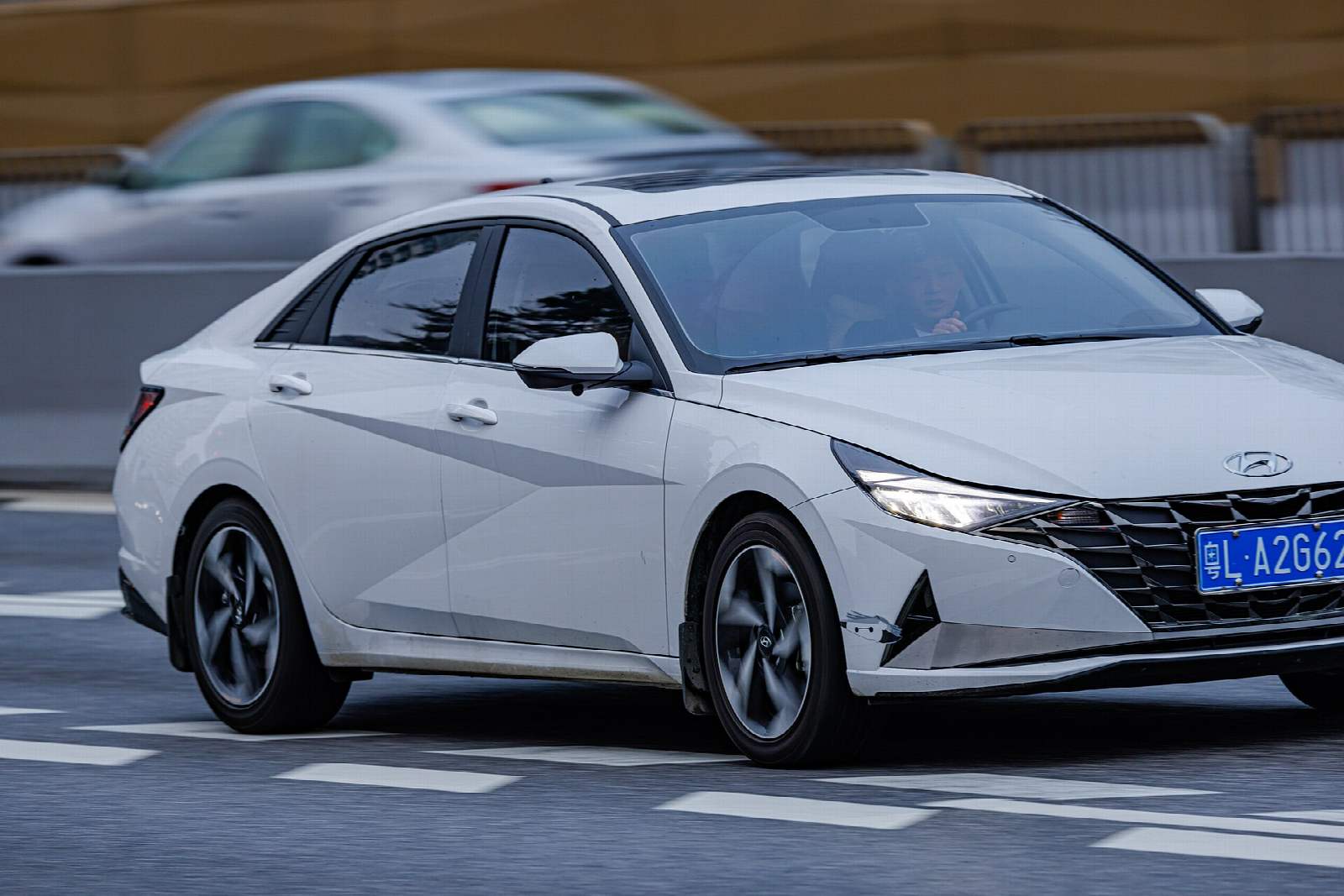
Hyundai Elantra
Hyundai's global compact, sold as Avante in Korea. The Nu and Theta engine families' well-publicised bearing failures mean a knock or oil-pressure code on these years deserves the corpus's P0524-grade urgency — continuing to drive is what turns a warranty claim into an engine.
.jpg)
Gerações
-
First generation 1990–1995
The J1, sold as the Lantra in Europe and Australia and renamed Avante in South Korea in 1994. Every engine is a licence-built Mitsubishi design, so Mitsubishi service data reaches further than the badge suggests: the 1.5 is an Orion 4G15, the 1.6 a Sirius 4G61 and the larger 1.8 a Sirius 4G67.
- Carrocerias
- Sedan
- Plataforma
- Hyundai Elantra
- Motores
-
- 1.5 — G4DJ · petrol · Mitsubishi 4G15, single overhead camshaft
- 1.5 — G4CL · petrol · twin cam, from 1993
- 1.6 — G4CR · petrol · Mitsubishi 4G61
- 1.8 — G4CM · petrol · 1,796 cc
- 1.8 — G4CN · petrol · Mitsubishi 4G67, 1,836 cc
- Câmbios
- 5-speed manual · 4-speed automatic
- Tração
- Front-wheel drive
-
Second generation 1995–2000
The J2, and the first Elantra on engines Hyundai designed itself — the Beta four in three sizes. The 1998 facelift is coded RD internally and is widely called the J3, which is the same car. The 1.9 diesel offered from 1997 is a Peugeot XUD9, so PSA documentation covers it and nothing Korean does.
- Carrocerias
- Sedan · Estate
- Plataforma
- Hyundai Elantra
- Motores
-
- 1.5 — G4EK · petrol · Alpha
- 1.6 — G4GR · petrol · Beta
- 1.8 — G4GM · petrol · Beta
- 2.0 — G4GF · petrol · Beta
- 1.9 — XUD9 · diesel · PSA, from 1997
- Câmbios
- 5-speed manual · 4-speed automatic
- Tração
- Front-wheel drive
-
Third generation 2000–2006
The XD, the first Elantra offered as a five-door liftback and the first with a common-rail diesel. Its petrol engines are the Alpha II and Beta II families rather than the Mitsubishi-derived units of the first car, so a fault pattern read from a 1990s Lantra does not carry across.
- Carrocerias
- Sedan · Hatchback
- Plataforma
- Hyundai Elantra
- Motores
-
- 1.5 — G4EC · petrol · Alpha II
- 1.6 — G4ED · petrol · 77–79 kW (103–106 hp) · 143–146 Nm (105–108 lb-ft) · Alpha II
- 1.8 — G4GB · petrol · Beta II
- 2.0 — G4GC · petrol · 100–105 kW (134–141 hp) · 181–186 Nm (133–137 lb-ft) · Beta II
- 2.0 CRDi — D4EA · diesel · 83 kW (111 hp) · 235 Nm (173 lb-ft) · from 2001
- Câmbios
- 5-speed manual · 4-speed automatic
- Tração
- Front-wheel drive
-
HD 2006–2010
Beta and Gamma engines; conventional and largely undramatic.
- Carrocerias
- Sedan
- Plataforma
- Hyundai HD
- Motores
-
- 1.6 Gamma — petrol
- 2.0 Beta — petrol
- 1.6 CRDi — diesel
- 1.8 — petrol · China
- Câmbios
- 5-speed manual · 4-speed automatic
- Tração
- Front-wheel drive
-
MD 2010–2015
Nu 1.8 era — the years the connecting-rod bearing question hangs over.
- Carrocerias
- Sedan
- Plataforma
- Hyundai MD
- Motores
-
- 1.6 GDi — GAMMA · petrol · 97 kW (130 hp) · 158 Nm (117 lb-ft)
- 1.8 Nu — petrol
- 2.0 Nu — petrol
- 1.6 CRDi — diesel
- Câmbios
- 6-speed manual · 6-speed automatic
- Tração
- Front-wheel drive
-
AD 2015–2020
Nu and Gamma engines, GDI spreading through the range.
- Carrocerias
- Sedan
- Plataforma
- Hyundai AD
- Motores
-
- 1.6 GDi — GAMMA · petrol · 93–94 kW (125–126 hp) · 155 Nm (114 lb-ft)
- 1.4 turbo GDi — petrol · 211 Nm (156 lb-ft)
- 2.0 Nu — petrol · 115 kW (154 hp) · 192 Nm (142 lb-ft)
- 1.6 turbo GDi — petrol · 150 kW (201 hp) · 265 Nm (195 lb-ft) · Elantra Sport
- 1.6 CRDi — diesel · 100 kW (134 hp)
- 1.8 — petrol · 4-cylinder, US market 2015-2016
- Câmbios
- 6-speed manual · 6-speed automatic · 7-speed dual-clutch · CVT
- Tração
- Front-wheel drive
-
CN7 2020–present
Smartstream engines and hybrid variants.
- Belt CVT (continuously variable) CVT
- D6KF1 (6DCT) dupla embreagem de 6 marchas
- D7UF1 (7DCT) dupla embreagem de 7 marchas
- D8LF1 (8DCT) dupla embreagem de 8 marchas
- Dual-clutch (DCT / DSG) dupla embreagem
- Carrocerias
- Sedan
- Plataforma
- Hyundai K3
- Motores
-
- 1.6 Smartstream — petrol · 90–94 kW (121–126 hp) · 154 Nm (114 lb-ft)
- 2.0 Smartstream — petrol
- 1.6 turbo GDi N Line — petrol · 150 kW (201 hp) · 265 Nm (195 lb-ft)
- 2.0 turbo GDi — petrol · 206 kW (276 hp) · 392 Nm (289 lb-ft) · Elantra N
- 1.6 GDi hybrid — hybrid · 104 kW (139 hp) combined
- Câmbios
- 6-speed manual · 6-speed automatic · CVT · 6-speed D6KF1 DCT · 7-speed D7UF1 DCT · 8-speed D8LF1 DCT
- Tração
- Front-wheel drive
Dados CAN
Bancos de dados de barramento que cobrem este veículo, espelhados do projeto de código aberto opendbc.
Informações de serviço
Informação, não instrução
O CarGeek é uma referência, não um manual de serviço. Suas páginas são escritas a partir de fontes públicas e do que outras pessoas constataram, nunca a partir da documentação de serviço do fabricante, de modo que podem estar erradas ou incompletas para o seu veículo específico. Parte do que descrevem envolve risco real: alta tensão, combustível sob pressão, energia acumulada e peças quentes ou em movimento.
Antes de agir com base em qualquer orientação, peça a verificação de uma pessoa com formação técnica, seguindo o procedimento do próprio fabricante para o seu veículo. Nada aqui substitui esse procedimento.
Publicações sobre o Hyundai Elantra
Seja o primeiro a documentar isto
Ainda não há publicações sobre isto. Vale a pena anotar tudo o que você descobriu — até um beco sem saída poupa a mesma tarde de outra pessoa.
O que faz valer a leitura:
- O carro — marca, modelo, ano e motor. A mesma falha se comporta de forma diferente em cada um.
- O que você mediu, não só o que trocou.
- O que realmente resolveu — ou que nada resolveu, o que também vale saber.
Entrar ou criar uma conta para adicionar o que você descobriu sobre Hyundai Elantra.