Vehicle
Hyundai Elantra
Hyundai's global compact, sold as Avante in Korea. The Nu and Theta engine families' well-publicised bearing failures mean a knock or oil-pressure code on these years deserves the corpus's P0524-grade urgency — continuing to drive is what turns a warranty claim into an engine.
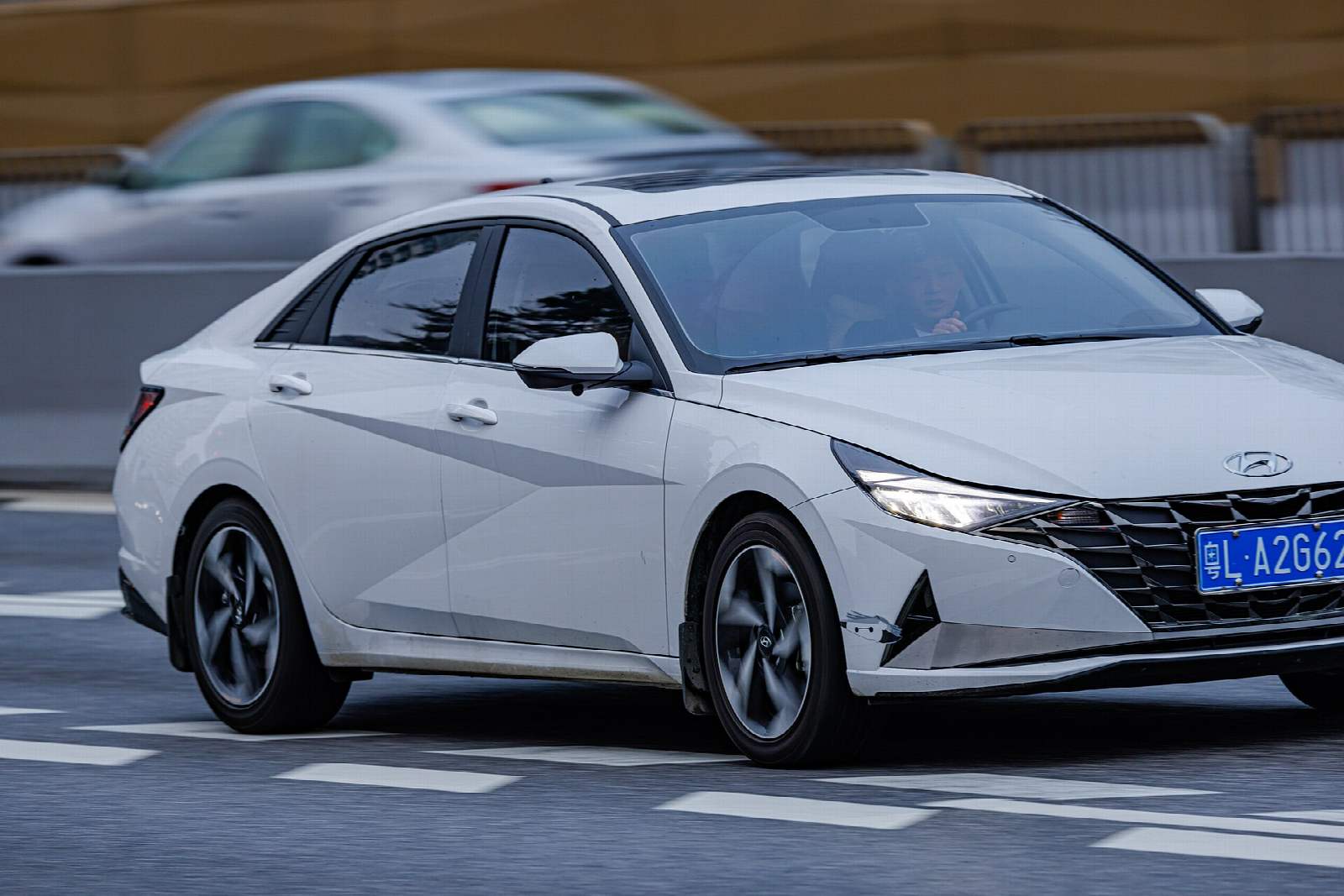
.jpg)
Generations
-
First generation 1990–1995
The J1, sold as the Lantra in Europe and Australia and renamed Avante in South Korea in 1994. Every engine is a licence-built Mitsubishi design, so Mitsubishi service data reaches further than the badge suggests: the 1.5 is an Orion 4G15, the 1.6 a Sirius 4G61 and the larger 1.8 a Sirius 4G67.
- Body styles
- Sedan
- Platform
- Hyundai Elantra
- Engines
-
- 1.5 — G4DJ · petrol · Mitsubishi 4G15, single overhead camshaft
- 1.5 — G4CL · petrol · twin cam, from 1993
- 1.6 — G4CR · petrol · Mitsubishi 4G61
- 1.8 — G4CM · petrol · 1,796 cc
- 1.8 — G4CN · petrol · Mitsubishi 4G67, 1,836 cc
- Transmissions
- 5-speed manual · 4-speed automatic
- Drivetrain
- Front-wheel drive
-
Second generation 1995–2000
The J2, and the first Elantra on engines Hyundai designed itself — the Beta four in three sizes. The 1998 facelift is coded RD internally and is widely called the J3, which is the same car. The 1.9 diesel offered from 1997 is a Peugeot XUD9, so PSA documentation covers it and nothing Korean does.
- Body styles
- Sedan · Estate
- Platform
- Hyundai Elantra
- Engines
-
- 1.5 — G4EK · petrol · Alpha
- 1.6 — G4GR · petrol · Beta
- 1.8 — G4GM · petrol · Beta
- 2.0 — G4GF · petrol · Beta
- 1.9 — XUD9 · diesel · PSA, from 1997
- Transmissions
- 5-speed manual · 4-speed automatic
- Drivetrain
- Front-wheel drive
-
Third generation 2000–2006
The XD, the first Elantra offered as a five-door liftback and the first with a common-rail diesel. Its petrol engines are the Alpha II and Beta II families rather than the Mitsubishi-derived units of the first car, so a fault pattern read from a 1990s Lantra does not carry across.
- Body styles
- Sedan · Hatchback
- Platform
- Hyundai Elantra
- Engines
-
- 1.5 — G4EC · petrol · Alpha II
- 1.6 — G4ED · petrol · 77–79 kW (103–106 hp) · 143–146 Nm (105–108 lb-ft) · Alpha II
- 1.8 — G4GB · petrol · Beta II
- 2.0 — G4GC · petrol · 100–105 kW (134–141 hp) · 181–186 Nm (133–137 lb-ft) · Beta II
- 2.0 CRDi — D4EA · diesel · 83 kW (111 hp) · 235 Nm (173 lb-ft) · from 2001
- Transmissions
- 5-speed manual · 4-speed automatic
- Drivetrain
- Front-wheel drive
-
HD 2006–2010
Beta and Gamma engines; conventional and largely undramatic.
- Body styles
- Sedan
- Platform
- Hyundai HD
- Engines
-
- 1.6 Gamma — petrol
- 2.0 Beta — petrol
- 1.6 CRDi — diesel
- 1.8 — petrol · China
- Transmissions
- 5-speed manual · 4-speed automatic
- Drivetrain
- Front-wheel drive
-
MD 2010–2015
Nu 1.8 era — the years the connecting-rod bearing question hangs over.
- Body styles
- Sedan
- Platform
- Hyundai MD
- Engines
-
- 1.6 GDi — GAMMA · petrol · 97 kW (130 hp) · 158 Nm (117 lb-ft)
- 1.8 Nu — petrol
- 2.0 Nu — petrol
- 1.6 CRDi — diesel
- Transmissions
- 6-speed manual · 6-speed automatic
- Drivetrain
- Front-wheel drive
-
AD 2015–2020
Nu and Gamma engines, GDI spreading through the range.
- Body styles
- Sedan
- Platform
- Hyundai AD
- Engines
-
- 1.6 GDi — GAMMA · petrol · 93–94 kW (125–126 hp) · 155 Nm (114 lb-ft)
- 1.4 turbo GDi — petrol · 211 Nm (156 lb-ft)
- 2.0 Nu — petrol · 115 kW (154 hp) · 192 Nm (142 lb-ft)
- 1.6 turbo GDi — petrol · 150 kW (201 hp) · 265 Nm (195 lb-ft) · Elantra Sport
- 1.6 CRDi — diesel · 100 kW (134 hp)
- 1.8 — petrol · 4-cylinder, US market 2015-2016
- Transmissions
- 6-speed manual · 6-speed automatic · 7-speed dual-clutch · CVT
- Drivetrain
- Front-wheel drive
-
CN7 2020–present
Smartstream engines and hybrid variants.
- Belt CVT (continuously variable) CVT
- D6KF1 (6DCT) 6-speed dual-clutch
- D7UF1 (7DCT) 7-speed dual-clutch
- D8LF1 (8DCT) 8-speed dual-clutch
- Dual-clutch (DCT / DSG) dual-clutch
- Body styles
- Sedan
- Platform
- Hyundai K3
- Engines
-
- 1.6 Smartstream — petrol · 90–94 kW (121–126 hp) · 154 Nm (114 lb-ft)
- 2.0 Smartstream — petrol
- 1.6 turbo GDi N Line — petrol · 150 kW (201 hp) · 265 Nm (195 lb-ft)
- 2.0 turbo GDi — petrol · 206 kW (276 hp) · 392 Nm (289 lb-ft) · Elantra N
- 1.6 GDi hybrid — hybrid · 104 kW (139 hp) combined
- Transmissions
- 6-speed manual · 6-speed automatic · CVT · 6-speed D6KF1 DCT · 7-speed D7UF1 DCT · 8-speed D8LF1 DCT
- Drivetrain
- Front-wheel drive
CAN data
Bus databases covering this vehicle, mirrored from the open-source opendbc project.
Service information
Information, not instruction
CarGeek is a reference, not a service manual. Its pages are written from public sources and from what other people have found, never from a manufacturer's own service information, so they can be wrong or incomplete for your particular vehicle. Some of what they describe carries real risk: high voltage, fuel under pressure, stored energy, hot and moving parts.
Have anything you intend to act on checked by a trained person against the manufacturer's own procedure for your vehicle. Nothing here replaces that procedure.
Posted about the Hyundai Elantra
Be the first to write this up
Nothing posted about this yet. Whatever you found is worth writing down — even a dead end saves someone the same afternoon.
What makes one worth reading:
- The car — make, model, year and engine. The same fault behaves differently on each.
- What you measured, not only what you replaced.
- What actually fixed it — or that nothing did, which is worth knowing too.
Sign in or create an account to add what you found about Hyundai Elantra.