Vehicle
Audi A8
The aluminium-bodied flagship, and the Audi Space Frame is the thing that sets it apart practically: the body is aluminium, so accident repair is a specialist process and corrosion behaves differently from steel. Air suspension is standard rather than optional, which makes a ride-height complaint a compressor, valve-block or strut question first — and a compressor that has failed usually did so working against a leak. The 4.2 TDI V8 and the W12 are both here, and neither shares much with the volume V6.
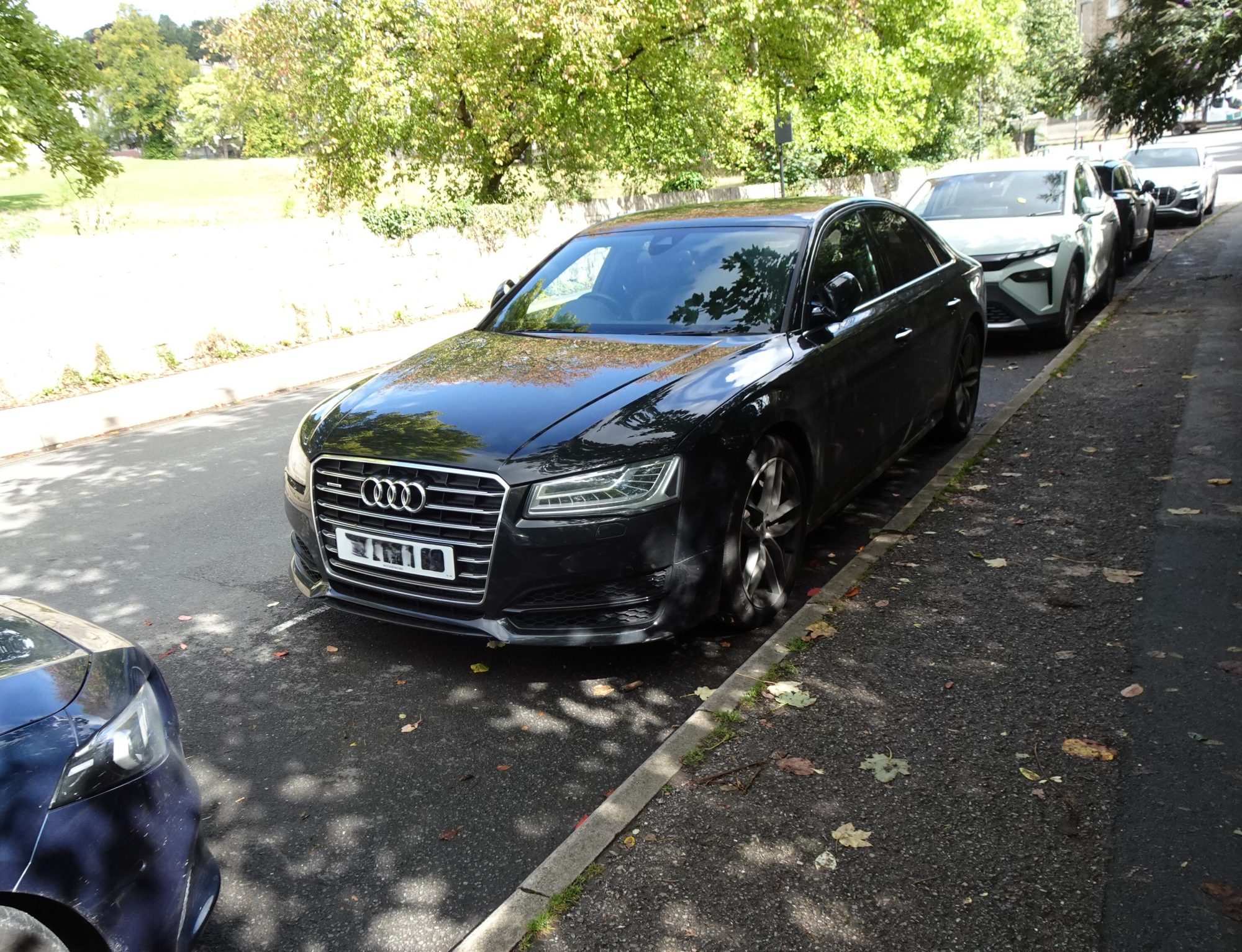
_(54813494556).jpg)
Generations
-
D2 1994–2002
The first aluminium-spaceframe A8 — body repair needs aluminium-specific procedure and equipment, which is the fact that catches a general workshop out.
- Body styles
- Sedan
- Platform
- Volkswagen D2
- Engines
-
- 2.8 V6 — petrol · 128–142 kW (172–190 hp) · 250–280 Nm (184–207 lb-ft)
- 3.7 V8 — petrol · 169–191 kW (227–256 hp) · 315–350 Nm (232–258 lb-ft)
- 4.2 V8 — petrol · 220–265 kW (295–355 hp) · 400–430 Nm (295–317 lb-ft)
- 2.5 TDI V6 — diesel · 110–132 kW (148–177 hp) · 310–370 Nm (229–273 lb-ft)
- Transmissions
- 5-speed manual · 6-speed manual · 5-speed automatic
- Drivetrain
- Front-wheel drive · quattro four-wheel drive
-
D3 2002–2010
The aluminium space frame with standard air suspension; a compressor failure is nearly always secondary to a leak.
- Body styles
- Sedan
- Platform
- Volkswagen D3
- Engines
-
- 3.0 V6 — petrol · 162 kW (217 hp) · 300 Nm (221 lb-ft)
- 3.2 FSI V6 — petrol · 191 kW (256 hp) · 330 Nm (243 lb-ft)
- 4.2 V8 — petrol · 246–257 kW (330–345 hp) · 430–440 Nm (317–325 lb-ft)
- 6.0 W12 — petrol · 331 kW (444 hp) · 580 Nm (428 lb-ft)
- 3.0 V6 TDI — EA896 · diesel · 171 kW (229 hp) · 450 Nm (332 lb-ft)
- 4.2 V8 TDI — diesel · 240 kW (322 hp) · 650 Nm (479 lb-ft)
- 5.2 — petrol · 331 kW (444 hp) · 540 Nm (398 lb-ft) · 10-cylinder, US market 2007-2009
- Transmissions
- 6-speed tiptronic · 8-speed tiptronic
- Drivetrain
- quattro four-wheel drive · Front-wheel drive
-
D4 2010–2017
MLB, and the generation where the 3.0 TFSI supercharged V6 becomes the volume engine in most markets.
- EA824 (4.0/4.2 V8)
- EA896 (3.0 V6 TDI) 3.0 L
- EA897 (3.0 V6 TDI) 3.0 L
- EA898 (4.1/4.2 TDI)
- TDI (badge, not an engine)
- TFSI / TSI (badge, not an engine)
- Body styles
- Sedan
- Platform
- MLB
- Engines
-
- 3.0 TFSI V6 — petrol · 213–250 kW (286–335 hp) · 420–440 Nm (310–325 lb-ft)
- 4.0 TFSI V8 — petrol · 309–382 kW (414–512 hp) · 600–650 Nm (443–479 lb-ft) · S8
- 6.3 W12 — petrol · 368 kW (493 hp) · 625 Nm (461 lb-ft)
- 3.0 V6 TDI — diesel · 150–193 kW (201–259 hp) · 400–580 Nm (295–428 lb-ft)
- 4.2 V8 TDI — diesel · 258–283 kW (346–380 hp) · 800–850 Nm (590–627 lb-ft)
- 2.0 TFSI hybrid — hybrid · 155 kW (208 hp) · 350 Nm (258 lb-ft)
- 4.2 — petrol · 273 kW (366 hp) · 445 Nm (328 lb-ft) · 8-cylinder, US market 2010-2012
- Transmissions
- 8-speed tiptronic
- Drivetrain
- quattro four-wheel drive
-
D5 2017–present
MLB Evo with a 48-volt mild hybrid as standard — an integrated starter-generator putting high-voltage codes on every car in the range.
- EA824 (4.0/4.2 V8)
- EA839 (2.9/3.0 V6 TFSI)
- EA897 (3.0 V6 TDI) 3.0 L
- TDI (badge, not an engine)
- TFSI / TSI (badge, not an engine)
- Body styles
- Sedan
- Platform
- MLB Evo
- Engines
-
- 3.0 TFSI V6 — mild hybrid
- 4.0 TFSI V8 — mild hybrid · S8
- 3.0 V6 TDI — EA897 · mild hybrid
- 3.0 TFSI e — plug-in hybrid
- 3.0 V6 — petrol · 250 kW (335 hp)
- 4.0 V8 mild hybrid — mild hybrid
- 4.0 V8 diesel — diesel · 320 kW (429 hp)
- Transmissions
- 8-speed Tiptronic automatic
- Drivetrain
- quattro four-wheel drive
Information, not instruction
CarGeek is a reference, not a service manual. Its pages are written from public sources and from what other people have found, never from a manufacturer's own service information, so they can be wrong or incomplete for your particular vehicle. Some of what they describe carries real risk: high voltage, fuel under pressure, stored energy, hot and moving parts.
Have anything you intend to act on checked by a trained person against the manufacturer's own procedure for your vehicle. Nothing here replaces that procedure.
Posted about the Audi A8
Be the first to write this up
Nothing posted about this yet. Whatever you found is worth writing down — even a dead end saves someone the same afternoon.
What makes one worth reading:
- The car — make, model, year and engine. The same fault behaves differently on each.
- What you measured, not only what you replaced.
- What actually fixed it — or that nothing did, which is worth knowing too.
Sign in or create an account to add what you found about Audi A8.