Vehicle
Daihatsu Copen
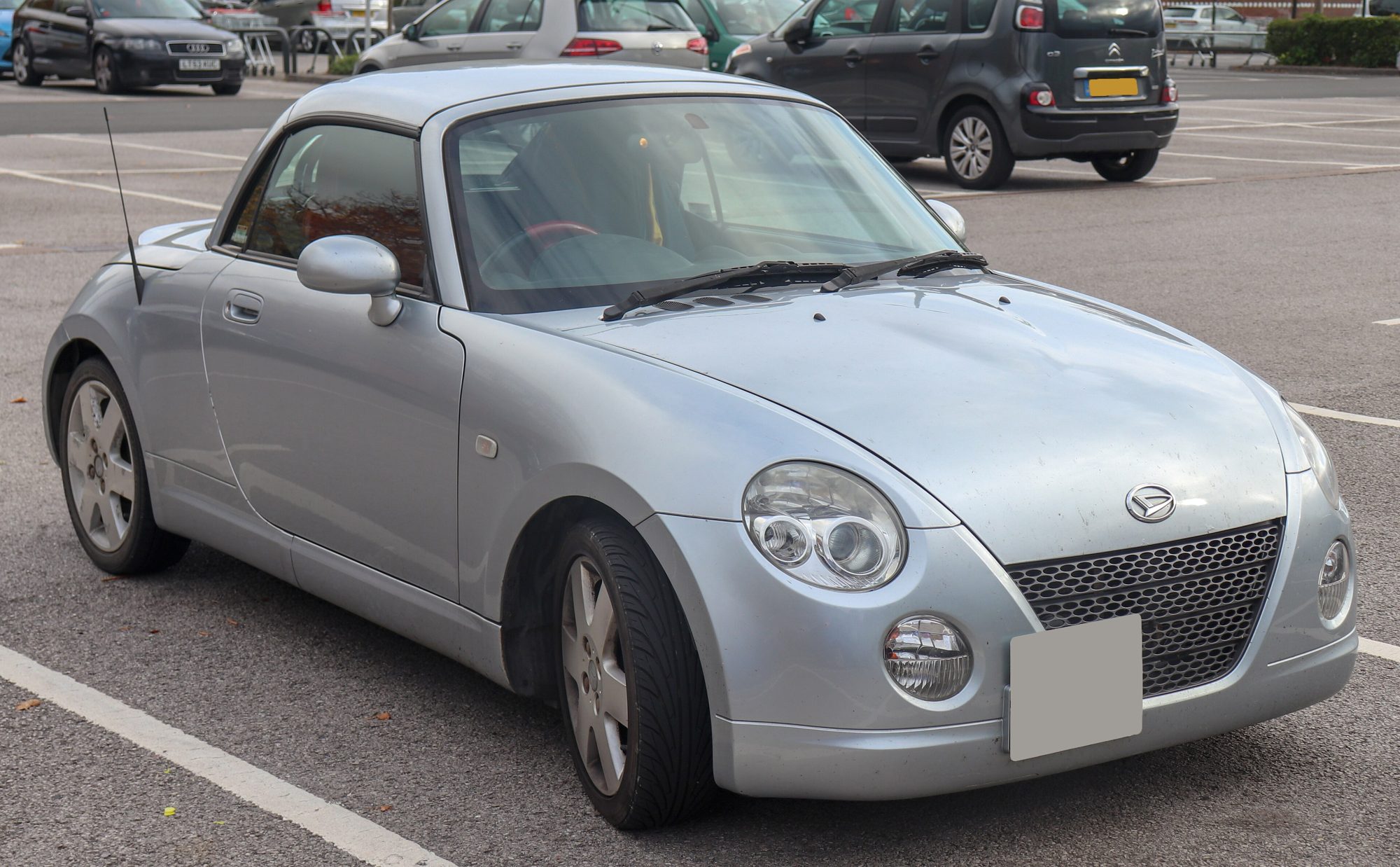
A two-seat folding-hardtop roadster built to Japan's kei-car regulations, which is the fact that shapes everything about it: a 660 cc engine, tiny dimensions and a body designed around a legal class rather than a market. The original L880K uses the JB-DET turbocharged four-cylinder — a genuinely small turbo engine whose boost-control solenoid and intercooler plumbing are the usual sources of a power complaint. The later LA400K moves to a three-cylinder KF-VET and adds removable body panels. Both carry an electrohydraulic folding roof with its own control unit, pump and microswitches, which is the model's characteristic fault and reports as a position rather than a component code.

Generations
-
L880K 2002–2012
The original, with the JB-DET turbocharged four-cylinder — a genuinely small turbo engine whose boost-control solenoid is the usual power complaint.
- Body styles
- Roadster
- Platform
- Daihatsu kei platform
- Engines
-
- 0.66 turbo four-cylinder — petrol · JB-DET
- 1.3 four-cylinder — petrol · K3-VE, export
- 0.7 turbo — petrol
- Transmissions
- 5-speed manual · 4-speed automatic
- Drivetrain
- Front-wheel drive
-
LA400K 2014–present
A three-cylinder KF-VET on a new frame with removable body panels; the folding roof and its microswitches carry over as the characteristic fault.
- Body styles
- Roadster
- Platform
- Daihatsu D-Frame
- Engines
-
- 0.66 turbo three-cylinder — petrol · KF-VET
- 0.7 turbo — petrol
- Transmissions
- 5-speed manual · CVT · 7-speed Super Active Shift CVT
- Drivetrain
- Front-wheel drive
Information, not instruction
CarGeek is a reference, not a service manual. Its pages are written from public sources and from what other people have found, never from a manufacturer's own service information, so they can be wrong or incomplete for your particular vehicle. Some of what they describe carries real risk: high voltage, fuel under pressure, stored energy, hot and moving parts.
Have anything you intend to act on checked by a trained person against the manufacturer's own procedure for your vehicle. Nothing here replaces that procedure.
Posted about the Daihatsu Copen
Be the first to write this up
Nothing posted about this yet. Whatever you found is worth writing down — even a dead end saves someone the same afternoon.
What makes one worth reading:
- The car — make, model, year and engine. The same fault behaves differently on each.
- What you measured, not only what you replaced.
- What actually fixed it — or that nothing did, which is worth knowing too.
Sign in or create an account to add what you found about Daihatsu Copen.