Vehicle
Jaguar XJS
Jaguar's grand tourer for twenty-one years, and the last car built around the 5.3 and 6.0 V12 — an engine whose ignition, fuel and, above all, cooling systems decide whether one survives: it runs hot by design, the header tank and radiator are marginal when new, and an overheat takes the heads. The six-cylinder AJ6 and AJ16 cars are far more ordinary. Later facelift cars (1991 onward) have substantially revised electrics and a different rear suspension bush arrangement, so the year matters more than the badge suggests.
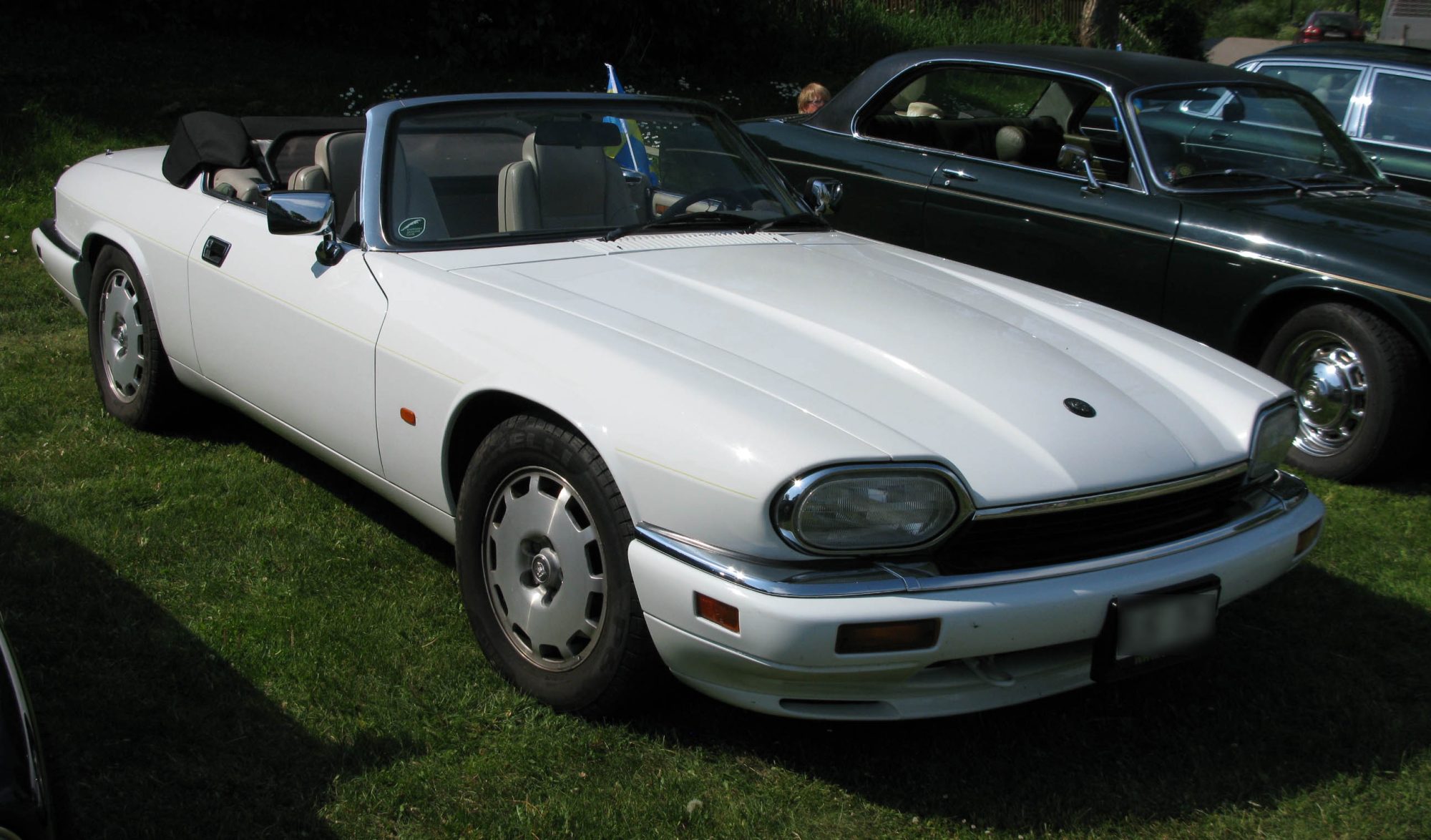

Generations
-
Pre-facelift 1975–1991
The original body. V12 throughout until the AJ6 straight-six joined in 1983.
- Body styles
- Coupé · Convertible
- Platform
- Jaguar XJ
- Engines
-
- 5.3 V12 — petrol · 182–220 kW (244–295 hp)
- 3.6 straight-six — AJ6 · petrol · 168 kW (225 hp)
- Transmissions
- 4-speed manual · 3-speed BorgWarner automatic · 3-speed GM TH400 automatic · 5-speed Getrag 265 manual · 4-speed ZF automatic
- Drivetrain
- Rear-wheel drive
-
Facelift 1991–1996
Revised body, wiring and rear suspension. The 6.0 V12 and the 4.0 AJ16 six are the final engines.
- Body styles
- Coupé · Convertible
- Platform
- Jaguar XJ
- Engines
-
- 4.0 straight-six — AJ16 · petrol · 166–180 kW (223–241 hp)
- 6.0 V12 — petrol · 224–248 kW (301–333 hp) · 479 Nm (353 lb-ft)
- 4.0 straight-six — AJ6 · petrol
- 5.3 V12 — petrol
- Transmissions
- 5-speed manual · 4-speed ZF 4HP24E automatic · 3-speed GM TH400 automatic · 4-speed GM 4L80E automatic
- Drivetrain
- Rear-wheel drive
Information, not instruction
CarGeek is a reference, not a service manual. Its pages are written from public sources and from what other people have found, never from a manufacturer's own service information, so they can be wrong or incomplete for your particular vehicle. Some of what they describe carries real risk: high voltage, fuel under pressure, stored energy, hot and moving parts.
Have anything you intend to act on checked by a trained person against the manufacturer's own procedure for your vehicle. Nothing here replaces that procedure.
Posted about the Jaguar XJS
Be the first to write this up
Nothing posted about this yet. Whatever you found is worth writing down — even a dead end saves someone the same afternoon.
What makes one worth reading:
- The car — make, model, year and engine. The same fault behaves differently on each.
- What you measured, not only what you replaced.
- What actually fixed it — or that nothing did, which is worth knowing too.
Sign in or create an account to add what you found about Jaguar XJS.