Vehicle
Kia Optima
The mid-size sedan, now badged K5 globally. Sonata platform and engines, including the Theta II recall years — the same stop-driving advice attaches to the same noises.

Generations
-
First generation 2000–2005
The MS, sold as the Magentis in most of the world. It is a Hyundai Sonata EF in a different body, so Sonata information covers the powertrain and there is far more of it — the Sirius II fours and the Delta V6s are the same engines under the same codes.
- Body styles
- Sedan
- Platform
- Hyundai-Kia Y4
- Engines
-
- 1.8 — G4GB · petrol · Beta II
- 1.8 — G4JN · petrol · Sirius II
- 2.0 — G4JP · petrol · 100 kW (134 hp) · 180 Nm (133 lb-ft) · Sirius II
- 2.4 — G4JS · petrol · Sirius II
- 2.5 V6 — G6BV · petrol · 124 kW (166 hp) · 230 Nm (170 lb-ft) · Delta
- 2.7 V6 — G6BA · petrol · Delta, from 2001
- Transmissions
- 5-speed manual · 4-speed automatic
- Drivetrain
- Front-wheel drive
-
Second generation 2005–2010
The MG, on a platform Kia used alone rather than a shared Sonata one, and the first Optima with a diesel — the 2.0 D4EA, which is the engine most European cars carry. Its petrol fours are Theta rather than Sirius II, so the older Mitsubishi-derived references stop applying here.
- Body styles
- Sedan
- Platform
- Kia MG
- Engines
-
- 1.8 — G4KB · petrol · 98 kW (131 hp) · 166 Nm (122 lb-ft) · Theta
- 2.0 — G4KA · petrol · 106 kW (142 hp) · 189 Nm (139 lb-ft) · Theta
- 2.4 — G4KC · petrol · 119 kW (160 hp) · 219 Nm (162 lb-ft) · Theta
- 2.7 V6 — G6EA · petrol · 138–142 kW (185–190 hp) · 247–250 Nm (182–184 lb-ft) · Mu
- 2.0 CRDi — D4EA · diesel · 103–110 kW (138–148 hp) · 305 Nm (225 lb-ft)
- Transmissions
- 5-speed manual · 6-speed manual · 4-speed automatic · 5-speed automatic
- Drivetrain
- Front-wheel drive
-
TF 2010–2015
Theta II petrol — the recall years, where the noise matters more than the stored code.
- Body styles
- Sedan
- Platform
- Hyundai YF
- Engines
-
- 2.0 II — THETA · petrol · 121 kW (162 hp) · 197 Nm (145 lb-ft)
- 2.4 II GDi — THETA · petrol · 148 kW (198 hp) · 250 Nm (184 lb-ft)
- 2.0 turbo GDi — petrol · 191–204 kW (256–274 hp) · 365 Nm (269 lb-ft)
- 2.4 hybrid — hybrid · 124 kW (166 hp) · 212 Nm (156 lb-ft)
- 1.7 CRDi — diesel · 100 kW (134 hp) · 325 Nm (240 lb-ft)
- Transmissions
- 6-speed manual · 6-speed automatic
- Drivetrain
- Front-wheel drive
-
JF 2015–2020
Turbocharged and hybrid variants join.
- Body styles
- Sedan · Estate
- Platform
- Hyundai LF
- Engines
-
- 1.6 turbo GDi — petrol · 132 kW (177 hp) · 265 Nm (195 lb-ft)
- 2.0 Nu GDi — NU · petrol · 113–121 kW (152–162 hp) · 196 Nm (145 lb-ft)
- 2.4 II GDi — THETA · petrol · 138 kW (185 hp) · 241 Nm (178 lb-ft)
- 2.0 turbo GDi — petrol · 175–180 kW (235–241 hp) · 350–353 Nm (258–260 lb-ft)
- 2.0 GDi hybrid — hybrid · 115 kW (154 hp) · 189 Nm (139 lb-ft)
- 2.0 GDi — plug-in hybrid · 115 kW (154 hp) · 189 Nm (139 lb-ft)
- 1.7 CRDi — diesel · 104 kW (139 hp) · 340 Nm (251 lb-ft)
- 1.6 turbo — diesel · 100 kW (134 hp) · 320 Nm (236 lb-ft)
- Transmissions
- 6-speed manual · 6-speed automatic · 7-speed dual-clutch
- Drivetrain
- Front-wheel drive
-
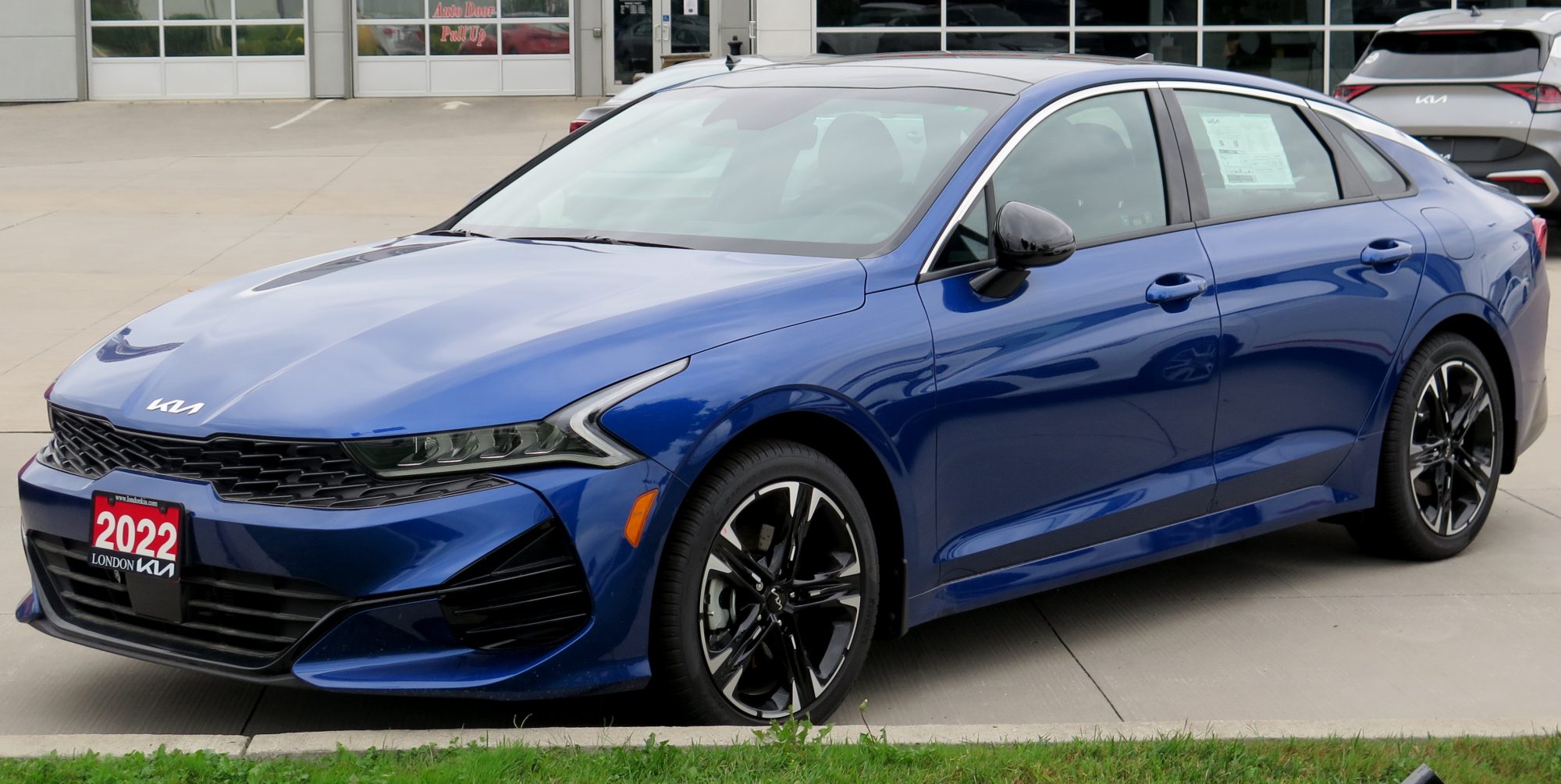
DL3 2019–present
Badged K5 globally; Smartstream engines.
- Body styles
- Sedan
- Platform
- Hyundai N3
- Engines
-
- 1.6 turbo GDi — petrol · 132 kW (177 hp) · 265 Nm (195 lb-ft)
- 2.0 Smartstream — petrol · 110–118 kW (148–158 hp) · 192–196 Nm (142–145 lb-ft)
- 2.5 GDi — SMARTSTREAM · petrol · 143 kW (192 hp) · 246 Nm (181 lb-ft)
- 2.0 GDi hybrid — hybrid
- Transmissions
- 6-speed automatic · 8-speed automatic · 8-speed dual-clutch · 7-speed dual-clutch automatic · 8-speed dual-clutch automatic
- Drivetrain
- Front-wheel drive · Four-wheel drive
CAN data
Bus databases covering this vehicle, mirrored from the open-source opendbc project.
Service information
Information, not instruction
CarGeek is a reference, not a service manual. Its pages are written from public sources and from what other people have found, never from a manufacturer's own service information, so they can be wrong or incomplete for your particular vehicle. Some of what they describe carries real risk: high voltage, fuel under pressure, stored energy, hot and moving parts.
Have anything you intend to act on checked by a trained person against the manufacturer's own procedure for your vehicle. Nothing here replaces that procedure.
Posted about the Kia Optima
Be the first to write this up
Nothing posted about this yet. Whatever you found is worth writing down — even a dead end saves someone the same afternoon.
What makes one worth reading:
- The car — make, model, year and engine. The same fault behaves differently on each.
- What you measured, not only what you replaced.
- What actually fixed it — or that nothing did, which is worth knowing too.
Sign in or create an account to add what you found about Kia Optima.