Vehicle
Lexus GS
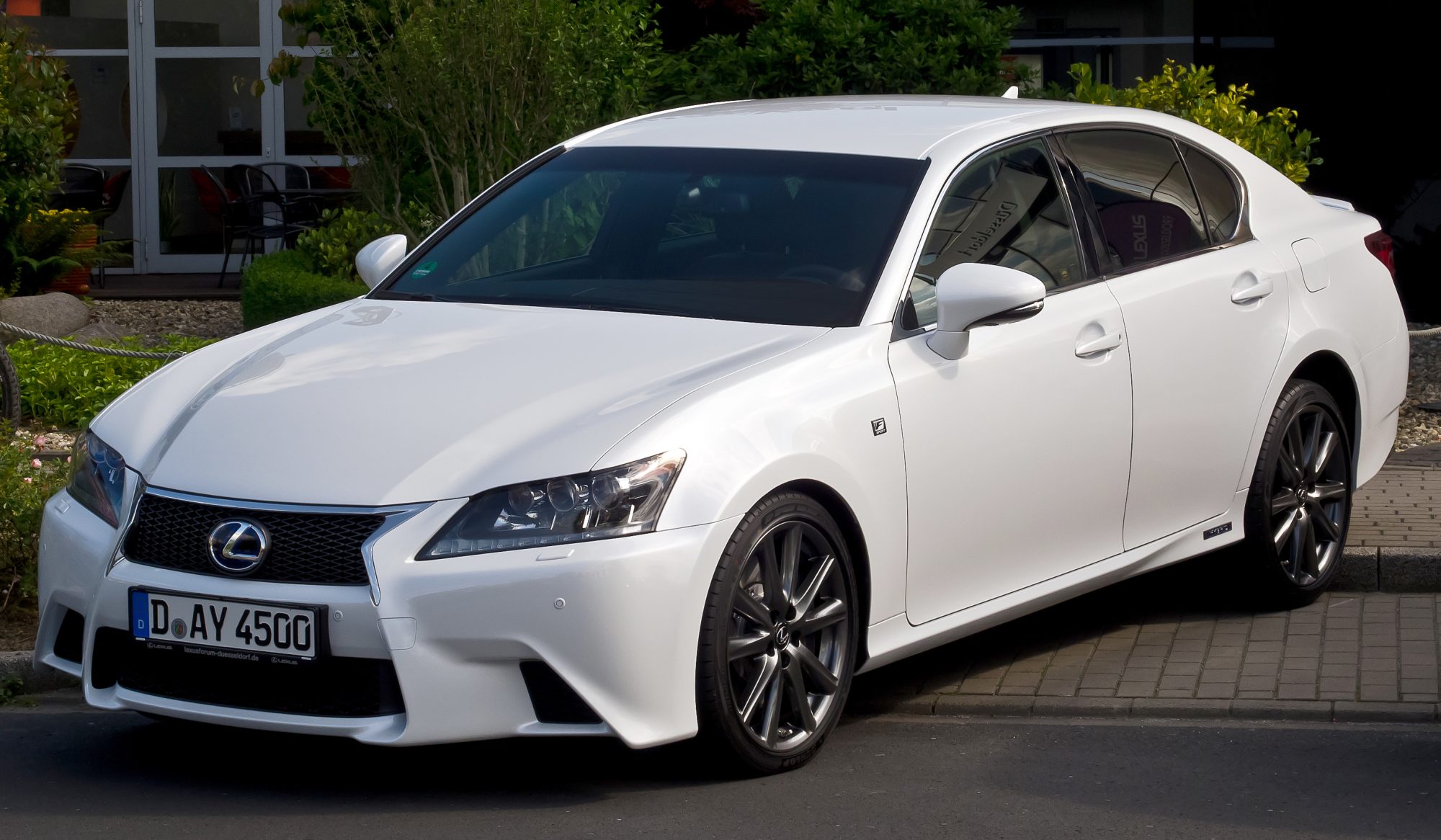
The mid-size rear-driven saloon that sat between the IS and the LS. Offered as a hybrid 450h and as V6 and V8 petrols; a high-mileage European example is most often the hybrid, and diagnoses as a Toyota one.

Generations
-
S140 and S160 1993–2005
The 2JZ straight-six era, including the naturally aspirated 2JZ-GE that shares its architecture with the Supra's turbo engine.
- Body styles
- Sedan
- Platform
- Toyota S
- Engines
-
- 3.0 straight-six — 2JZ-GE · petrol · 162 kW (217 hp) · 279–304 Nm (206–224 lb-ft)
- 4.0 V8 — 1UZ-FE · petrol · 162–224 kW (217–300 hp) · 333–420 Nm (246–310 lb-ft)
- 4.3 V8 — 3UZ-FE · petrol · 206–224 kW (276–300 hp) · 430–441 Nm (317–325 lb-ft)
- 3.0 turbo straight-six — 2JZ-GTE · petrol · 432–451 Nm (319–333 lb-ft)
- Transmissions
- 5-speed A350E automatic · 4-speed A340E automatic · 4-speed A341E automatic · 5-speed A650E automatic
- Drivetrain
- Rear-wheel drive
-
S190 2005–2011
V6 and V8, plus the 450h hybrid that most surviving European examples are.
- A760E / A761E 6-speed automatic
- A960E 6-speed automatic
- Aisin TL-80SN (AA80E) 8-speed automatic
- L110 / L210 CVT
- Body styles
- Sedan
- Platform
- Toyota N
- Engines
-
- 2.5 V6 — petrol
- 3.0 V6 — 3GR-FSE · petrol · 183–188 kW (245–252 hp) · 310–314 Nm (229–232 lb-ft)
- 3.5 V6 — 2GR-FSE · petrol · 320–380 Nm (236–280 lb-ft)
- 4.3 V8 — 3UZ-FE · petrol · 206–224 kW (276–300 hp) · 430–441 Nm (317–325 lb-ft)
- 4.6 V8 — 1UR-FSE · petrol · 255 kW (342 hp) · 460 Nm (339 lb-ft)
- 3.5 V6 hybrid — hybrid · GS 450h
- 4.6 V8 — 1UR-FE · petrol · 221–255 kW (296–342 hp) · 439–460 Nm (324–339 lb-ft) · Middle east
- Transmissions
- e-CVT · 6-speed A760H/1E automatic · 6-speed A960E automatic · 8-speed AA80E automatic · e-CVT L110 hybrid transaxle
- Drivetrain
- Rear-wheel drive · Four-wheel drive
-
L10 2011–2020
Hybrid at volume in Europe; diagnoses as a Toyota Hybrid System car.
- Body styles
- Sedan
- Platform
- Toyota N
- Engines
-
- 2.0 turbo — 8AR-FTS · petrol · 180 kW (241 hp) · 350 Nm (258 lb-ft)
- 3.5 V6 — petrol · 215–218 kW (288–292 hp) · 2GR-FSE and 2GR-FKS
- 5.0 V8 — 2UR-GSE · petrol · 530 Nm (391 lb-ft) · GS F, 2UR-GSE
- 3.5 V6 hybrid — hybrid · GS 450h
- 2.5 — 2AR-FSE · hybrid · 221 Nm (163 lb-ft)
- 2.5 V6 — 4GR-FSE · petrol · 133 kW (178 hp) · 243–260 Nm (179–192 lb-ft)
- Transmissions
- e-CVT · 6-speed automatic · 8-speed AA80E automatic · 8-speed AA81E automatic · e-CVT L110 / L210 hybrid transaxle
- Drivetrain
- Rear-wheel drive · Four-wheel drive
Information, not instruction
CarGeek is a reference, not a service manual. Its pages are written from public sources and from what other people have found, never from a manufacturer's own service information, so they can be wrong or incomplete for your particular vehicle. Some of what they describe carries real risk: high voltage, fuel under pressure, stored energy, hot and moving parts.
Have anything you intend to act on checked by a trained person against the manufacturer's own procedure for your vehicle. Nothing here replaces that procedure.
Posted about the Lexus GS
Be the first to write this up
Nothing posted about this yet. Whatever you found is worth writing down — even a dead end saves someone the same afternoon.
What makes one worth reading:
- The car — make, model, year and engine. The same fault behaves differently on each.
- What you measured, not only what you replaced.
- What actually fixed it — or that nothing did, which is worth knowing too.
Sign in or create an account to add what you found about Lexus GS.