Vehicle
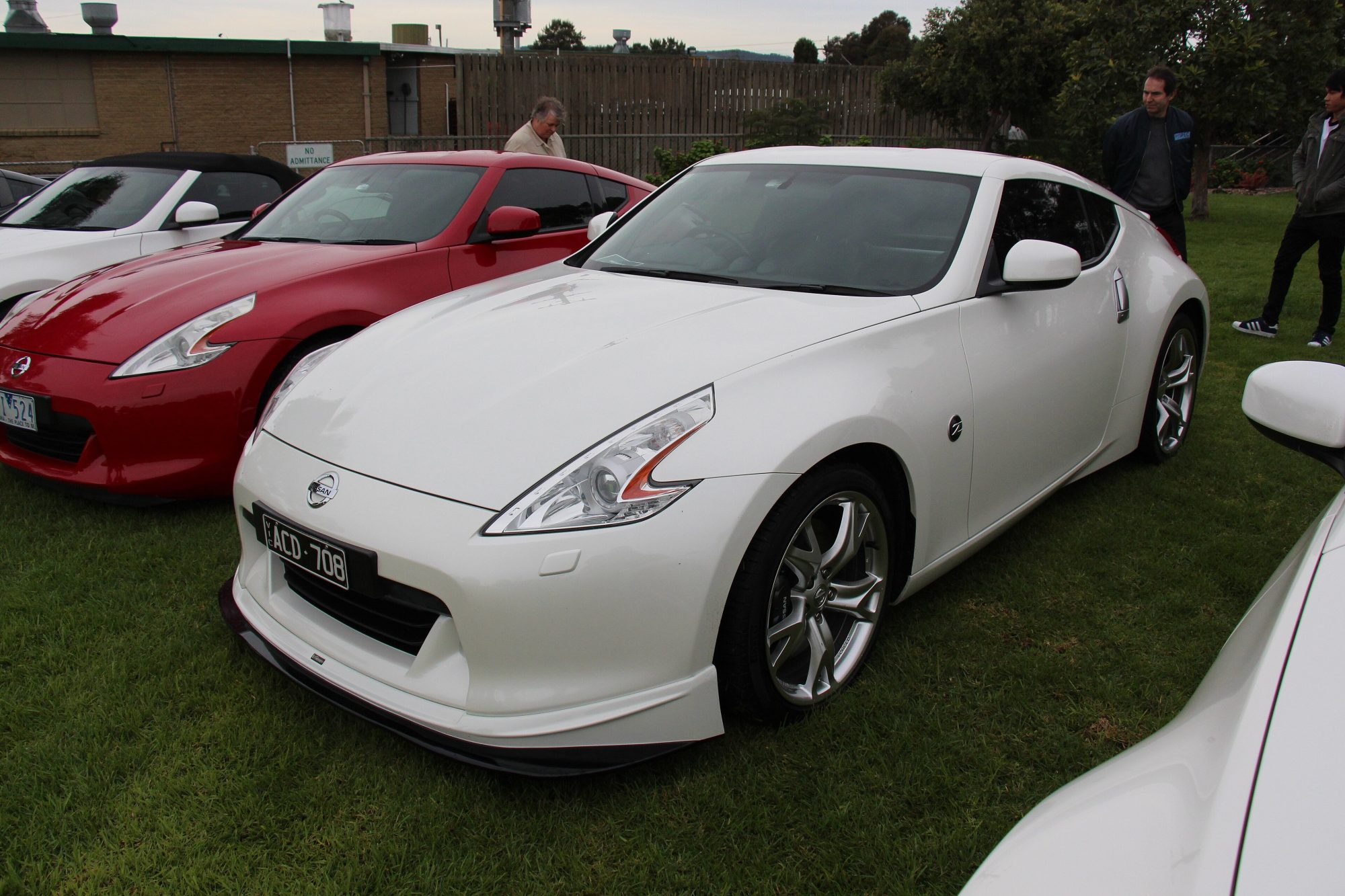
Nissan 370Z
Rear-drive VQ coupé, and the two generations behave differently enough to be worth separating. The 350Z's VQ35DE is the one with the oil-consumption reputation, and on early cars that consumption is what eventually kills the catalysts and produces efficiency codes — treating the code without measuring consumption gets the car back. The 370Z's VQ37VHR adds variable valve event and lift on the intake side, so a timing or lift fault there produces codes the earlier engine cannot set. Both use a clutch-delay and rev-matching arrangement on the manual whose sensors generate their own faults. The CSC clutch slave cylinder inside the bellhousing is the most common non-engine complaint on either.
.jpg)
Generations
-
Z33 2003–2009
The 350Z; VQ35DE oil consumption is what eventually sets its catalyst efficiency codes.
- Body styles
- Coupé · Convertible
- Platform
- Nissan FM
- Engines
-
- 3.5 V6 — petrol · VQ35DE and VQ35HR
- 3.5 V6 — VQ35HR · petrol · 225–232 kW (302–311 hp) · 342–358 Nm (252–264 lb-ft)
- Transmissions
- 6-speed manual · 5-speed automatic
- Drivetrain
- Rear-wheel drive
-
Z34 2009–2020
VQ37VHR with variable valve event and lift on the intake — it can set timing faults the VQ35 cannot.
- Body styles
- Coupé · Convertible
- Platform
- Nissan FM
- Engines
-
- 3.7 V6 — VQ37VHR · petrol · 241–253 kW (323–339 hp) · 363–374 Nm (268–276 lb-ft)
- Transmissions
- 7-speed Jatco automatic · 6-speed FS6R31A manual
- Drivetrain
- Rear-wheel drive
-
RZ34 2022–present
Badged simply Z, and turbocharged for the first time — the VR30DDTT shares its architecture with the Q50, so that car's boost and fuel data applies.
- Body styles
- Coupé
- Platform
- Nissan FM
- Engines
-
- 3.0 twin-turbo V6 — VR30DDTT · petrol
- Transmissions
- 9-speed automatic · 6-speed FS6R31A manual
- Drivetrain
- Rear-wheel drive
Service information
Information, not instruction
CarGeek is a reference, not a service manual. Its pages are written from public sources and from what other people have found, never from a manufacturer's own service information, so they can be wrong or incomplete for your particular vehicle. Some of what they describe carries real risk: high voltage, fuel under pressure, stored energy, hot and moving parts.
Have anything you intend to act on checked by a trained person against the manufacturer's own procedure for your vehicle. Nothing here replaces that procedure.
Posted about the Nissan 370Z
Be the first to write this up
Nothing posted about this yet. Whatever you found is worth writing down — even a dead end saves someone the same afternoon.
What makes one worth reading:
- The car — make, model, year and engine. The same fault behaves differently on each.
- What you measured, not only what you replaced.
- What actually fixed it — or that nothing did, which is worth knowing too.
Sign in or create an account to add what you found about Nissan 370Z.