Vehicle
Peugeot 306
The 1993-2002 small family car, and a very large number are still running — which makes the management-system boundary the first thing to establish. Early cars use Bosch Motronic or Magneti Marelli systems that pre-date OBD-II and need the manufacturer's own protocol and a 30-pin connector; from 1998 most are EOBD compliant on the standard connector. The XU-series petrol engines are simple and durable, with the distributor-less ignition coil packs and crank sensor as the usual no-start causes. The 1.9 diesels are mechanical and largely codeless; the 2.0 HDi that arrived at the end of the run is common rail, and its injector return-flow test is the fastest route to a rough-running diagnosis.
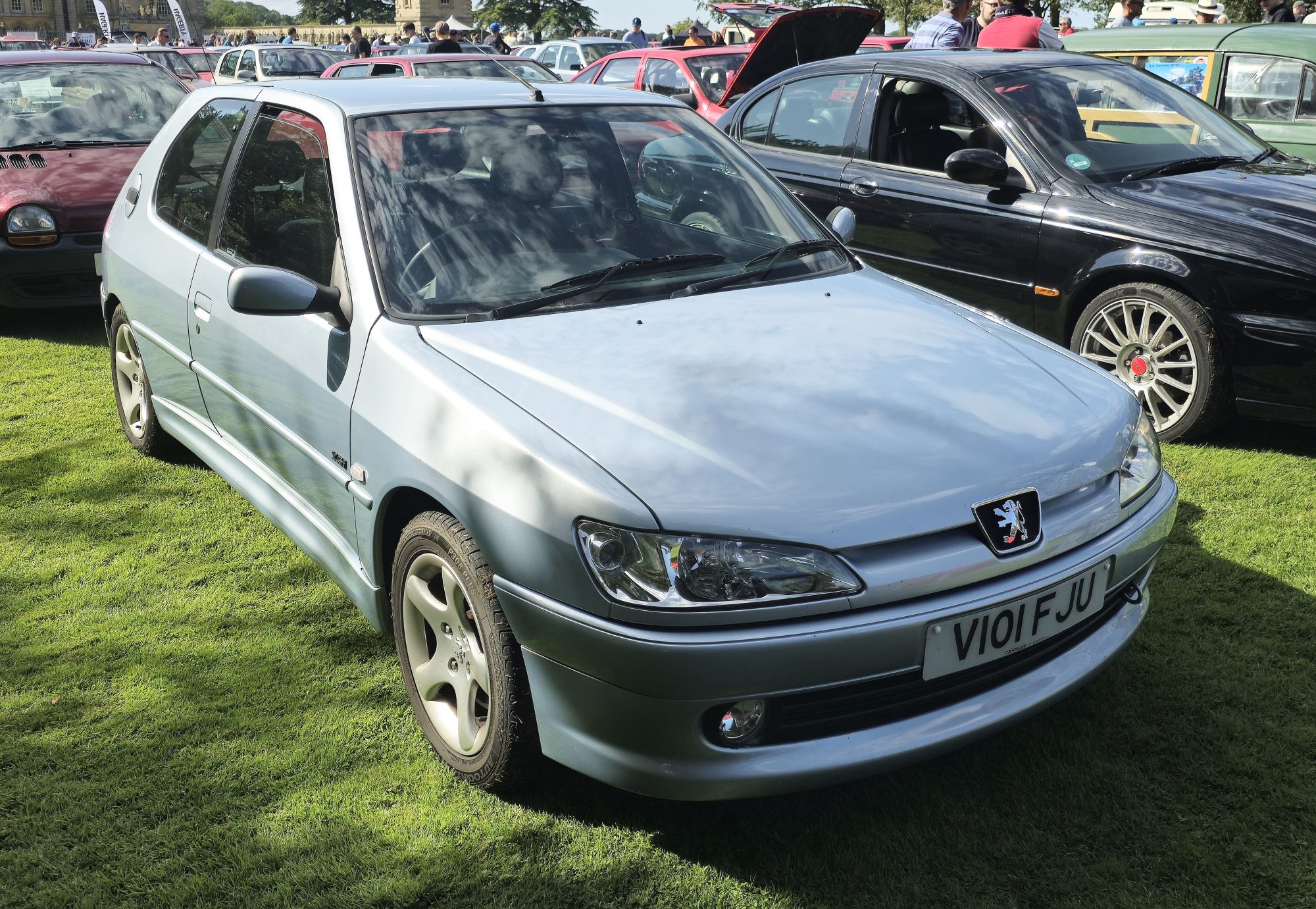

Generations
-
First generation 1993–2002
Pre-OBD-II management on early cars, EOBD from 1998; the 2.0 HDi's injector return flow is the quickest diagnostic on the diesels.
- Body styles
- Hatchback · Sedan · Estate · Convertible
- Platform
- PSA Phase 2
- Engines
-
- 1.4 petrol — TU3 · petrol · 48–74 kW (64–99 hp)
- 1.6 petrol — TU5 · petrol · 85 kW (114 hp)
- 1.8 16v — XU7 · petrol · 66–81 kW (89–109 hp) · 153–155 Nm (113–114 lb-ft)
- 2.0 16v — XU10 · petrol · 206 kW (276 hp) · 255 Nm (188 lb-ft) · XU10, GTI-6
- 1.9 D — XUD9 · diesel · 48 kW (64 hp)
- 2.0 HDi — DW10 · diesel · 66–132 kW (89–177 hp) · 205 Nm (151 lb-ft)
- 1.1 — TU1 · petrol · 40 kW (54 hp)
- 1.8 — XUD7 · diesel · 44 kW (59 hp) · 110 Nm (81 lb-ft)
- 1.9 — DW8A · diesel · 51 kW (68 hp) · 125 Nm (92 lb-ft)
- Transmissions
- 5-speed manual · 6-speed manual · 4-speed automatic ZF 4HP14 · 4-speed automatic AL4 · 5-speed manual MA 5 · 5-speed manual BE 3/5 · 6-speed manual BE 3/6
- Drivetrain
- Front-wheel drive
Service information
Information, not instruction
CarGeek is a reference, not a service manual. Its pages are written from public sources and from what other people have found, never from a manufacturer's own service information, so they can be wrong or incomplete for your particular vehicle. Some of what they describe carries real risk: high voltage, fuel under pressure, stored energy, hot and moving parts.
Have anything you intend to act on checked by a trained person against the manufacturer's own procedure for your vehicle. Nothing here replaces that procedure.
Posted about the Peugeot 306
Be the first to write this up
Nothing posted about this yet. Whatever you found is worth writing down — even a dead end saves someone the same afternoon.
What makes one worth reading:
- The car — make, model, year and engine. The same fault behaves differently on each.
- What you measured, not only what you replaced.
- What actually fixed it — or that nothing did, which is worth knowing too.
Sign in or create an account to add what you found about Peugeot 306.