Vehicle
Renault Laguna
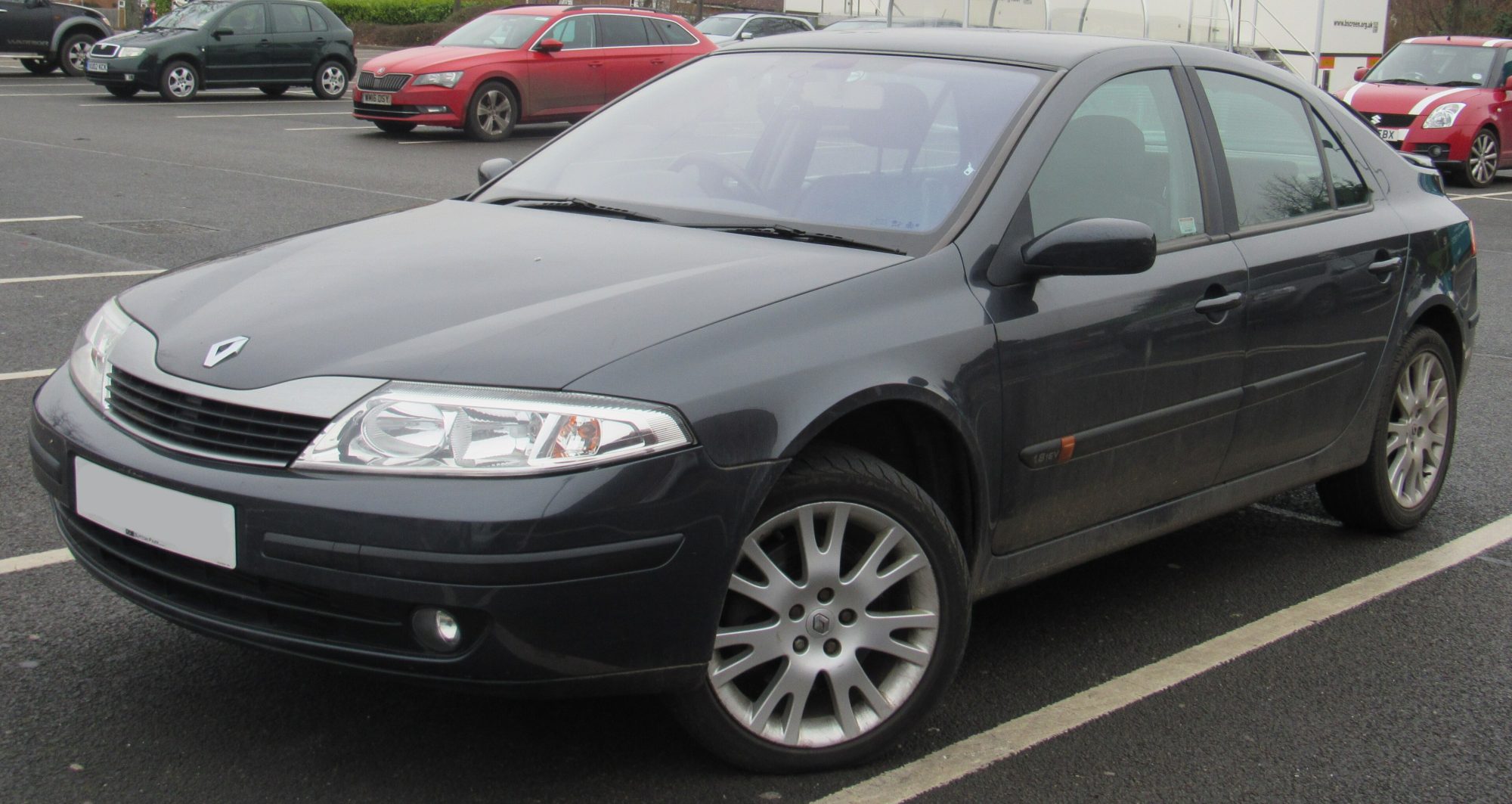
Renault's large family car, and the Laguna II is the one that defines the model's reputation — it was among the first cars sold with a keycard and a fully electronic ignition and immobiliser arrangement, and the resulting no-start faults are electrical rather than mechanical almost every time. The card reader, the steering-column-mounted ignition switch and the UCH body computer are the three items behind most of them, and a flat keycard battery presents identically to a failed reader. The 1.9 dCi is the engine most examples carry, with the usual injector and turbo-vane fouling; the 2.0 dCi that followed adds a particulate filter. Electrical earth corrosion in the boot and behind the battery causes clusters of unrelated codes.

Generations
-
Second generation (X74) 2001–2007
The keycard car; the card reader, ignition switch and UCH body computer account for most of its no-start faults.
- Body styles
- Liftback · Estate
- Platform
- Renault D
- Engines
-
- 1.6 16v — petrol
- 1.8 16v — petrol
- 2.0 16v — petrol
- 1.9 dCi — diesel
- 2.2 dCi — diesel
- 2.0 turbo — petrol
- 3.0 V6 — petrol
- 2.0 — diesel
- Transmissions
- 5-speed manual · 6-speed manual · 4-speed automatic · 6-speed automatic · 5 or 6-speed manual · 4 or 5-speed automatic
- Drivetrain
- Front-wheel drive
-
Third generation (X91) 2007–2015
Coupé and estate bodies with the 2.0 dCi and its particulate filter; four-wheel steering on some GT models.
- Body styles
- Liftback · Estate · Coupé
- Platform
- Renault-Nissan C
- Engines
-
- 1.6 16v — petrol
- 2.0 16v — petrol · 103–125 kW (138–168 hp)
- 2.0 TCe — petrol · 103–125 kW (138–168 hp)
- 1.5 dCi — diesel · 81 kW (109 hp)
- 2.0 dCi — diesel · 96–131 kW (129–176 hp)
- 3.0 dCi V6 — diesel · 173–177 kW (232–237 hp)
- 2.0 turbo — petrol · 103–125 kW (138–168 hp)
- 3.5 V6 — petrol
- Transmissions
- 6-speed manual · 6-speed automatic · CVT
- Drivetrain
- Front-wheel drive
Service information
Information, not instruction
CarGeek is a reference, not a service manual. Its pages are written from public sources and from what other people have found, never from a manufacturer's own service information, so they can be wrong or incomplete for your particular vehicle. Some of what they describe carries real risk: high voltage, fuel under pressure, stored energy, hot and moving parts.
Have anything you intend to act on checked by a trained person against the manufacturer's own procedure for your vehicle. Nothing here replaces that procedure.
Posted about the Renault Laguna
Be the first to write this up
Nothing posted about this yet. Whatever you found is worth writing down — even a dead end saves someone the same afternoon.
What makes one worth reading:
- The car — make, model, year and engine. The same fault behaves differently on each.
- What you measured, not only what you replaced.
- What actually fixed it — or that nothing did, which is worth knowing too.
Sign in or create an account to add what you found about Renault Laguna.